Opinion & Thought, Politics and current affairs

Carpe Diem

gina-headshot-e1509375521711-600x404

A brief internet discussion with an Italian on social media a few days ago produced the following observation: “I think the British are just too afraid to go outside their comfort zone.” Well yes. But there is a back-story here: being on an island makes it harder for us to go outside our national comfort zone than for those on the continent (although southern Italians might disagree…) Even a committed European like me could only find the time and money to travel abroad a couple of times a year. Contrast that with my Swiss friend’s son – who went ‘abroad’ every day – to school. Even though that was only a matter of a few kilometres’ journey. It is so much easier to become internationalised when your geographical situation facilitates it.

And yet there more in that Italian guy’s comment than perhaps he knew. It has only ever been in the U.K. that I have heard people say such-and-such “is not for the likes of me”. I heard perfectly able students say it when I tried to encourage them to aim for the top universities. I heard a woman in my town say it the other day when I tried to encourage her to get involved with local decision-making.

I don’t want to fall into the trap of suggesting that a whole continent is uniform – and uniformly different from Britain – but it is nonetheless anecdotally true, as I have observed before, that people ‘over there’ seem less constrained by barriers not only of geography – but also in their own minds. It is one of the things I find attractive about continental culture: compared with Britain, anything – well, at least much more  – seems possible.

I think the reasons for this do come back to our sociopolitical situation. Everything about Britain is still predicated on competitive advantage. The aim in life seems to be to “get ahead” – but of what? The system? One’s fellow citizens? The purpose of ‘success’ in Britain seems to be to buy exclusivity – and I can only conclude that this is a hangover of a social system where rank was (still is?)  everything.

Another social media conversation a few days ago was quite enlivening – and then I checked the profile of my interlocutor. It turned out (since verified) that I had been talking, simply as one human to another, to the CEO of BMW. My perception in Britain is that the elite rarely talk to anyone except each other – and certainly not with the hoi polloi via unassuming Facebook threads.

It would of course be wrong to suggest that everyone is equal on the continent. They have their elites too – but experience suggests that while ambition in those countries may bring an enviable way of life,  it does not – at least to the same extent – bring snobbery. Over the years, I have met a fair number of influential continentals – from MEPs to the (Dutch) President of the UCI (International Cycling Federation ). I have observed and heard about the behaviour of others, from celebrated Swiss art dealers to executives in multinational companies.  Almost without exception, they seemed to lack the superiority complex of their British counterparts. (The principal exception was Juan Antonio Samaranch, the Spanish President of the IOC, who seemed to think he was the Emperor of the World; those others whose view was closer to the British seemed to come from countries which shared many of our social problems and attitudes).

Even in the European Parliament, it was very noticeable that it was the British (Conservative) MEPs who had the airs and graces; the rest, even in their own political grouping, seemed much more down-to-earth. I have also heard about the low esteem in which residual elites are held in those countries – they are figures for fun or pity, and they certainly do not possess the power to intimidate that they do in Britain.

I spy an irony here, in that those nations which shout loudest about ‘anything being possible’ – The USA and the UK – are actually those with some of the lowest social mobility. It seems that we have to keep shouting about it, because we know that it really isn’t true. When ‘opportunity’ is so much the monopoly of a few, the mentality amongst the rest, that much of life’s bounty really isn’t “for the likes of me”, seems inevitable. And that includes the ability to travel, to discover that it isn’t the same everywhere.

It is in those countries which are more equal to begin with, that perceived Opportunity really does present itself to more people. And what is more, the consequences and objectives of that opening seem different too. While the aspiration for a comfortable life is probably universal, the attaching of this to exclusivity seems not to be. Wealth and seniority do not automatically make one a superior person, simply a wealthier or more senior one. It is the conflation of wealth, elitism and power that have put Britain (and the US) in the positions in which they now find themselves.

In a sense, this blog Sprezzatura rails against this: beneath an apparently superficial preoccupation with the good things in life lies a more profound belief that they should not be the preserve of an elite, but be accessible to all who want them. That good life does not need to come – as many in Britain’s elite seem to think – at the expense of others. And in any case, the ‘good life’ is not only about material wealth or privilege: many of those good things are actually found in simplicity and attitude, rather than large bank balances and powerful connections.

What prevents more people from enjoying them is the conflation of good living with privilege – of things that are “not for the likes of me”. It is a barrier that seems to be at least much less strong in those nations that are not so persistently hierarchical in their mindset.

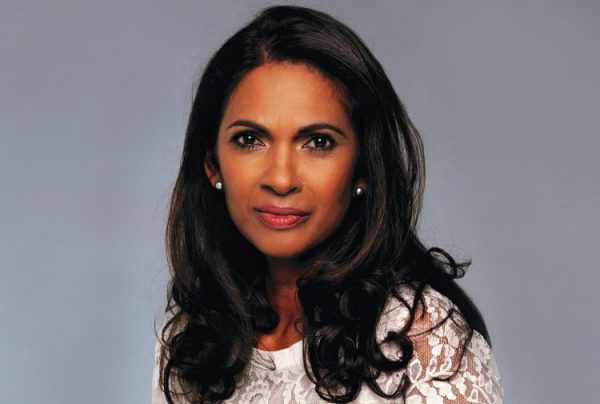
The antidote to this is indeed Carpe Diem. Seize The Day, no matter who you are – and make the most of it. And on this day of all – which was to have been Brexit day – I feel it essential to acknowledge the role played in our current reprieve by Gina Miller, without whose legal challenge we would now be having Brexit imposed on us by the most authoritarian, elitist government in recent British history. Even Parliament would not have had a look-in, had it not been for her.

It clearly took someone with wealth and connections like Miller to activate the necessary procedures to bring the legal challenge to May’s dictatorial instincts – but the striking thing about this woman is that she uses her wealth not just to bolster her own position, but for what she believes is the common good. She seized a day without which today would be our last in the EU. I hope she is eventually sainted for it.

While she is a British citizen, it is of course noticeable that she takes at least some of her cultural leads from her past, elsewhere in the world. We British have a lot still to learn.
Opinion & Thought, Politics and current affairs

Why should only some have prizes?

Mrs May today says she “shares British people’s frustration” that Brexit has not (yet) been completed. In doing so she illustrates perfectly the endemic problem with British politics that got us into this fix in the first place: she is quite at liberty utterly to disregard the opinions of the at-least-half of the population that disagrees with her. We simply don’t exist, let alone figure in her reckoning. She can claim she speaks for the nation when she clearly does not. Our fate, as a beaten (supposed) minority, need be of no interest to her.

This is the result of a system that is based on disagreement and confrontation rather than consensus-seeking. It is a system based on beating your opponents and then ignoring them. Both major parties are as bad as each other when the chips are down and they win power. This is no way to run a pluralistic modern nation.

This is the system that allows the Conservative Party to describe itself as “the natural party of government”. The fault in that is not the obvious one – but the implication that governing a country needs to be a zero-sum choice in the first place. It is also the system that then allows this party – true to its name – to resist modernising the nation and preserving the privileged classes upon which it has always heavily drawn.

This is why we urgently need electoral reform. While there is no perfect system, and it is true that most of the alternatives are both more complex and less certain, that actually reflects the realities of life, which is no longer as straightforwardly feudal-tribal as our antiquated system presupposes. The implications are far reaching: not only does consensual politics send an entirely different message to the populace, one of inclusiveness rather than monopoly, but I suggest that it eventually effects the very way in which people think about both politics and society more widely.

This nation is handicapped by a confrontational national model that goes far beyond politics – the mentality of winner takes all. It has done immense damage to the country over the decades, not least because of the sense of disenfranchisement and outrage that it fosters, and the frequent reversals of national policy that it causes. It takes a regressive view of life that says only some are entitled to opportunities and rewards – ironically quite the opposite of both right-wing views on ‘opportunity’. and the left-wing view of inclusiveness.

When it comes to Brexit, the argument is not symmetrical: within the EU, nobody is forced to acknowledge that organisation: people are free utterly to ignore it if they so choose. But outside the EU, the rights of pro-Europeans to exercise their wishes and loyalties will be prevented: another case of unnecessary zero-sum politics.

The view that life needs to be about ‘winners’ – and hence ‘losers’ – in my view has no place in a just modern society. Life is both more complex and more random than that, and when it comes to opportunity and fortune, ‘no man is an island’. Ultimately, we are all dependent on each other, and our systems should reflect that fact.

Whatever happens with Brexit, it is essential that this is changed in future. Unfortunately the very nature of the present system makes that, in my judgement, very unlikely, even after the present experience. What will it take to bring about change to a healthier national mindset?

Opinion & Thought

Citizens of Somewhere

I recently saw a comment by someone who said he had voted Remain “in order to get his country back”. At which point, I will hasten to say that this is not another post about Brexit. Well, not really: it’s about culture.

His point, though, was that Britain as he saw it was an open culture, that has always happily assimilated others into its own domestic life, from Jamaican music to Indian food and Italian coffee – and he saw Brexit as representing a return to an intolerant, mono-cultural past.

This set me thinking about the traditional cultures of Britain. I use the plural because even before the migrations of the Twentieth Century, these islands were always home to more than one, for all that Victorian paternalism might have tried to pretend otherwise.

I have always felt a tension in my own life between the progressive, modernist, internationalist outlook that this blog generally advocates, and my culturally more conservative side. Many of the good things I discuss here are in a cultural sense quite conservative. For example, I see no good reason to mess with traditional cuisines, when the original dishes are fine in their own right, and have stood the test of time. They did that for a reason – and more often than not, those who tamper with them rarely come up with anything as good as a finely-produced original. This applies to other cultural expressions from literacy to dress, too: fusion normally fails.

The same issue crops up in my musical tastes. In particular, the apparently conservative world of traditional music in which I’m active hardly sits well with internationalised modernist tastes. I find that conscious attempts to modernise the tradition are rarely as good as the original. Many traditional musicians these days are writing their own tunes, supposedly in the traditional idiom – but more often than not, they are little more than clever but instantly forgettable riffs, with none of the structure and character of ‘real’ traditional tunes. They derive from the blandness of pop music which is those people’s default cultural reference, rather than the inherited instincts of the traditional proper.

But the more I think about this, the less of a real conflict I see. The main point about tradition is not that it is old-fashioned, so much as timeless – and therefore there is no reason why it should not be as relevant in the present as any in past era.

While it is undoubtedly true that tradition changes over time, it tends to do so by a process of accretional, almost imperceptible evolution, rather than the attempts of radical individuals to turn things on their head. It is probably these characteristics, the perceived continuity and familiarity that give traditional things the comfort that appeals to many. (Maybe there is a lesson here for those who would push European integration too fast…) The problem is, it gets confused with a kind of stubborn, stuck-in-the-mud-ness that refuses ever to move forward. The Scots have the concept of the ‘carrying stream’: the cultural river that flows out of the past, through the present and into the future, linking the then, the now and the next into a continuum of shared identity.

Here is where the wider significance of this becomes apparent: I make a distinction between folk music (which I tend not to like) and traditional music (which I often do). This may seem to be splitting hairs – but the latter is a timeless musical form, whereas the former is a confection, an imagined past that was reconstructed from the 1960s onwards, to replace true traditions that had been allowed (or forced) to die out. One is deeply authentic, and the other is just an arcane form of popular commercial music. This is the difference between ‘real’ culture and a manufactured facsimile.

When it comes to “getting our country back”, it is not as simple as it sounds: for all that the British claim to love tradition, much of what they actually like is not, in my books, traditional at all: it, too was manufactured. We see new-build houses being described as traditional, when they are actually a facsimile collision of Victorian, Edwardian and even later references. In developer-speak, the brash little villas of the 1930s are now “traditional”. No they are not: traditional houses were not industrially constructed of mass-produced red brick and pebbledash for a start, let alone steel girders. Even if we go back further, much of what is perceived as English tradition was in fact the product of upper class Victorian imaginations. Many of our so-called traditions date no further back than that, even if they were in some ways romanticised re-interpretations of medieval times. Real traditions were not for the most part bourgeois, and were often crueller than the fey character of much modern ‘folk’ music . Proper traditional music is complex, sometimes dark and even raucous, far from the twee modern perception.

Here is the root of the English identity crisis: by sanitising and then annihilating true English traditions, bourgeois Victorians and their successors arguably severed the connection between the ordinary people of this country and their real identity. They imposed a ‘respectable’ replacement which required conformism rather than active participation, and which lost its emotional connection to the people and their terroir. Once that root had been cut, English culture lost its ability to stand up to outside influences. This is perhaps one of the reasons why, in the 20th Century, American culture made such inroads (obviously, the shared language was another). It perhaps explains why modern English culture has had to cast around so widely for other influences to give it some substance: it has lost all of its own. It may explain why a certain sort of English person is so in love with the cultures of the continent: it is a distinctiveness they perceive they lack themselves.

And it may also explain why, even in very recent times, the English in particular have struggled with the multiculturalism bought by both immigration and membership of the European Union. When one’s own culture is weak to the point of invisibility, the arrival of other, strong cultures might seem like more of a threat than it would otherwise be.

I am not by any means defending monoculturalism; I love the experience of other cultures. But I love their distinctiveness as well as their interface. Cultural exchange is fine, but finest of all if done on equal terms. And part of the English problem is perhaps that much of the population has no genuine ownership of, or even perception of, its own cultural identity. What is perceived as being English is largely imposed upper class mores of which they have little real possession; what most actually have instead is anonymous, transatlantic commercial pap.

I think it is no coincidence that those parts of Britain that are most pro-European are those with the strongest cultural identities of their own. In the case of our big cities, that is because multiculturalism already is the culture, while in Scotland and Ireland the culture is now so resurgent, that the perceived threat from in-comers is perhaps lessened. (It is also worth noting, however, that this situation was not achieved without a struggle to be free of the same bourgeois English impositions.)

And it is also no coincidence that these are British cultures that I identify most strongly with, even though I have no roots in those areas. They offer me a form of Britishness that is frankly more distinctive, dynamic and vibrant than my own invisible English one. It’s worth noting that Scottish and Irish music is hugely popular right across the continent, and further.

So I’m really not sure about the gent who wanted to “get his (multicultural) nation back”. I sympathise with his feelings – but I also believe that the whole experience would have been happier and less confrontational had the ordinary identity of these islands, and England in particular, not been diluted almost to the point of extinction in the first place.

The current prime minister described citizens of the world as being citizens of nowhere. The reason that she is wrong is that for many of them, internationalised modernity is quite capable of co-existing with a traditional identity that anchors their outward-looking present in a secure historical and geographical sense of self. What she missed about Europeanisation, as do Brexiters generally, is that it is not about the abolition of distinct cultural identities so much as their meeting, as equals, to celebrate their distinctiveness and their commonalities.

It is only people who have no secure identity of their own to begin with, who will feel threatened by this.

Opinion & Thought, Politics and current affairs

The Significance of Flags

maladiere

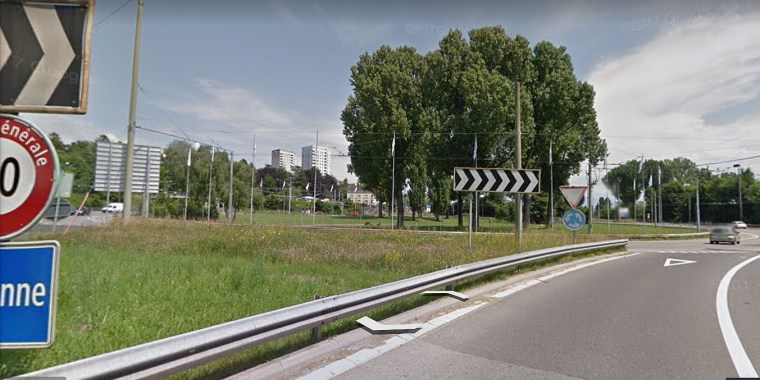
This is the Maladière roundabout in Lausanne, Switzerland. If you arrive in the city by motorway from the west, this is where you end up. I remember it clearly from my first visit over thirty years ago. Lausanne is, of course, global home of the International Olympic Committee, and so proud is the city of this fact, that it has adorned the roundabout with over thirty-five flagpoles, from each of which flutter white Olympic flags. On most days, this presents a joyous and animated gateway to the city: it is quite a sight. Unfortunately, I have no photos of the roundabout, for all that I have passed it many times – and on the day Google Earth was there, there was clearly no wind. But you get the idea.

The U.K. doesn’t really have a tradition of mass flag flying, which is a pity as it is one of the windiest countries in Europe. And while we do have a fondness for our rather garish flag itself, we perhaps underestimate the importance of such things in the symbolism of nation-building. In fact, that activity is something else that has never really been felt necessary in a democratic way either. Most of the ‘wind’ hitherto generated in this country was dedicated to bigging-up the Empire (and post-Empire), and the upper classes whom it most benefitted. It was rarely inclusive. And now that flag has been significantly misappropriated by the far Right anyway.

The Europhile introspection in Britain, about where it all went wrong, shows little sign of abating. It seems increasingly accepted that the case for Britain in Europe was not lost in spring 2016 – but over the forty preceding years in which absolutely no convincing case whatsoever was made to the British people at large, as to why they should begin to see themselves as part of a European whole. The cynic in me suspects that this was entirely deliberate on the part of the political classes – as one article I read recently suggested, the U.K. saw its relationship with the continent as solely mercantile. It still does.

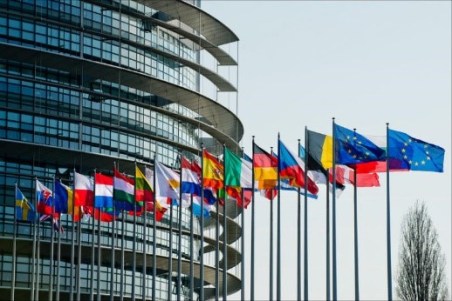
The next photo perhaps underlines the importance of flags: those of all the nations flying outside the European Parliament in Strasbourg.

EU-Flags

As well as animating an otherwise rather dull open space, this sends a powerful message, one seen frequently all over the continent, where the EU flag routinely flies alongside national and regional ones on city halls and other public buildings.

It’s not that we don’t understand this significance in Britain: we are more than happy for the flags of Australia and New Zealand, for example, to incorporate the Union Jack. I wonder how we would feel, though, if it became a requirement to incorporate the gold stars into national flags in the same way. I suspect that might be a step too far for even the most communitaire of European Commissions. In the U.K., it was controversial enough to put the stars on car registration plates, prompting a backlash from the nationalists that one still doesn’t see anywhere else.

flags

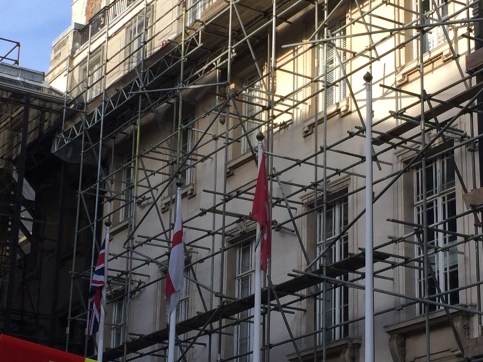
My last photo shows the exterior of Essex County Hall in Chelmsford taken a couple of weeks ago. There are four flag poles by the main entrance – quite excessive by British standards. The Essex, England and UK flags are all present – and one empty pole. I don’t ever recall seeing this occupied by the logical next step in the sequence, in thirty years of living in the area, though I may have missed it…

It has always been unusual to see the EU flag flying in Britain – so much so that I normally stopped and double-took in pride when did I see it. I can’t remember the last time that happened.

In amongst all the media campaigns being organised to promote Remain, it might not have been a bad thing if, at some point in the past, there had been a concerted campaign to fly the EU flag across the country. I think the effect over those forty years would have been far more powerful.