Opinion & Thought

The Sound of Silence

54e090c6-mirror-image-058

“To be able to fill leisure intelligently is the last product of civilization, and at present very few people have reached this level.” Bertrand Russell

There is a way in which every one of us is alone in the world. Despite social media giving us a greater sense than ever of how we all belong to one great herd of humanity, there is much of life that can only ever be individual. Ultimately, it is not possible to delegate one’s experience of life, and anything that it might throw at you, to anyone else. It is down to individual resourcefulness to deal with.

Bertrand Russell had a lot to say on the subject. For me, his most memorable observation is the one above. Russell died in 1970 – but whether we have made much progress on this in the intervening half-century is moot to say the least.

The present situation, with around 20% of the global population in lock-down perhaps presents the ultimate test of his thinking. One of the things that has struck me in the past couple of weeks – and indeed continues to do so – is the level of unspoken alarm that many people seem to be exhibiting at the thought of not having work to do.

Of course, there are many pragmatic reasons why work needs to continue; we cannot press the Pause button on life, because the clocks continue to tick. People have needs that cannot wait.

There may also be a value in work as displacement activity, if it helps distract from the more anxiety-making thoughts of the current time. But I still suspect that a lot of the – frankly excess – effort that seems to be going into “putting arrangements in place” still comes back to Russell’s observations about the human fear of under-occupation, and the unavoidable contemplation of existential issues that may follow shortly afterwards.

As an educator, I find this distressing. My professional raison d’être, as I see it, is to encourage and help people to develop their inner resourcefulness, through the only media that we ultimately have available to us – our minds and bodies. That was the original purpose of education – to develop the individual – not to create efficient but unthinking work-units. Ultimately, these are the only inalienable tools we have with which to buttress ourselves against whatever life does decide to throw at us. Mihaly Csikszentmihalyi conducted exhaustive research into the experiences that people identified as giving their lives meaning and fulfilment – and he concluded that irrespective of culture, these were things that presented us inwardly with challenges that once mastered increase our sense of autonomy.

Yet somewhere along the way, this ideal has been lost. While we have repeatedly dreamed of a future with increased leisure time, the harsh reality is that we have, if anything, moved in the opposite direction. Even the world of education itself has lost sight of that holistic remit, and has increasingly focused on preparing people for a lifetime of work, a situation which, while it can present personal challenges of its own, in many cases has completely the opposite effect on people’s sense of autonomy and individuality.

This is a long-term trend that is observable in all developed societies: as economies diversify, more and more human activities are contracted-out to other providers – be that food production, child care, entertainment, or almost anything else. Modern media even, in effect, allow us to outsource our own need to think about things. We can just think with the herd – until we discover that the herd doesn’t really know how to think at all. There is a perceived lesser need to know things because we can resort to Google, and less need to develop intellectual agility as apps will do almost all of the thinking for us.

Except they won’t.

For a start, there is a huge difference between information, knowledge and understanding. In terms of the cognitive development that is so essential for a fulfilled human life, by reducing the need to work at things for ourselves, all the “conveniences” of modern life actually remove the need to work at our own intellectual development. They limit the development of our neural networks. Many of those media present us with pre-digested forms of information that require us to do nothing except vegetate and passively, uncritically absorb. The absence of the need to persevere, to struggle and to develop the patience necessary to do so, actually robs us of the mental resilience we find we still need when the world bowls us a spinner.

As I said, the education world has regrettably almost entirely colluded with this trend, in the name of inclusivity and “engagement”. The marketisation of education has turned students and their parents into passive consumers of educational services. That seems to have meant providing a wall-to-wall conveyor of pre-digested content, without any opportunity ever to stop and seriously think about it. Because anything too demanding (i.e. anything that makes you demand too much of yourself) is likely to deter – and as we know, The Customer is always right.

Yet personal development is just not like that; there is only one way to do it, and that is to struggle with something for yourself. All of the scaffolding now available to learners often does little than defer (perhaps indefinitely) the enduring need to get to grips with German genders or violin vibrato. Let alone your comfort at simply being present with your own mind…

I think this trend has now been embedded in our society for so long that it is almost invisible. As a teacher, I have seen the “helicopter parent” become a more and more prevalent phenomenon; it now extends up the age range to those who are at and even beyond university. And it has been supplemented by the helicopter teacher, who (with, of course, the best of intentions) feels the overwhelming urge to stop at nothing supposedly to assist their students. We can hardly blame them, when social disapprobation can reach the levels that it nowadays does, and when in the case of teachers their careers can hang in the balance if they are seen to be doing otherwise.

But as Russell I am certain knew, it is all in vain. All the hyperactivity to create illusory structure and ‘purpose’ for our own and others’ lives cannot ultimately deny that fact that we must all meet our fates alone. I have long harboured an uneasy feeling that the ‘contracting out’ of so much of our lives does little other than render us more helpless, more dependent on others, less equipped to face things that only we will have to face.

What’s more, we deprive ourselves not only of the resilience that comes from self-sufficiency, but also the rewards. No one can learn to play the violin or speak a foreign language for you. Ultimately, we all must make such journeys for ourselves; to avoid the pain is also to avoid the gain – the deep satisfaction and ongoing fulfillment that comes from mastering something difficult, which thereby enhances our own autonomy and empowerment. The brilliant cellist Pablo Cassals, was asked why, in his eighties, he still practised. Apparently, he replied, “Because I think I’m improving”. And to deflect others from (having to) do so is almost worse.

I don’t think any of the foregoing is to deny the need for the necessary to be done. There is no question that we can assist each other in all sorts of ways. But as a teacher, I have always kept in mind an image of young birds on the verge of flight: there comes a point when even the best teacher, even the best parent, needs to stand back and let destiny take its course. There comes a point when letting someone struggle (a bit) is the best form of support – and certainly the quickest method of learning. Perhaps the current situation is just such a moment?

I think there is plenty of evidence to suggest that it is not only the young who would benefit from the need to spend a bit more time for introspection, for facing the existential realities of who they are, what they stand for, and how they face the sheer, immovable dilemmas of simply existing. I’m not sure that providing more and more vicarious distractions that prevent people from ever facing their own inner selves is ultimately very helpful. It may be why, with the current prospect of enforced leisure, many are rushing around frenziedly trying to find anything and everything that will obviate the need finally to contemplate their own navels. It is a form of helplessness that makes the prospect of months of curfew all the worse, perhaps almost worse (and certainly more immediate) than the risk of viral infection.

I’ve had experience of this. Luckily, I seem to have a restless mind that almost never tires of entertaining itself. This may be a personality trait that is not shared by everyone – but I’m not suggesting that there is only one way to address the issue. It’s a matter of finding what engages you and absorbs you – but being engage-able in the first place is a skill that may need practice. For people who are used to finding their entertainment externally, looking inward may be uncomfortable and unfamiliar. But my experience of being largely housebound for much of the past three years (as well as being a lifelong hobbyist) is that, in the longer run, it is the inner world that is the more rewarding.

So if you are reading this as a home-constrained worker, a harassed parent, or an over-anxious teacher, I’m not suggesting that what needs to be done should not be done. But it is perhaps necessary to question what that “need” really is.

By all means seek ways of filling the time – but the best place to look is inwardly, not outwardly. Find a new skill, interest or ambition to fulfill. And if you are responsible for others, do not feel you have to fill their every waking moment. Now might be precisely the moment to give them the space and time to explore their own inner resources. They are there – even if they need some looking for. The teachers amongst us might benefit our students most by giving them the space they need to find themselves, rather than insisting on doing it for them: to metaphorically even if not literally, climb trees. It is not a dereliction of duty.

The current crisis might in the longer term shed some beneficial light on our modern human condition. Part of that might be to show the extent to which we have lost our resilience and self-sufficiency and inner lives. Don’t resort to wall-to-wall Netflix; find something more challenging and active to do – and encourage others to do the same. It might be tough to begin with – but you will soon learn to accept the outward silence – and listen to the internal conversation instead.
Arts, Architecture & Design, Opinion & Thought

H.Q.

lr

Home. A baseline in the world. Perhaps the only place where we have anything like complete control of how that world is. And right now, what could be more important than that? When we are away from it, we describe places that strike a chord as “feeling like home”.

And yet, from much of what is being said at the present moment, home might as well be a prison. Spending time there is being portrayed as penitence, rather than pleasure. Many seem to be worried that spending time at home will send them up the wall. It should do the opposite. (I suspect that this is actually just the sound of the usual extroverts fearing what will happen if they are deprived of their social energy for a while).

It’s not like that for me. Much as though I love travelling, being out there in the buzz of modern life, there is nowhere I would ultimately rather be than home. It’s probably easier for an introvert – but never have I seen home as a prison.

I have spent a large proportion of the last four years at home – often alone. The mental health difficulties of 2016 and after meant that for quite a long time, I found it very difficult just to get beyond the front door. The loss of my career and related income meant that even after my difficulties abated, there was simply not the need to leave on a daily basis, nor the opportunity to do so, when it almost inevitably meant spending money that we didn’t have. So we fell back heavily on the things you can do at home.

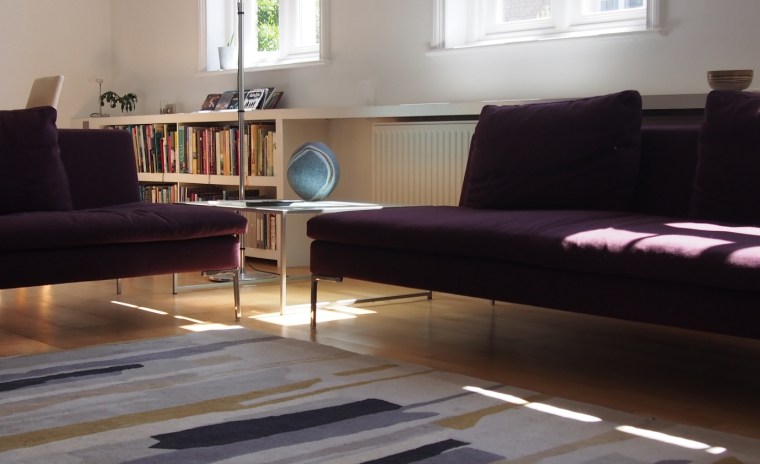
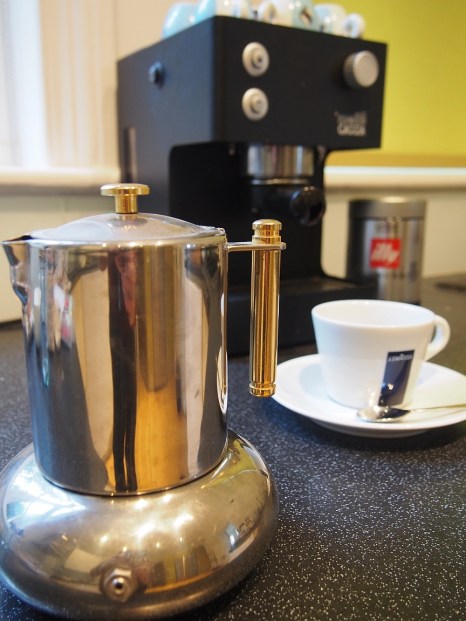
Even now that I am working part-time again, in an environment where I can ‘spark’ off several thousand other people, I still look forward to coming home – to the place that is at once my restaurant, studio, café, spa, gallery, lounge, hotel, debating chamber, library, archive, concert hall, writing space, rehearsal room and workshop, all rolled into one. It is the defining backdrop of my, and our, life: the place where it has been possible to create a setting in which at least part of our lives can be lived on the stage of our choosing, rather than that of others.

OLYMPUS DIGITAL CAMERA

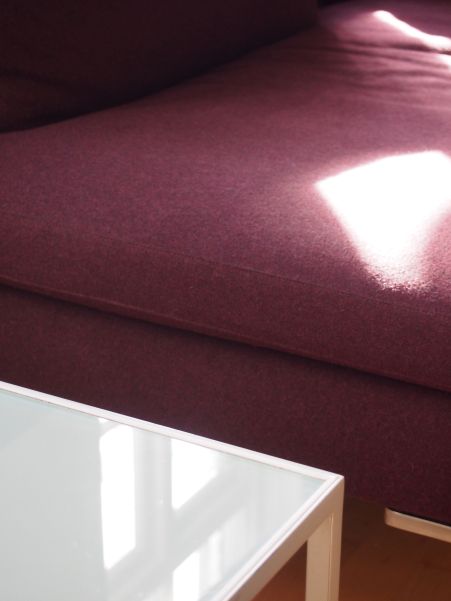
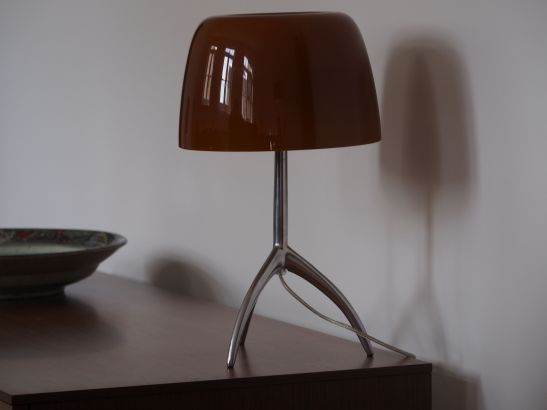
A good home should wrap around you like a second skin, it should envelop you and fit like a glove. It is both a haven from others, and a place where you allow them a little further into your inner life. It is also a creative space in its own right – where we can be amateur architects, play with space, materials, texture and light, to create something that is both nurturing and restorative – and at what point might such a thing be more needed than now?

OLYMPUS DIGITAL CAMERA

Perhaps I’m a little extreme (while I was unwell, I completed a diploma in interior design – it’s an interest that has always been there…). I’m aware that many others don’t seem to perceive, or feel about, their homes in this way. For quite a few, home seems to be solely a functional space, where they store worldly clobber and hang out when they can’t find anywhere better to go. Very often, this seems to be reflected in the attention (or lack of it) given to both aesthetics and organisation.

I’m tempted to wonder at the extent to which this is a wider cultural expression of a nation that perhaps lacks the creative spark of certain others, or which is inhibited from expressing itself by the near-universal British fear of social disapprobation. For rarely have I seen on the continent some of the utter shambles and aesthetic nightmares in which quite a few Britons seem to live. Pride in one’s home still seems socially acceptable there, without the accusation of social climbing.

A short while ago, the men who delivered a new appliance couldn’t resist showing me the pictures they had been required to take as evidence for their failure to install one in another house. I can’t begin to describe the appalling, insanitary horror displayed in those photos, apparently belonging to a “perfectly normal guy”, as they described him. What was happening there? Maybe deeply cerebral types simply don’t have enough spare head-space to pay attention to their surroundings – but I have always found the opposite: calming and comfortable surroundings are a great stimulus to creativity – simply because there are fewer jarring distractions.

I’m perhaps fortunate in that my “significant other” and I don’t have to deal with serious conflicts of taste or vision when it comes to what we want our home to be. It’s also been helpful that I am afflicted by neither macho hang-ups about being interested in home nor the less macho inability to realise and fix most things here myself. Our home is not prestigious: a two-bedroom apartment in an old school. It perhaps it is a little unconventional even for just being that; on occasions we have been gently ribbed for having produced a ‘show home’ – but it is not.

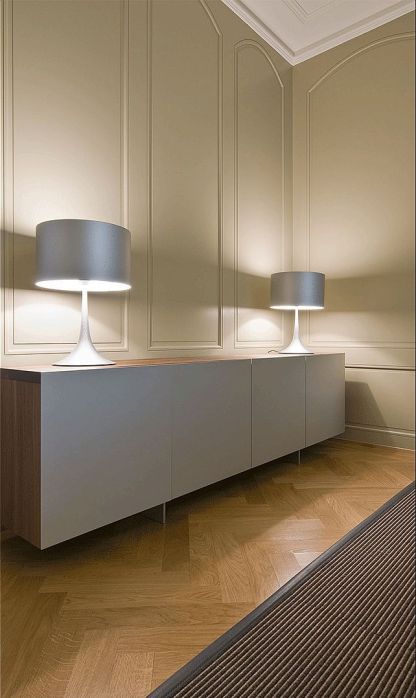
We happen to love a modern aesthetic that in this country (wrongly) seems associated with aspirational wealth. What we have done was entirely for our own private pleasure, no matter what others think – and it remains as calm when we are alone here as when we have visitors. Even a brief investigation of the origins of the modernist movement will show that it was founded in principles that were far-distant from the associations with affluence that it seems to have acquired.

It is true that we appreciate fine materials, design and workmanship. But it is a cultural error to correlate that with social one-upmanship. Such an appreciation does not always come with a high salary attached. It is certainly harder to achieve with more modest means – but it is possible precisely by paring back the aesthetic, reducing the amount of “stuff” one needs, and sinking one’s funds into a few signature pieces such as have lasted us for decades.

OLYMPUS DIGITAL CAMERA

Doing much oneself can help, too: in what was a shell when we bought it, I laid the wooden floor, and fitted out two bathrooms and a kitchen myself. The doing of it is often less daunting than the fear of trying.

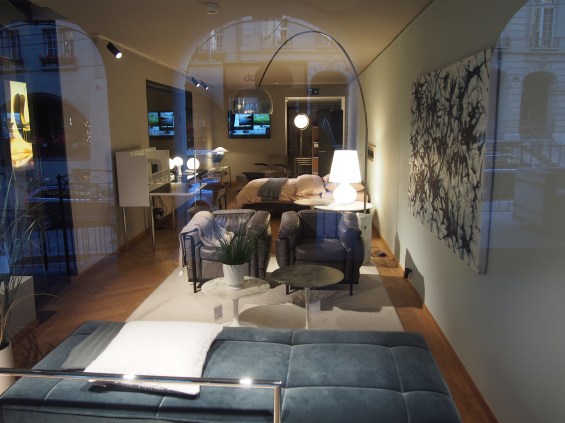
Our home is also a form of philosophical self-expression – in our case the belief that Mies was right, and Less really is More. It is also an expression of our Europeanism: much of what is, and happens, here is a product of our exposure to the domestic and wider interior tastes of many countries. Back in the Nineties I was already doing this, having been utterly bowled over by the styles on show in France, Switzerland and Italy, where simple modernism has never been seen as the eccentricity it was until fairly recently in Britain.

OLYMPUS DIGITAL CAMERA
Inspiration in a Bernese showroom.


I still remember being stunned by the discovery of a boldly modern, kingfisher-blue Bulthaup kitchen installed in the Belle Epoque interior of the Chateau de Vidy in Lausanne, now part of the IOC headquarters and since refurbished again. I learned that there is more to homeliness than reproduction Victoriana or Georgian pastiche or ancient cottagey-ness.

cdv
The current incarnation of the Chateau de Vidy, IOC headquarters, Lausanne.

For many years, I was my own personal importer of homewares from those countries, a situation that has now thankfully changed: another way in which this country has become unknowingly more European.

So for me, staying at home is no punishment. The modern home is equipped with everything needed to reach the world beyond, to allow it in on our own terms. It is the headquarters of our own lives. Our corporate selves might yearn for a beneficent call to visit HQ. But at home, the Chief Exec is us – and the HQ is ours, not theirs. What more could you want?

Might Now be a good time to pay renewed attention to your own headquarters?

Opinion & Thought, Politics and current affairs

Cannon fodder

716ZNk5JnxL

Now is hardly the time to be preoccupied by grumbles about the state of the nation. Emergencies such as the coronavirus should ideally see us setting aside our other differences and working for the common good. (I am very irritated by the email feeds that I subscribe to, which have continued to make political capital out of the situation).

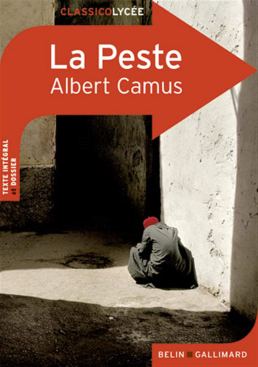
However, it is also true that extreme circumstances often reveal stark realities about the way we live. Albert Camus used epidemic in his major work La Peste for precisely this purpose: the way in which various characters react in extremis speaks volumes about the real nature of the human condition.

On the one hand, locally there have been any number of small gestures of community-spirited kindness – while on the other, certain landlords elsewhere apparently intend to evict tenants who can’t pay their rent, come what may; this reflects a depressingly callous side of human nature. (Since I first drafted this, the government has said it will make such actions illegal – but the intent nonetheless remains…)

What is true of individuals is, it seems, also true of nations. The respective responses of various countries to a broadly common threat is quite revealing about the mindset of those who run them, not to say their general level of competence. To be fair, we should overlay on that the relative position of those countries in relation to the development of the pandemic. Those who were hit first can hardly be blamed for making mistakes that experience may allow others to avoid.

But it still informative to note the extent to which some nations have adopted a hawkish approach, while others have been towards the ‘dove’ end of the spectrum; this perhaps reflects varying perspectives on, and levels of compassion towards, humanity in general. And once again, Blighty seems to have been firmly in the hawkish camp. Boris Johnson’s early comments on national policy gave the impression that losses amongst the ‘ordinary ranks’ were to be considered acceptable, or at least unavoidable, collateral damage. Only later, when this was reported negatively, were slightly softer messages forthcoming.

His choice of words is also informative: he considers dealing with a virus to be a “war” in which we are all to be conscripts. It is not very different from the imagery he used for Brexit. It betrays a confrontational, winner-and-loser mentality that is of questionable utility – unless you happen to consider yourself a habitual winner, which Johnson of course does.

A salutary point, however, is that some of the countries that we have become accustomed to praising for their tolerance, progressiveness and democracy, have been quicker than the U.K. to impose conditions not too far removed from martial law. Likewise, Britain’s accursed island status has been thrown into sharp relief: on the one hand the arrival of the virus has shown the idiocy of believing that we really can pull up a drawbridge on the world – but on the other, it is perhaps true that with closed borders, islands and other remoter areas really are somewhat shielded from the risks of a wholesale pandemic that could more easily sweep across a continent.

Perhaps more important, though, is the vision with which a country is run. Are those others who have imposed draconian measures really doing so because of their underlying authoritarianism, or just a more realistic appraisal of what is in their people’s best interest? At least it appears that such policies are consistently and equally applied; I can’t help but wonder whether the gradualist British approach is designed to leave doors ajar for those who have the means to help themselves first…

I don’t subscribe to the view that the ruling class of this country is willfully neglectful of the rest of the nation. It’s more subtle than that – and Johnson is only the particularly buffoonish tip of a much larger establishment iceberg: one that is still raised to think in terms of social hierarchy, “natural orders” and its own self-evident preeminence. It can’t help it, any more than the rest of us can help having our basic assumptions – but it does have further-reaching consequences.

It is an attitude that propagates hawkishness, that makes it easy to consider the ‘ranks’ as lesser human beings, which in turn justifies in its own mind a hierarchical approach to how people are treated even in times of emergency. The key thing (just as it was in national nuclear-strike strategy) is to protect those who are ‘pivotal’  to the perpetuation of the existing order – who just happen, of course, largely to belong to one particular socio-economic stratum. Is this just the privileged protecting themselves again – or (given that many such people are senior decision-makers) a necessary strategy for continued societal functioning? It perhaps shows that in the minds of such people, the continued existence of the British State is more important in itself than that of the majority of the individuals who comprise it: an attitude that is a hangover of Empire if ever there was one.

This mindset is doing significant and increasing damage to the fabric of British society. It can be summed up as Entitlement. From their earliest days, those who are born into this segment of society is taught to assume as a ‘given’ that their destiny is assured – and that that destiny is one of privilege.

By means of accent, lineage, connections, high-paid employment, inherited wealth and education, they continue to sequester the best that this nation has to offer for their own kind, before the hoi polloi has a chance even to get near it.  Their crowning achievement is to have persuaded the rest that this is indeed a natural order, in which the principle function of the lower orders is to fall on their swords when necessary in order to perpetuate the good life for those at the top. This is why it shows so little concern for the impact of adverse events on the population at large: it really does consider those other lives to be of lesser value than its own.

It is an intractable problem. As one such person said to me some time ago: “There is so little you can do with the plebs. They are so hopeless, so basic, and with such low expectations that you really can’t consider them to be much more than cannon-fodder”.

Sadly, there is an element of truth in this. Having been working again with young people, it is all too evident that significant numbers come from backgrounds, and have expectations, that are very likely perpetuate poor-quality lives. It is extremely difficult to raise these young people’s expectations, or to persuade them that there are alternative trajectories for their lives to the ones that, by their late teens, they already seem locked into. Pointing out that there are others having very different experiences seems to do little good: they have already bought into the mindset that certain things are “not for the likes of me”. Such attitudes become an unwitting collaborator in keeping the so-called elite where it believes it belongs – and experience suggests that they really are a particularly extreme handicap in British society compared with elsewhere in Europe.

Yet when one is faced with the reality of the such starkly contrasting lives, it becomes quite easy to understand Holly Martins’ view in The Third Man, that most humans are little different from ants, whose ceasing to exist would make almost no difference. Except that its exploitation could help bulwark the higher orders further.

But it is wrong.

It is wrong in a way whose understanding of why is perhaps beyond those whose entire existence is predicated on their belief in their own preeminence. To begin with, you have to un-learn that ingrained assumption that some humans are naturally superior to others. I don’t believe that Johnson and his ilk spend their everyday lives consciously thinking and acting on this – but it is so utterly impregnated in their very existence that they probably can’t help themselves. It doesn’t help that they live and work in a bubble that thrives on such groupthink. Everything about their lives insulates them from the rest of society. This is probably why Johnson seems so little troubled by the criticism radiating from large parts of the rest of society: he simply doesn’t see that the same rules need apply to his type, nor that he need be troubled by their outrage. Part of his privilege is to be able to behave as he pleases, and answer to no one. And after all, the nation has just elected him by a landslide, hasn’t it?

But once you have un-learned the superiority complex of the ruling classes, one thing becomes apparent: it is not that everyone is important – but that in the face of a pandemic, no one is. And once you have accepted that, it becomes very much easier to understand why egalitarianism really is the only logical response – making sure that everyone has the best stab at this life that they can, for there are still so many things about this life that we cannot control that we really do need to optimise those that we can.

The hierarchy that still bedevils every facet of this country, even down to its pandemic management, fails to understand one thing: it is not a survivor of the brutishness of so much of national life, so much as its source. Those (supposedly) lower British orders need not be any coarser than they are in other countries; what makes them so is their knowing lack of opportunity and access to the more elevating aspects of life. And this has primarily been caused by the hoarding tendencies of those with the means to do so: the higher orders are not the refugees from baseness that they seem to believe: they are its cause.

In Italy, residents of the big apartment blocks have responded to their incarceration by singing on their balconies; in Britain, the media seems to be responding to a similar scenario by reminding the nation how much television there is to watch. This is the extent to which such disparities in everyday life-opportunity infiltrate national psyches. I have had to work hard to persuade my teenage students that there is plenty they could do to stop themselves getting bored in the coming months. But they are mostly not that resourceful; British society encourages them to be otherwise.

Life today is in many ways far removed from Hobbes’ view of it as “nasty, brutish – and short”. But we still have far to go – and it is perhaps it is during extreme times, whether Brexit or the pandemic that this is exposed. Some people are starting to describe these things as a wake-up call. Perhaps the test of this theory will be whether those who increasingly run the show use it to bulwark their own positions, or finally to wake up to another reality. After all, the really essential workers at times like this are the ones doing the most basic but essential work – and maybe we need reminding of that fact.

Perhaps the most likely eventuality is that the present economic model – which (with education) is the prime mechanism for perpetuating privilege – may simply fail to cope with this emergency; the fact that Johnson has already hinted at a universal basic income and eviction controls may be a sign that realities are being faced that might otherwise not have been.

On the face of it, a virus does not discriminate between people according to their wealth or social status – but the ability (and willingness) of the elites to protect themselves at others’ expense will no doubt – as Camus pointed out – speak volumes.