Opinion & Thought

The Passeggiata Paradox

The first of several pieces on personal expression, social pressure and a search for quality.

“You two look smart. Big occasion?”

“We’re just going for the newspaper”, we replied.

The reaction was uncertain – but as a compliment seemed to have been paid, it would have been churlish to be churlish. Yet expectations of normal behaviour had clearly been transgressed…

There is, they say, no accounting for taste. But that’s not true: if anything, there is too much accounting for taste. Trying to figure out what makes people tick is perhaps too complex to fathom – in particular, the dynamic between a simple visible expression of personal preference and the reaction that others have to it. Individual these situations may be, but they bear on us all, affecting what we choose to do – and what wider society will accept our doing.

The passeggiata only works because of the collective will. One person putting on their glad-rags and going for a walk alone of an evening just doesn’t work in the same way. We know, we’ve tried. No one actively prevents us, but the critical mass just isn’t there when everyone else is indoors, glued to the Box. Without them, our passeggiata cannot exist. It is not only individual decisions but also collective ones that determine (even by default) what matters and what does not, what can or cannot happen, even what an individual can easily do. Some things somehow become considered normal, others oddly deviant.

While this might seem trivial, behind it is a complex dynamic around the values and attitudes that shape society, and the serious matter of the ability of individuals and groups within it genuinely to live as they choose. Choices are often straightforward for the mainstream – but for those who step outside it, headway can be difficult enough without the indifference, let alone condemnation, of the majority to make it worse.

There may be more at stake than meets the eye: not all situations are equally benign for the human condition, and societies that find a good balance between belonging and individual free expression are perhaps healthier and happier than more conformist or repressive ones. Key to it is the social interaction that all humans engage in constantly – and the effects that this has on their behaviours. The Passeggiata Paradox, then, is simply my shorthand for the possibly beneficial things that never come to pass, even for those who actively want them, simply because of mass ignorance or indifference. What are we missing, because of it?

In the days when recorded-music shops were more of a thing than they are now, the same issue could be seen at work in the shelf-space given to different types of music. Most was given over to the many sub-divisions of commercial ‘popular’ entertainment-noise that may or may not have musical merit as opposed to being a vicarious route to Celebrity. Other types of music: classical, jazz, folk, early music and so on, were usually relegated to the further reaches with a just a few bays between them, despite the fact that each is probably just as capable of filling an entire shop. (R.I.P. Coda Music, Edinburgh). Thus, one thing became the self-perpetuating ‘norm’ at the expense of (at least) equally deserving others: the interests of one group: “the majority”(?) unwittingly given almost total precedence over others.

The reason for such inequality is a collusion between the herd instinct that assumes that most people would rather seek safety in the crowd than do anything much actively to assert their individuality, and the unregulated commercial interests whom it suits to encourage it to be so. Tribalism is hard-wired into our species; I suppose it saves an amount of thought – and making social errors. Of course, business is entirely happy with this, since it is more profitable to shift large quantities of homogenised lowest-common-denominator to an undemanding mass-market, than to respond to a diverse range of individual preferences. Done skilfully, you can even persuade them that they are still making individual distinctions…

On the rare occasion that the mainstream’s attention is drawn to something more specialist, it will normally be commercialised to make it more “accessible” (read marketable and mass-producible) – thereby losing many of whatever distinctive qualities it had in the first place. Step up, amongst others, almost every themed chain restaurant or cafe in the country… What you get in such places is rarely more than a pastiche.

The habitual solution for those who cannot accept this, has been to resort to specialist providers. But these are often of limited viability (especially when ‘helped’ out of business by the aggressive tactics of the big boys) and frequently beyond the geographical reach of many. The internet may be the saviour of many such minority concerns.

More concerning is the ghettoisation of niche groups that brings the risk of misunderstanding and conflict, and certainly diminishes the scope for crossover and mutual discovery. There are many examples of minorities for whom the consequences have been much more serious than over their choice of music.

One can argue that the freedom with which I supposedly make my choices is precisely the same that others have, to make different ones – but this ignores the fact that one person’s freedom can easily trump another’s.  It is also at odds with my persistent doubts that many personal choices are really anything of the sort. How else can one explain the dominance, in a nation of millions of individual sentient minds, of the overwhelming homogeneity of mainstream taste? Conversation has yet to convince me that many people bring much real thought or conviction to these things and more often just take the line of least resistance, conveniently provided by ‘convention’ – and the mass-market retailers. It might not matter if it did less harm to the interests of the few who think harder…

From our early years we learn that people’s actions have social meaning. It is a fundamental of human psychology to signal and infer identity. Today, this is complex: what and where people eat or purchase, how they dress, what they read and listen to, where they travel, how they furnish their homes, with whom they associate, whom they marry, where they holiday, and pretty much all stops between: everything can be seen as a form of social statement. We can’t avoid it since the message is ultimately in the eye of the beholder, not the sender. Despite (or more likely because of) that, remaining in the herd and playing-safe is a strong driver of behaviour.

This is the logic behind chain retailing: that which is numerically dominant thrives and that which is not, withers. It is the law of the market society – but hardly a recipe for diversity. It doesn’t matter whether what is popular has any inherent merit: majority buy-in is all that counts. But there is a weakness: this can be manipulated. Fashions and trends are rarely really determined as much by popular demand as it seems, but by what suppliers decide they are going to provide. We can’t easily choose what is not available.

Herd behaviour can become a form of oppression of those who have different ideas: either you conform, or your “unviable” needs go unmet. The numbers game is intimidating, and it takes a determined individual to swim for long against a strong social or economic current. It is not helped by the fact that despite their numerical advantage, herds often do not tolerate deviants, being more inclined to drive them out; it is no coincidence that victims of bullying are often those perceived as being “different”. It is true that some people choose to be different precisely to send a certain message – and they may thrive on the adverse reactions they get. But there are others who neither want this, nor indeed the only alternative of going it alone. They simply need a different herd from the only one on offer.

Awareness of “inclusiveness” has grown in recent times – but this is curious and perhaps self-defeating. True inclusiveness is not a matter of low-level homogenisation, but tolerance, pluralism and perhaps cross-fertilisation. Yet society in effect chooses which minorities it will ‘include’ and which it will ignore – which is not inclusiveness at all. Yet there is a contradiction here too: such pluralism might also seem precisely the opposite of the kind of cultural cohesion required to make the passeggiata and other collective experiences work. How to reconcile these opposing forces?

My experience suggests that more egalitarian societies, or those lacking a history of rigid hierarchy, are less socially competitive, and therefore less troubled by those who step outside their norms – or by status-signalling more generally. Or perhaps it is just that their norms are more loosely defined so that people have less need to step outside them in the first place. Some limits to individual freedom are always necessary to avoid breaching the boundaries of legality – but some societies self-impose constraints of social convention or commercial pressure which are much narrower than that.

Despite its self-delusion, Britain is still strongly socially stratified. One cannot grow up here without absorbing an awareness that judgements may be inferred about one’s standing – and worse still, aspirations – from almost everything one does. Wearing a certain tie – or a school uniform – is often a badge of social differentiation rather than anything of much beauty. In Britain, going the opera is likely seen as a social statement whereas in Italy it is more likely to be accepted as a musical choice that cuts across social groups. The minor misunderstanding at the start of this piece derived from an assumption that we were making a deliberate social statement rather than reflecting an innocent personal preference; it was not the first time.

Personal choices and social ambitions are indeed easily confused, as their means of expression can appear identical – but the motives are very different: one seeks intrinsic pleasure, the other extrinsic advantage. Yet it can be extremely difficult to distinguish them, especially when one has been raised in a society that routinely does the opposite.

In this way, we arrive at a situation where it becomes intimidating for individuals to express their real preferences for fear of disapproval or misunderstanding; all the more so when judgements are attached not just to one’s personal choices, but implicitly even to one’s worth as a human being. This may sound extreme, but it is not such a great step in a society where some people are still implicitly considered inherently socially superior to others.

I do not have an insider’s view of the passeggiata: I have only ever participated as a visitor. But as far as I can see, it is not the social straitjacket that it might appear. There is little compulsion to take part. But what it does do is present an opportunity for people to see and be seen if they so wish. Their motives for doing so may be complex but are not, I suspect, primarily avaricious. For a start it takes place in a society where creative, aesthetic self-expression is given greater approval than in Britain; where it may be possible to appreciate (or disapprove of) behaviours and choices without attaching the heavy social condemnation as well. I have noticed the diversity that results – for within that social framework exists the possibility for wide individual interpretation. Sometimes things that appear to constrain freedom have the opposite effect – and vice versa.

The trade-off between the individual and the collective is not the same everywhere; there is no single “right” answer, even though some solutions may be more benign than others. Neither, despite its conservatism, is the UK uniquely cursed: for example, the beacon of social liberalism that is Denmark has also been criticised as a subtly conformist form of hell – and the anarchy of the free-for-all has clear downsides too… Perhaps conservative cultures are more likely to pass social judgements than others, but even in Italy, for all the strong currents of individual flamboyance, there co-exists a distinct thread of social conservatism.

Norms change over time: when everyone else is wearing jeans and hoodies, it is the necktie-wearer who is the rebel.  The best trade-off is perhaps where people freely make their own choices, but still choose to participate because they do not feel unduly constrained by doing so. Only when people can participate reasonably on their own terms will they do so willingly and unselfconsciously. The key to this is tolerance and understanding from everyone else.

The problem for the British (and nations like them) is that they do not recognise their own conformism: it is hidden by the fact that so few step outside it.  When it does happen, it is often in violent or destructive ways that seem the only way to make it register: the conformity of rebellion by getting wrecked every Friday night – which is not rebellion at all…

It is reinforced by those commercial interests: it is easier to appeal to people’s groupthink and snobbery than their individuality. Products are advertised on their supposed exclusivity or sophistication rather than their intrinsic appeal. Even when that depends on an inverted form of snobbery, the mechanism is the same. And life-events such as weddings are widely planned primarily for their social impact, sometimes at the cost of aesthetic crassness. And of course, it is precisely in such circumstances that the two are most hopelessly confused, for a wedding remains perhaps the worst place to make a social faux pas.

The dominance of mainstream culture makes it harder for those who operate by different criteria to live and act the way they choose, without fear of misunderstanding, or worse. It reaches its censorious head when attitudes balkanise into prejudice and hostility.

But we should perhaps remember that all people have their foibles, and therefore it is perhaps unwise not to accommodate minorities: at some point, we may find that the minority is not others: it is Us.
Sartoria

A Tale of Two Tailors

I have long hoped that somewhere in Italy there must be makers of good quality clothes for people who like to dress well but can’t or won’t pay designer prices. But I had never found any – until recently. Even more than in Britain, there is a hole where the middle-market should be. Online searches reveal low-priced disposable fashion – and then the top end. The difference lies in the proportions of the two: less of the former, and more of the latter – at least when it comes to selling online. Classic style is hardly the dominant concern in modern Italy that the rest of the world seems to believe: as the clip below shows, there are plenty who default to the international uniform of jeans/chinos/cargo pants/trainers (and they are not all tourists…), but equally, one still sees more people who clearly do fare la bella figura, certainly compared with the U.K., where it’s no longer done to dress ‘up’ except at weddings.

Maybe we’re just not seeing the whole range. It would not surprise me if the Italian online clothing market is a mere fraction of its British equivalent – and much of what there is seems aimed at high-spending Americans. Whatever the style, in Italy, sartorial purchases are perhaps too important to be made so lightly…

There are department stores and the like: La Rinascente is perhaps the best known – but generally, they seem nowhere near as dominant as in the UK. People there seem more likely to buy from the many small retailers, certainly if they want anything other than the usual globalised fare.

An acquaintance in the trade confirmed my impressions of the top end: the tailors who make Italian menswear the envy of the world seem quite content to continue charging premium prices and see no need to head downmarket just to please we less affluent punters. That would seem more condescending that it is, were it not for the fact that plenty of Italian men seem prepared to spend amounts on clothes that would bring tears to the eyes of the average British bloke – and to be fair, I see no reason why skilled labour should come cheap just to satisfy the likes of me. But this still leaves a problem for those of us who admire the style without being able to spare £950 for the exquisite Canali jacket I saw in a shop window a few days ago…

I’ve tried every which way to solve this puzzle. There are plenty of British clothiers who buy (and flaunt) their Italian fabrics. Moss Bros, for example, offer fabrics from Cerruti, Zegna, Barberis and more – but the problem comes when they get their scissors out: the items they produce are, well, just dull… They lack the ‘edge’ that makes Italian tailoring work. Sadly, the same largely goes for Tyrwhitt. I suspect that such chain-retailers are hardly buying the best quality to begin with: anything so long as they can add a price-hiking label – and they certainly don’t indulge in the time-consuming niceties that give Italian clothing its distinctive appeal. I suppose they would argue there’s no demand for it in this country. But then, they often offer such items only in sizes that would fit a skinny teenager…

A new discovery was Pini Parma, founded by Thomas Pini, an Italian living in Paris. His ready-to-wear clothes are beautiful, and very good value (though still not cheap) – but once again, they are only offered in a limited size range.

I have tried a couple of the growing number of online made-to-measure services, many being based in India and offering (not?) surprisingly low prices. Despite some ethical concerns, I concluded that I might as well cut out the middlemen and pay the makers direct: at least that way, I have a little knowledge of the source. Some are using Italian fabrics, often from previous seasons or ends of rolls to keep the overheads low, and they do allow the buyer to customise items, such that quasi-Italian style might be achievable. I’ve now bought a few pairs of trousers this way over the years: they have all been well-enough made, the fabrics are indeed good, and – importantly – the fit is pleasing. What’s more, they solve the problem of the somewhat more middle-aged north European size that I need. The styling, however – while acceptable – is clearly not done with an Italian eye…

It is of course true that one generally gets what one pays for; the bargain end of the spectrum tends to have synthetics in the mix, which almost always means garments will lose their shape quickly. Pretty much what you would get from a high-street product. Better to stick to natural fibres – though it is still possible to acquire a decent pair of made-to-measure trousers for not very much more than the price of a better high-street pair – and a few weeks’ wait.

This summer, however, having foregone a holiday for the second year in a row, I decided to push the boat out and see what they could do with a higher-quality fabric from a named Italian mill. An order was duly placed with Studio Suits – a company in Mumbai about which I have seen mixed reviews but have never personally had any issues.

A few days later, before these had arrived, I chanced upon the website of Barocco Italia – which describes itself as a digital platform dedicated to supporting Italian artisans and widening their markets. It is in effect a broker for multiple smaller manufacturers – precisely what I had been seeking for so long. Some of the prices are still pretty eye-watering but surprisingly, less so for their trousers: still more than many would consider paying in the U.K., but not for once, utterly out of the question. We need to remember that we are buying custom-made, hand-sewn craftsmanship here… I decided to live dangerously and so also ordered a pair of trousers through Barocco from Neapolitan tailor Massimo Corrado. Each maker has a biog. on the Barocco website. Having spent time working for the big labels, some years ago, Corrado set up on his own: just what I was looking for. Again, measurements were dispatched, and the order duly confirmed.

Both pairs of trousers cost within a few pounds of each other – about double the price of a better high-street pair – and both arrived within a few days of each other. A good opportunity to see how the respective makers compared.

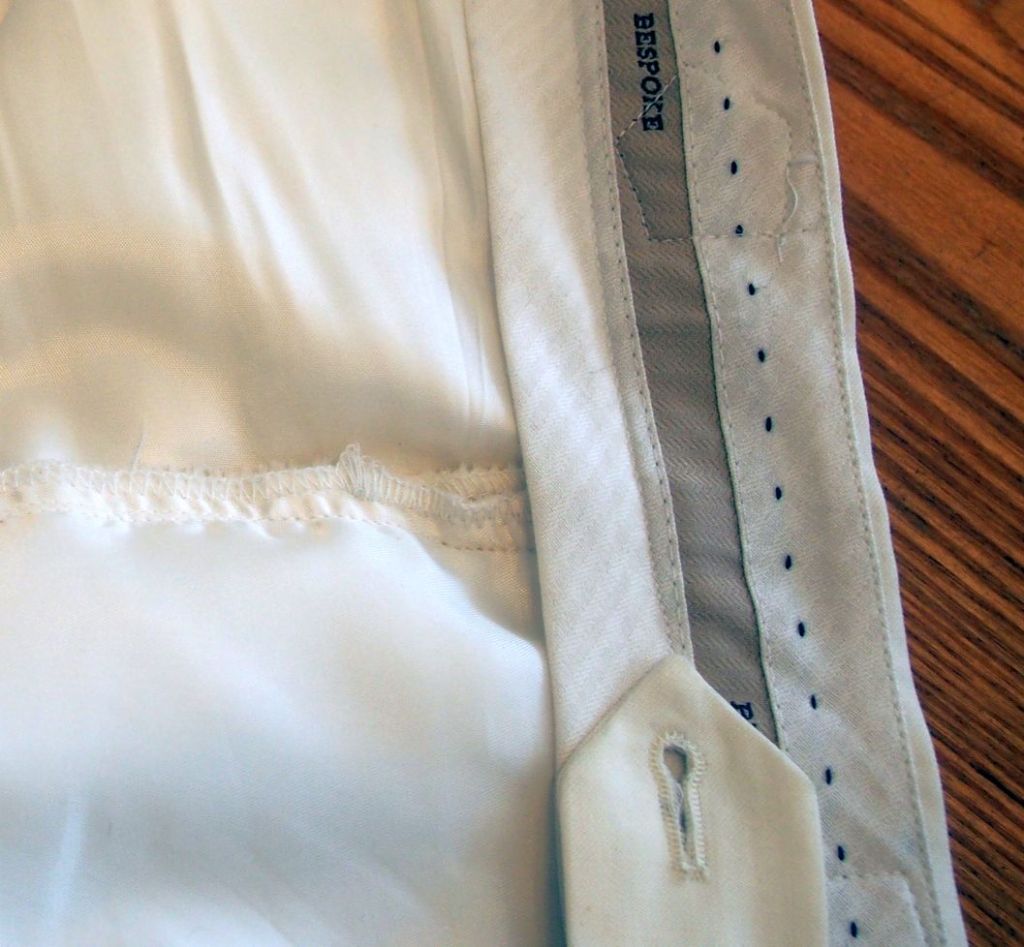
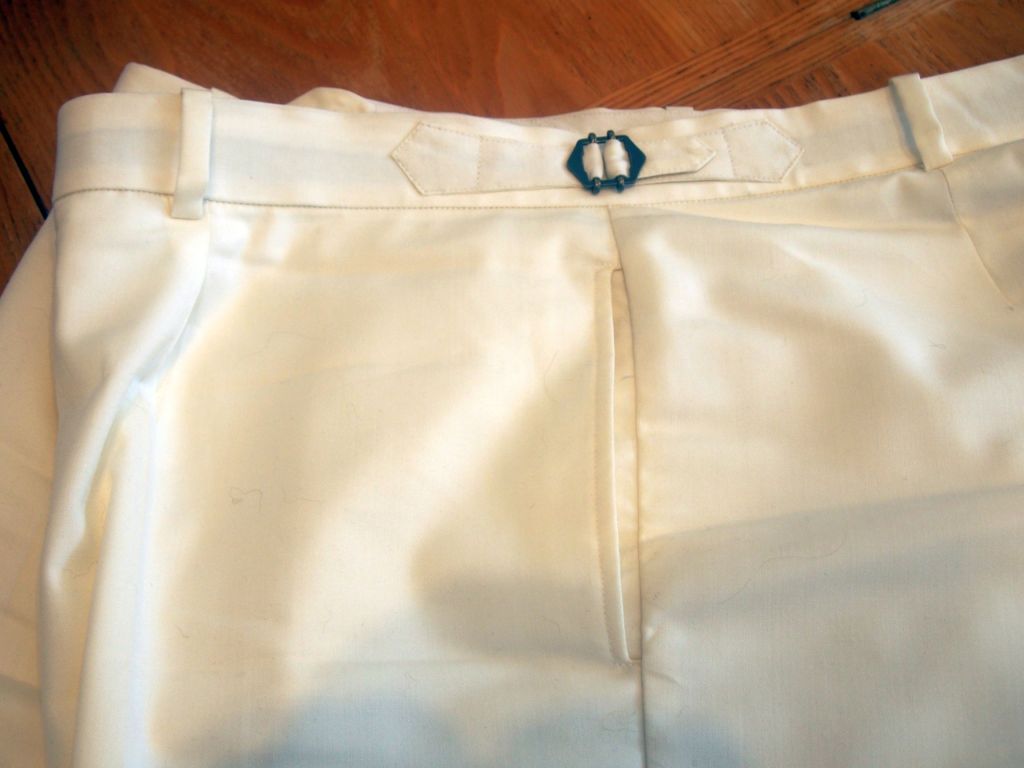
The Indian pair arrived first. Made from super-110 ivory summer wool (though it feels finer), they are indeed a very good item. The fabric by Reda is excellent, almost crease-free. They arrived soft-packed, and needed a careful press, but fit well, have a decent half-lining, feel robust, and left me wondering whether it would be possible for the Italians to do better…

The Indian pair

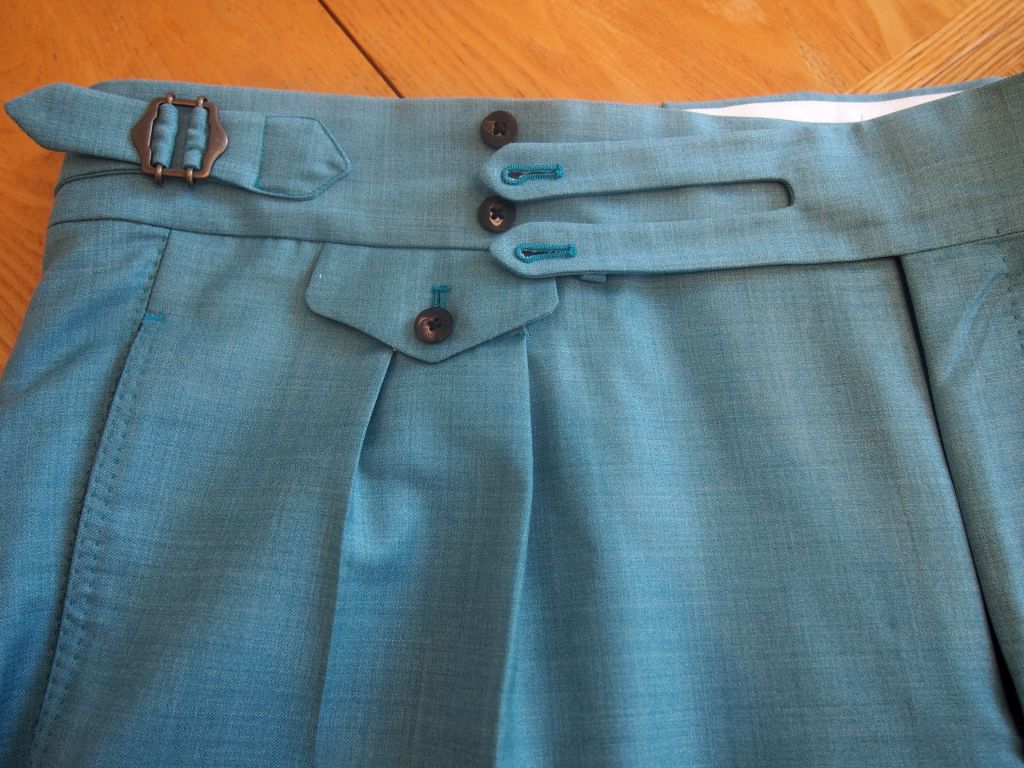
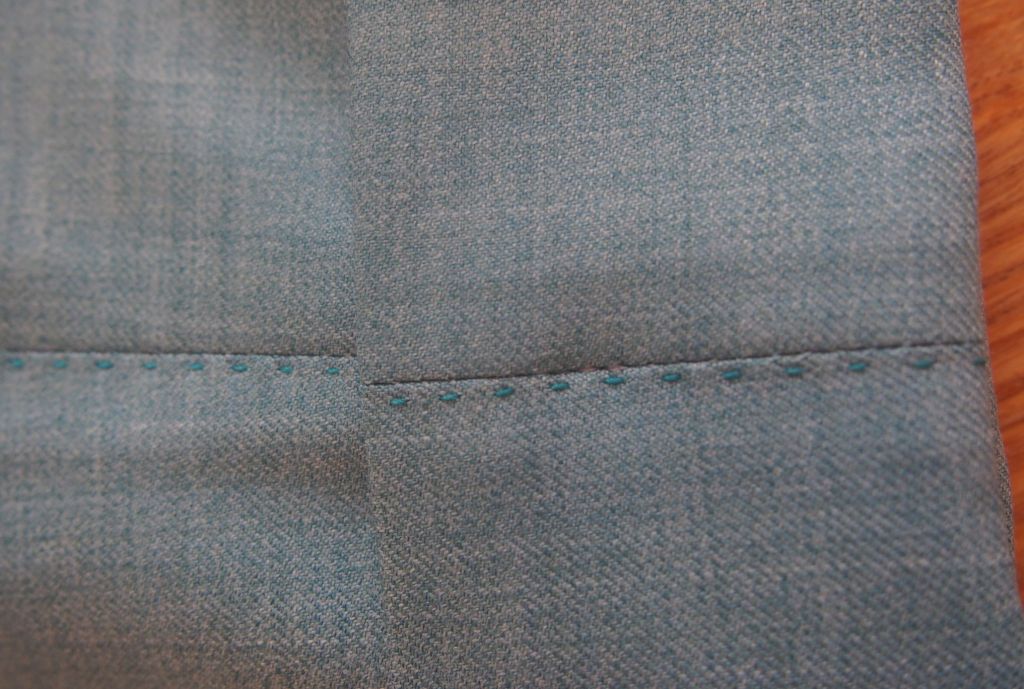
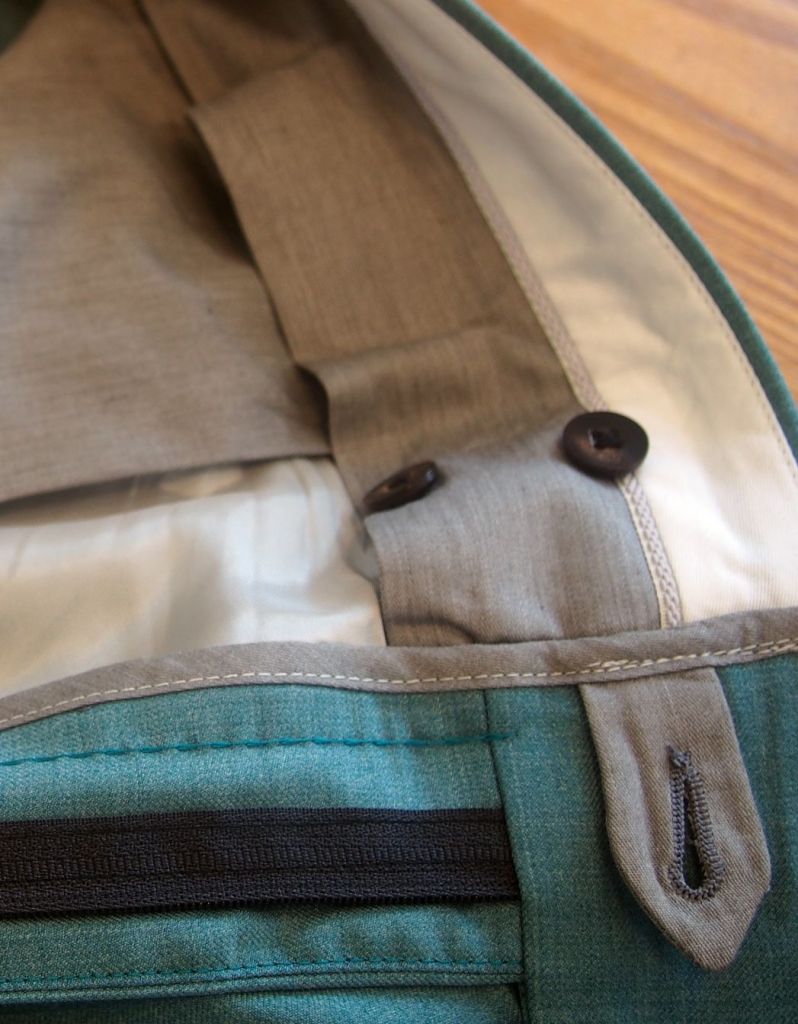
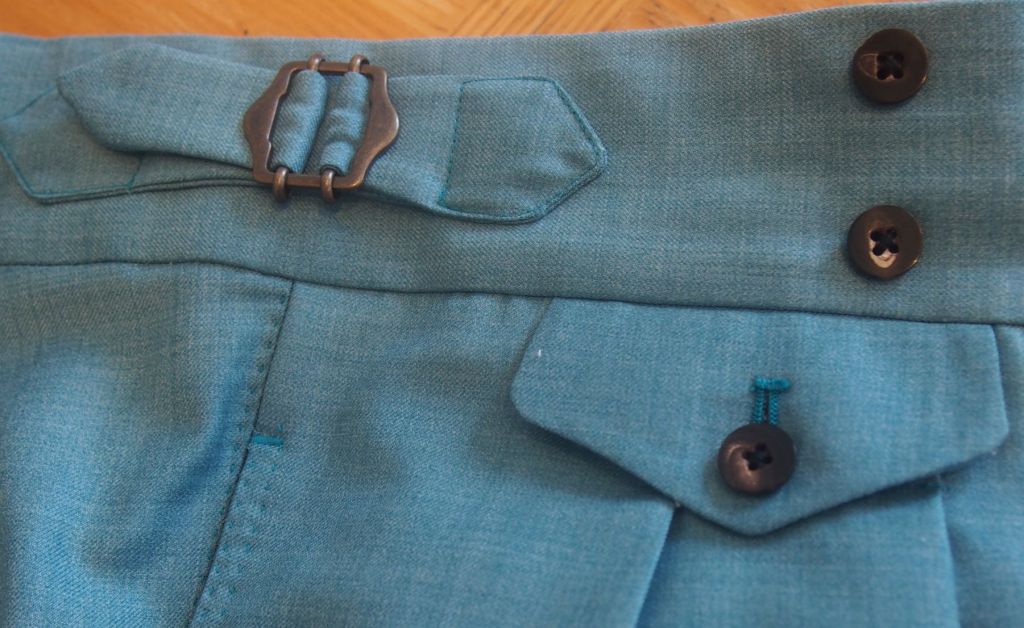
The Italian pair arrived a few days later, in a carboard carton and nicely wrapped in tissue. They didn’t need a press. In this case they are in super-150 summer wool, something I have not previously come across in person – amazingly fine. I had also decided to push my limits a little and opt for pale turquoise, which turned out to be more intensely err, Mediterranean than expected. A lovely colour – most definitely not your standard-issue British dull…

The Italian pair

As so often, seeing really is believing: only once you have experienced excellence does the merely good become clear. The quality of the cutting and stitching, the attention to finish, details such as horn buttons, really does set the Italian pair a cut above. These fine fabrics must be difficult to work with – almost like sewing with silk. The Indian pair had some evidence of slight puckering on the leg seams, and the stitching is just not as carefully done – nothing I am not entirely happy to live with – but if we are judging these items on sheer craftsmanship, then it becomes immediately apparent why the Neapolitan tailors have the exceptional reputation that they do. Strangely, from exactly the same measurements, the Italian pair presents a distinctly slimmer and (hopefully) more flattering cut – not such that they don’t fit – snugly – but it’s rather surprising that there is so much difference. I don’t know enough about the cutting processes to understand how this comes about.

When it comes to practicality, time will tell. I don’t really do “best” clothes – every day is good enough to dress well for. These will experience regular if restrained summer use (not painting the house, obviously…). I will wait and see whether that slim Italian cut – which is clearly an integral part of the character – really does go the distance when it comes to wear and seam-stretch. I suspect this may be where the Indian-made pair will have an edge. Made-to-measure is definitely the way forward for those of us who – while hardly of Pavarotti-like proportions – do have difficulty with the increasing prevalence of slim and extra-slim cuts on men’s clothing even in the U.K. (It seems as though many retailers have forgotten that men over 25 still exist, let alone that the national average body size is increasing… And if that’s perplexing here, it is doubly so in Italy where fits tend to be tighter, since there are plenty of older Italian men who are not exactly whippet-like either…)

The customer service – almost ‘e-personal’ – that I received from Barroco was also excellent: they are clearly on a mission – and their English is much better than my Italian. Having enquired about post-Brexit shipping issues, I was informed that in the event of unexpected duties being payable (they weren’t) a refund to the equivalent amount would be forthcoming.

The summer wardrobe emergency has now been well and truly addressed; as I’ve said before, I purchase rarely but (hopefully) well. In due course, I shall go back to Barroco – for ultimately the bona fide article has to win out here – but perhaps be a little more generous with the measurements I provide. When the chips are down, those high reputations exist for a reason…

Food, Opinion & Thought

It’s a scoop!

“I thought you were a kept man!” my musical friend teased, at the news of my end-of-year workload. Well, I suppose in some ways I am, given that it is my wife who has the more successful career and who still works full time, albeit now remotely from home.

After a full-on career of my own, over more than three decades, it is a frustrating fact that the experiences of the past five years seem to have left me with limits to amount I can take on – not that I don’t keep trying…

But I have inadvertently had the opportunity to learn an important lesson, as discussed in a previous post: the capacity of work to rob you of many of life’s other experiences. Working only part-time, I have discovered what happens when you simply have sufficient time to live appreciatively: when one is no longer forced to rush from one end of the day to the other, one can savour each experience more fully. Were it not for the periods when the dark clouds still descend, it is a big improvement.

This, I think, is what the much-discussed Mindfulness is really about – the ability to appreciate time as it unfolds, rather than being constantly engaged in the fuzzy anticipation of what will happen next, which has the propensity to make you less aware of what is actually happening now. It is certainly easier done when you are not constantly rushing from pillar to post.

Time can be a luxury in itself, and one that I have come to appreciate greatly. I’m well aware that this could easily slip over into mere self-indulgence, hence work and other commitments definitely have their place in order to keep the general perspective outward-looking – but as for the balance, then maybe there is still something to be learned more generally.

It may seem a large leap from such thoughts to the simple matter of serving coffee – but it is precisely in such details that the benefits can be found. We are now in the fortunate position of being able to have our mid-morning break together – and this has come to mean a cappuccino made on our trusty old Gaggia and drunk from proper china cups rather than a chipped mug or disposable paper carton. It is possible to source decent coffee easily in the UK now – we tend to rely on Illy.

I think ritual is an important part of marking life’s rhythm, and our morning cappuccino, taken whenever possible outside, is a valuable moment in the day. I’ve had time to work on my barista technique – a minor art in its own right – and most days a decent frothy coffee results, no chocolate powder or other pollutants allowed. Just a lovely, aromatic crema, followed by that big swoosh of frothed milk that leaves a beautiful tan-coloured swirl on the top. Not bad, given that it isn’t possible to be sitting at a café in Rome right now…

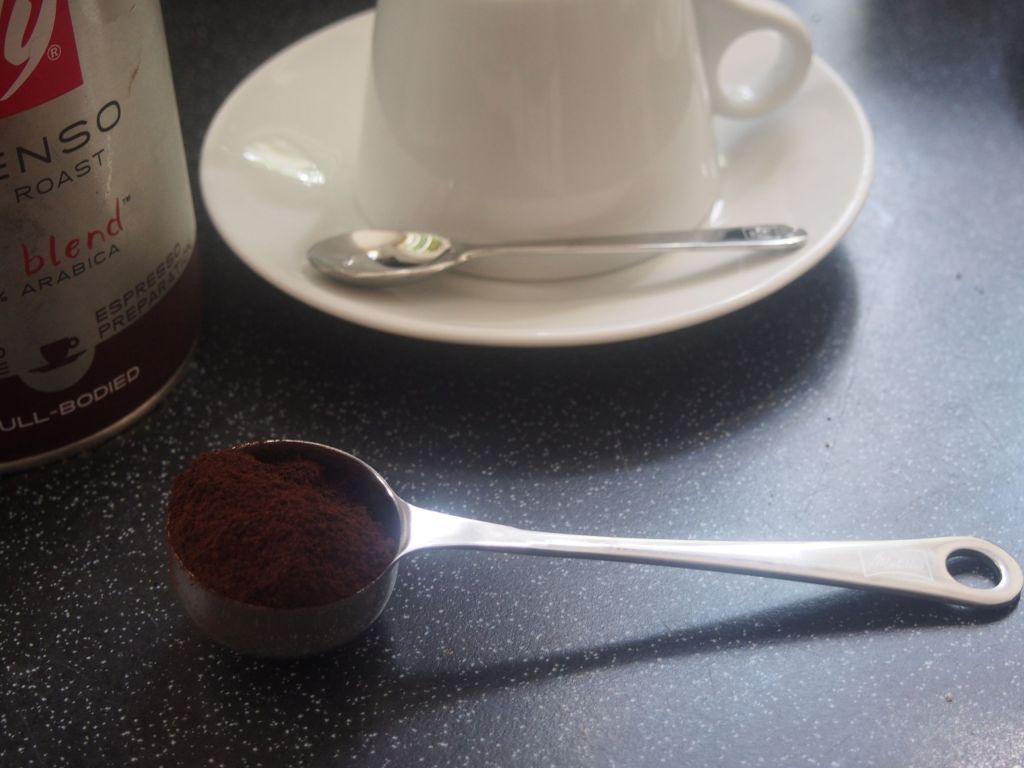
There was one thing that needed improvement. I used to rely on a cheap plastic scoop for moving the ground coffee around – but this split and snapped ages ago. I then fell back on a general kitchen measure, which just about did the job – at the cost of being too shallow and too wide for the coffee machine head. As a result, it often left a liberal heap of coffee on the worktop.

I have finally got round to addressing this matter of global significance. A brief online search turned up a decent stainless-steel scoop from Melitta, the German coffee brand. It only cost a few quid, turned up in a couple of days – and has made a pleasing difference. Not only does the coffee go where it is meant to, but the item is reasonably aesthetic, has a pleasing weight and does its job much more precisely than the old one.

This is hardly going to solve the major problems of the world, but in a small way, it has made a significant improvement to our daily ritual. As any craftsman knows, tools are important; not only for the job they do, but as items of sensory satisfaction, even beauty, in their own right. There is much gentle, mindful pleasure to be had from using good ones, that poorly designed ones rarely match. It was not a matter of anything other than a minor effort, minimal expense and just a little time. I wonder how many other daily irritations we tend to put up with, particularly when time-pressured, where just a little more ‘room’ to tackle them could make a useful difference. It’s not only the big things in life that matter…

Food, Travel

Baby Biarritz?

After the somewhat underwhelming experience of Nottingham, we were still feeling the urge to be out and about and indulging in a little café life. So, on the spur of the moment, we hit the road last weekend and found it in…. Felixstowe.

Felixstowe is not a place you go to by accident; what’s more, its main reputation as the U.K.’s principal deep-sea container port quite possibly makes it not the kind of place you would expect to go to on purpose either. I had passed quickly through once a number of years ago – but more recently, my hairdresser, who is one of the cooler men I know, had commended it. Coming from a natty dresser who likes a glass of something chilled with his jazz, there had to be a reason why…

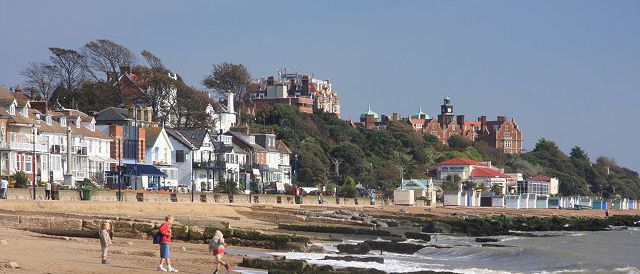
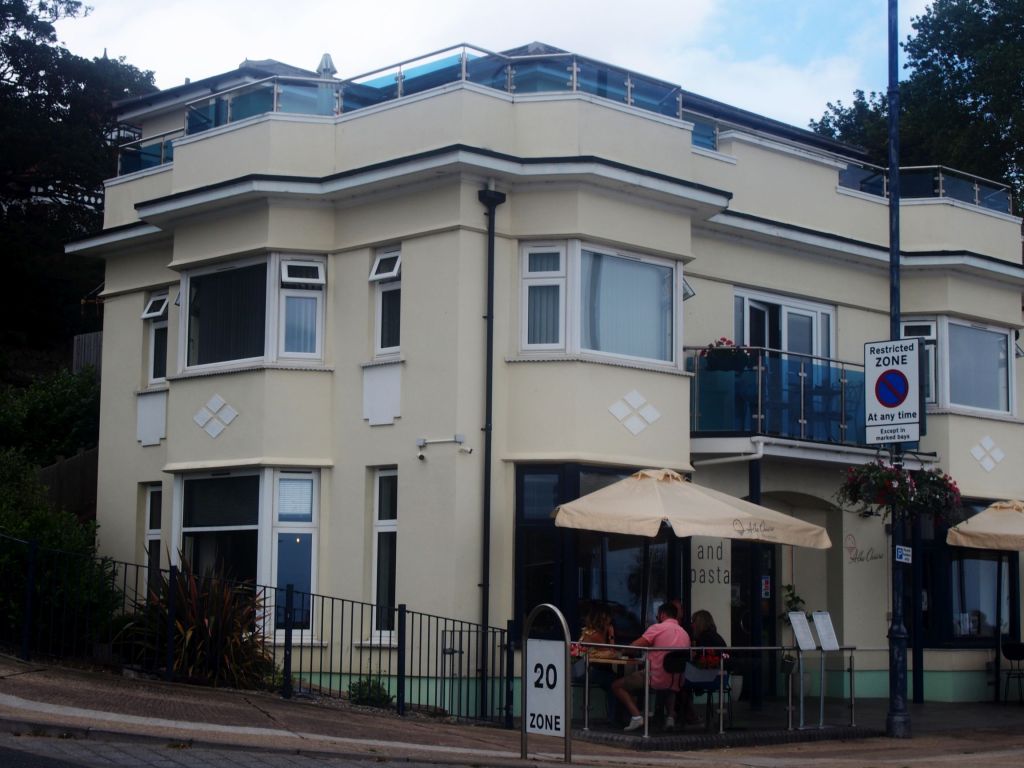
And so we discovered Baby Biarritz. Well, perhaps that’s a bit optimistic; Baby Bournemouth more like. I think it was the large villas on the clifftop that put both resorts in mind. It has the same restrained, slightly faded charm of the more tasteful better-known seaside resorts, today infused with a gentle hint of continent.

A little research revealed that Felixstowe indeed had form; it developed as an upmarket Edwardian coastal spa town complete with a steamer service from London – and thus it retains a legacy of rather grand old villas that have mostly withstood the redevelopment pressures of the larger resorts. Biarritz is known as the also-slightly-faded seaside hang-out of deposed European aristocracy: so much more discrete than Saint Tropez… Felixstowe had Wallis Simpson, who lay low here for some months in 1936 in a mansion she considered far too small, awaiting the divorce that would allow her to marry the abdicating Edward VIII. And in 1891, Empress Augusta Viktoria of Germany spent most of the summer here, in between visiting her mother-in-law the Queen in London. I said it had form…

Based on my first visit’s impressions, we had not expected to do more than cruise through on the way somewhere more interesting. But in the event, we felt the urge to park up and look closer. I find myself increasingly attracted to the laid-back atmosphere of the coast; someone once said that it is the only place where the British ever even marginally relax their buttoned-upness. You find slightly less prim, more exotic planting, a greater prevalence of picture windows and balconies than elsewhere – and despite the general coolness of the climate, the coastal light and vistas do lend something to this most understated of countries… But I am still repelled by typical kiss-me-quick bucket-and-spadeness, much preferring the style of French and Italian resorts. We loved Viareggio when we visited – and I have fond memories of Dieppe on the Cote d’Opale – whose northern French climate is not so markedly better than ours. But what they do with their resorts most definitely is…

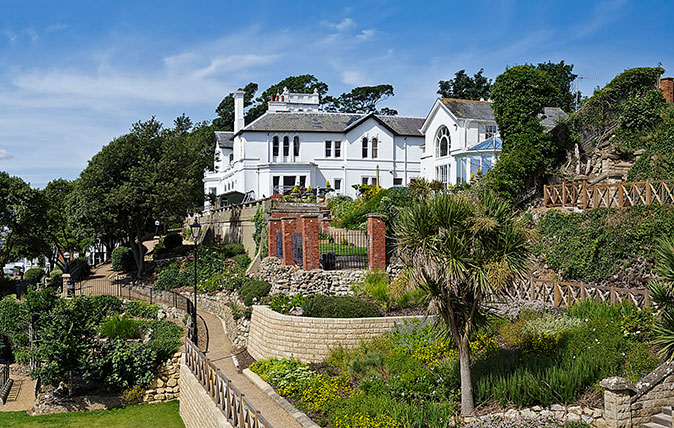
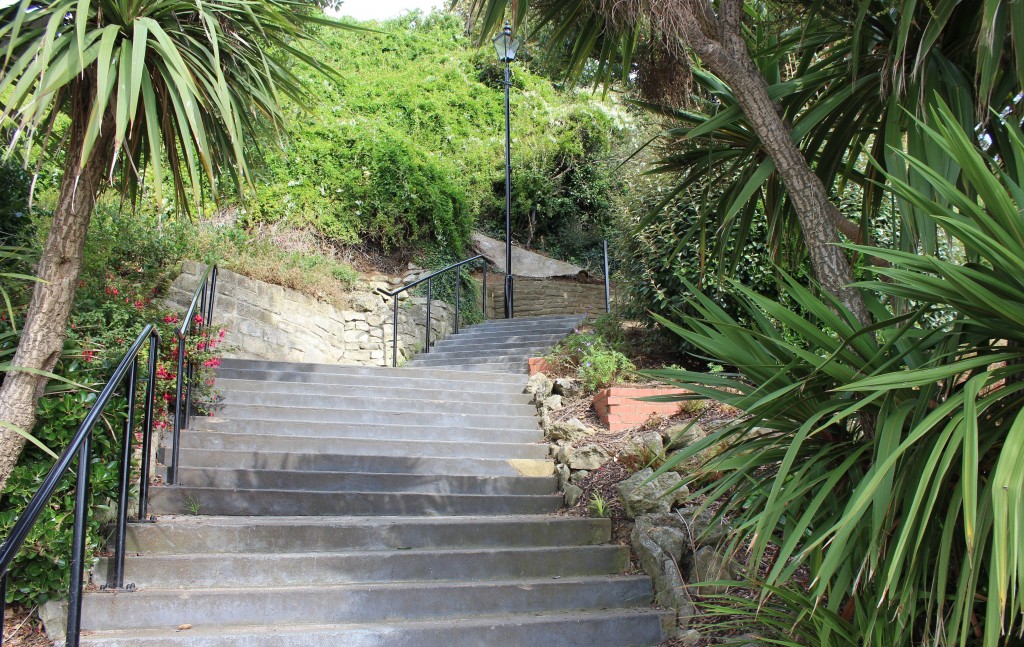
In Felixstowe’s case, it has the distinct advantage of being the only East Anglian resort to face south. Combined with a sloping cliff that relieves it of the flatness of most of its neighbours, it has a microclimate that the Edwardians exploited to create some appealing coastal gardens, recently restored. On a distinctly cool early August day, it was enough to lend a warmth that could have been somewhere distinctly more balmy…

British seaside resorts have had a rough half-century – ever since the Brits discovered they could go to Spain. But there are signs that some are rising to the challenge, no doubt helped this year by the travel restrictions. While there is not much we can do about the climate except wait for global warming, there are signs that Felixstowe at least is raising its game. Perhaps the very fact that it lies below the radar of the masses helps, as no doubt does the presence a little further up the coast of the much more chichi Suffolk towns of Aldeburgh and Southwold. Unlike those, however, which are very much pebbles, fishing boats and hearty doses of Benjamin Britten with everything, Felixstowe has rather more of that faded Riviera feel; at least enough to make it worth the thirty-five-mile drive, bypassing the distinctly mixed delights of Clacton and Frinton on the way…

The container port at the mouth of the Orwell is dredged to 15 metres, which allows it to accommodate the largest container carriers in the world; it’s the eight busiest port in Europe and nearly half all UK containerised imports pass through it. Facing Rotterdam across the southern North Sea probably helps. As a result, it has excellent transport connections. The southern horizon is dominated by a dozen gantry cranes, which are impressive enough not to be the complete eyesore that one might expect. The coming and going of the huge ships, not to mention the passenger service from nearby Harwich to Hook of Holland, adds interest.

The town itself is a mixed bag of low-end chains but with some more interesting independents sprinkled in; it seems to be making efforts, as I said, to raise its game – the main street is well enough cared for compared with many of its peers. It does have the expected amusement arcades and other trashiness, but the north end of the town is a rather different matter, with the cliff gardens, and the more imposing villas. What’s more, some pleasing eateries have moved in, with more on the way, thus addressing one of the regular downsides of the British seaside experience. That, and a shipload of imported palm trees, made for a pleasing, escapist afternoon, all the more so for being unexpected.

Alba Chiara

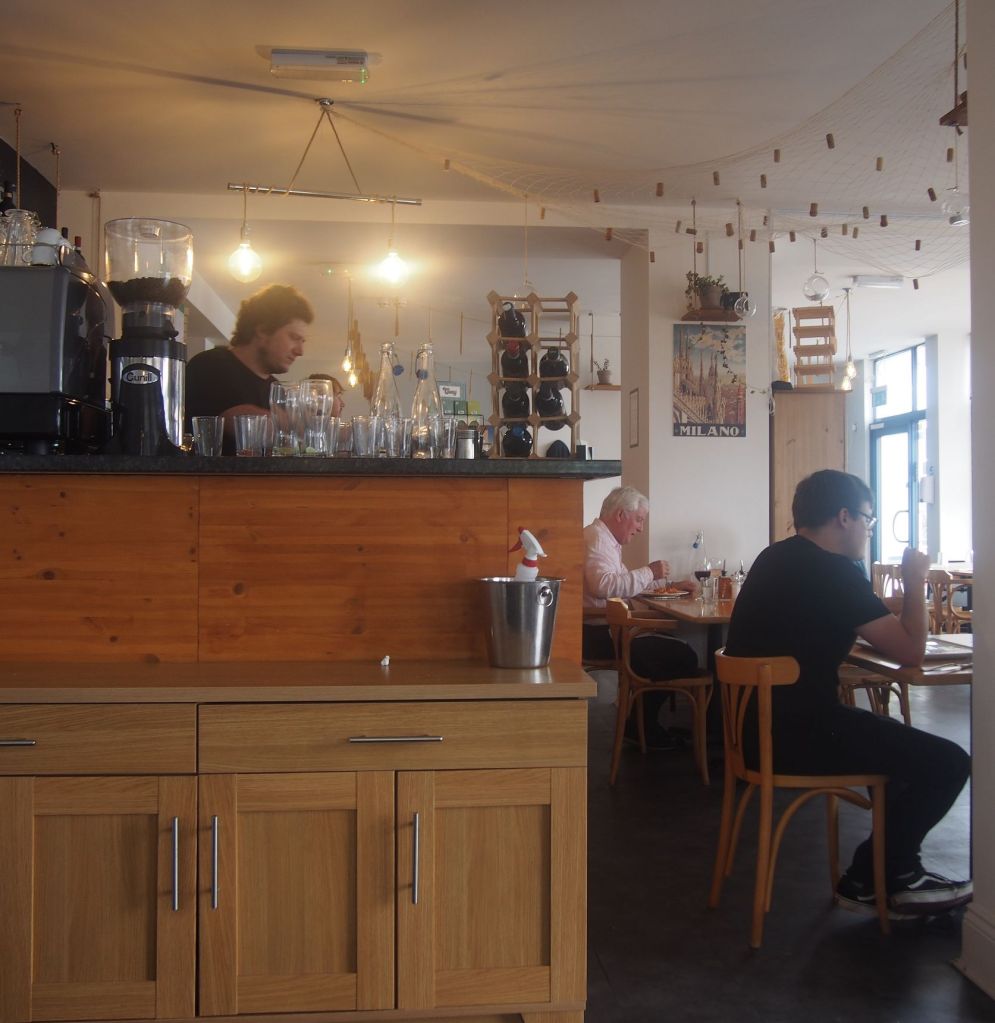
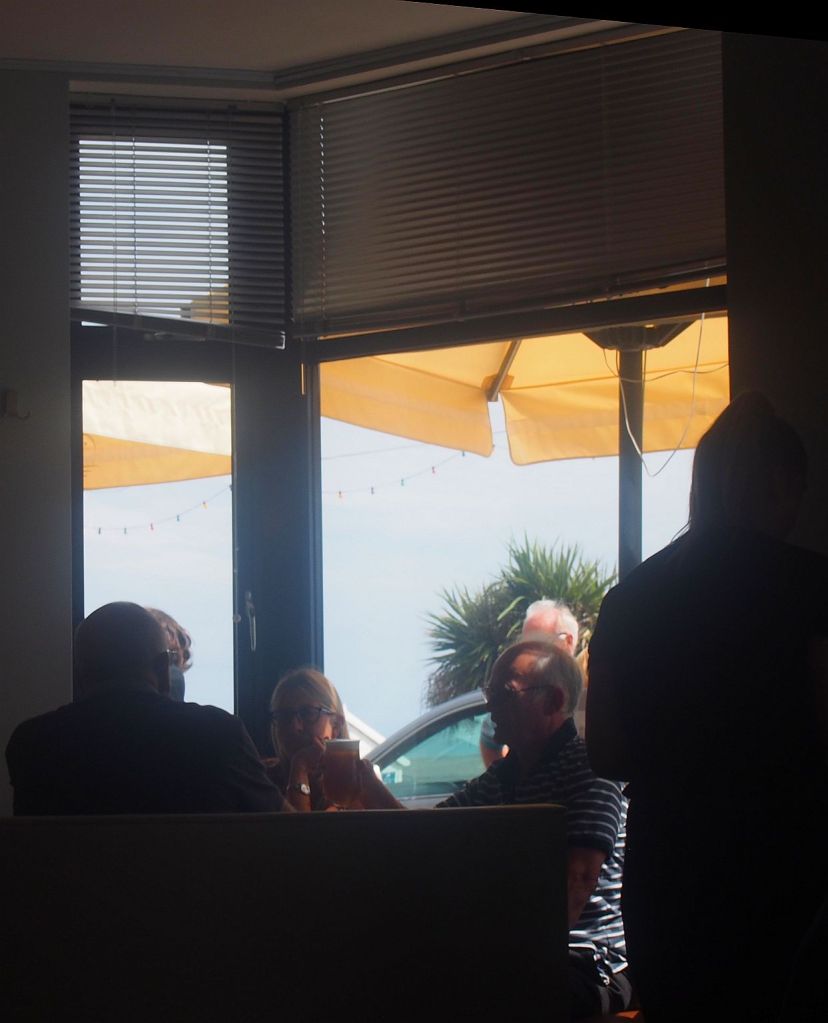
The renowned East Anglian brewers Adnams have opened a brasserie on the sea front; another similar venture is due to open soon. But we opted for Alba Chiara, a surprisingly good Italian restaurant, also a new arrival, and set up in an appealing building that had seen a previous life as a chips and burger bar. We got the better deal: anywhere that makes its carbonara with guanciale and pecorino knows what it is doing; nicely seaside-y and without being overly themed, it is a pleasant spot with great sea views. Later, we discovered that the owners are indeed Italian and escapees from one of our favourite restaurants elsewhere in the region. Full marks.

Alba Chiara
Serious espresso at last…

The promenade is worth a stroll; the beach is partly sandy, and a definite rise in the quality of kiosks is visible – several were selling “gelato” from proper scoop-chillers; a big improvement on the traditional lolly-on-a-stick. And then, joy of joys, we found one that was selling Mövenpick ice-cream: quite a rarity anywhere in the U.K., let alone at a lesser-known small resort like this. At the south end of the town, Beach Street Felixstowe is another recent addition: a Camden-style collection of independent traders, all housed in redundant shipping containers. We didn’t get far enough to check this in person, but it looks intriguing.

We rounded the afternoon off with a prowl around some of the cliff-top residential streets: a mix of villa and apartment blocks, several which have been recently renovated and (later research showed) commanding quite steep figures… And a couple of newly built contemporary additions, with some attractive looking balconies.

It’s not unusual to overlook the attractions of one’s near-region. Daily life tends to get in the way of exploring as thoroughly as one should – particularly when prejudice gets in the way. In this case, it was a good decision to take the risk; some of my family roots are in Dorset, and Bournemouth has always been – climatically, topographically and architecturally – my benchmark for the British seaside. But now we know that we at least have Baby Bournemouth, if not Baby Biarritz, much closer at hand…