 ijstock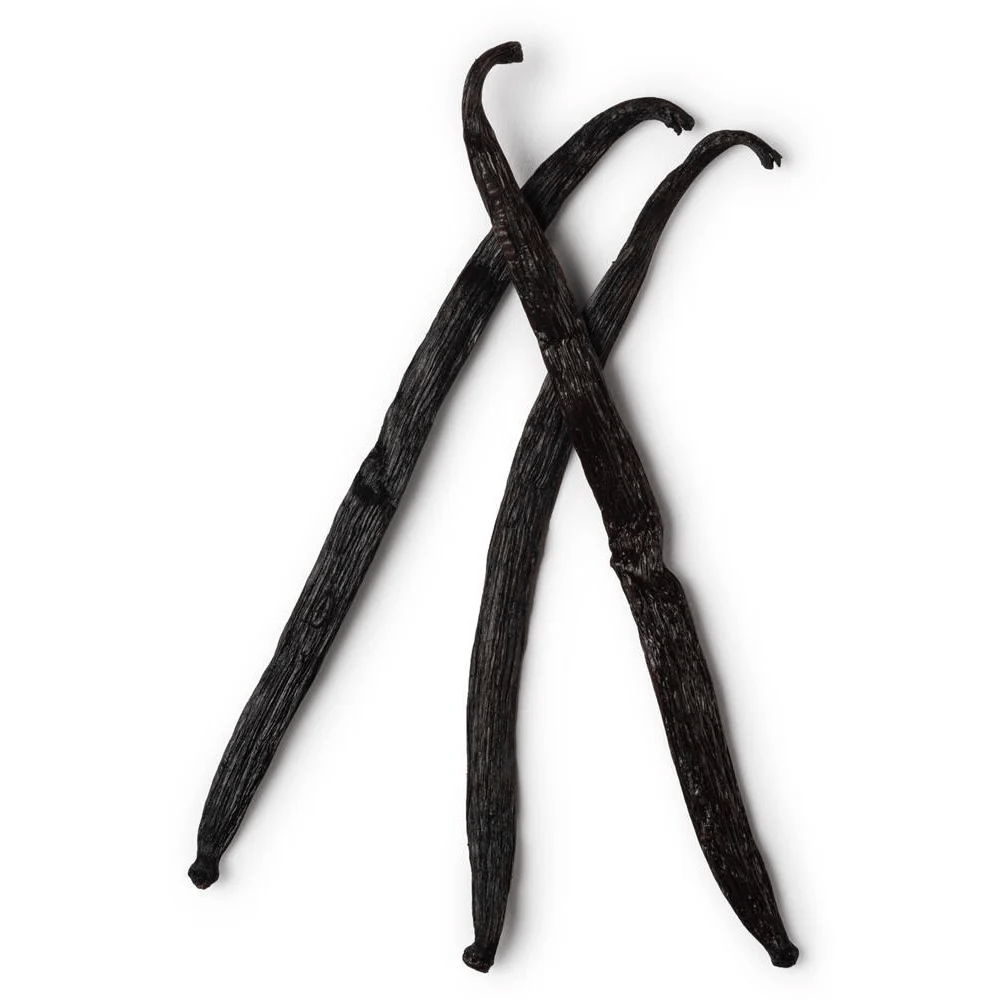
It’s the hot chocolate that gives it away. A week or two ago, we were in a fairly average café in our local town, and I ordered one. It arrived promptly enough but turned out to be – as expected – the usual disappointing fare of over-sweet Cadbury’s powder, though in this case worsened by the fact that it was over-dilute and tasted mostly of water.
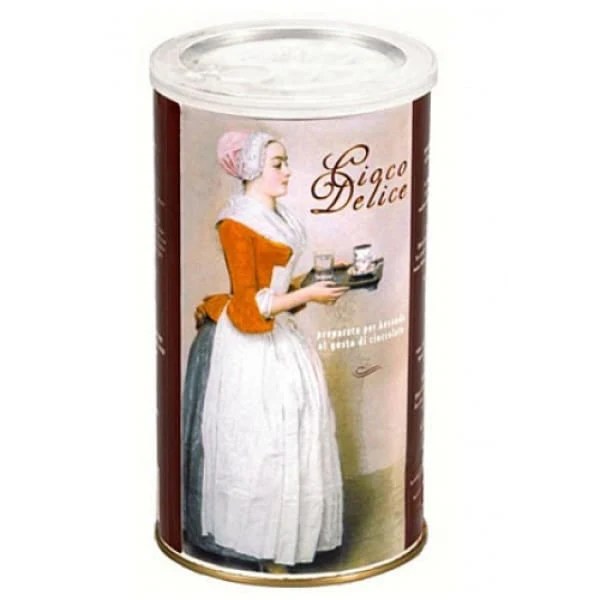
A few hot chocolates previously, I was in Lille, where chocolat chaud arrived as melted chocolate and a jug of hot milk. The same is normally the case in Italy, where hot chocolate has the consistency of double cream and almost needs to be spooned. Inspired by this, at home we have taken to using Molinari which is at least available online in the U.K.
The trouble is, one’s palate adjusts to the flavours one consumes, which makes the insipid British offerings all the worse for us… We have the same experience with coffee; at home, we habitually drink Illy Italian coffee and make it with a Gaggia espresso machine, which delivers something like Italian strength – which is now our natural point of reference. What we mostly find in the coffee shops on British streets, despite their proliferation, is brown bathwater. Despite the coffee shop hype, and multiple gimmicky flavourings, the baseline product repeatedly disappoints.
A couple of decades ago, I welcomed the spread of coffee shops across the U.K. It seemed like a major step forward for civilisation. In particular, I recall an early branch of Costa at Liverpool Street station, when it was still independently owned, and still felt like a proper Italian coffee bar, complete with polished granite counter, chromed high stools, proper pastries, and baristas who knew what they were doing.
Sadly, in recent years, I’ve all but given up on getting a good coffee in the U.K., at least outside a specialist restaurant. Coffee shops have become just another retail outlet clone for big business. Both Costa and Pret a Manger (hitherto my fall-backs for a half-decent cup) seem to have travelled the dumbed-down route. In lieu of decent drinks, both now offer the same buckets of dilute brown precipitate as Starbucks, to be sucked through the plastic lid of a cardboard takeaway cup. As with most things in Britain, we are only ever given a diluted version of what happens elsewhere.
My guess is that the loss of distinctiveness of such brands is not unconnected to the fact that both were bought out by large conglomerates, which broadened the reach but, in the process, completely destroyed the product. My second guess is that this trend is another import from the U.S.A, whose coffee, if the average Americano is anything to go by, is even more anaemic than ours. Once again, quantity over quality. It seems that the mass-business model is not to offer anything that might offend anyone by being too tasty. But in the process, they only end up giving even greater offence to those of us who prefer something more distinctive.
Apparently, the growth in the café sector in the U.K. at present is with independents. We do have some locally – but sadly they mostly seem to have used the chains as their template, both in terms of ambience and product. https://www.lovetoast.co.uk/toastwitham They talk the talk about loving coffee – but my experiences of drinking there revealed the same over dilute buckets as everywhere else.
From hot drinks to life in general.
What concerns me here, is why the British public puts up with this treatment. Which comes first: the companies diluting standards, and with it, expectations – or a public whose taste is so vanilla in the first place, that the companies know they won’t sell anything more distinctive?
I don’t have anything against genuine vanilla either – it is a very pleasant flavour used properly (which is not in gimmicky flavoured coffees…) But there’s a reason the word has also come to mean bland – and in that respect, it seems to describe British taste perfectly. In fact, those flavoured coffees tell a tale of their own: of a market that values gimmicks over good basic quality. Novelty to distract from the inferior quality of the basic offering.
One might have hoped that by now the much-vaunted British food and drink revolution of the Nineties and Noughties would have embedded itself in the national psyche of successive generations, but in actual fact, Vanilla seems to be getting worse. The end-product of that ‘revolution’ with regard to food seems to have been the gourmet burger – which ultimately is still just a burger – and an increased range of pseudo-ethnic outlets which, from what I can see, just offer various incarnations of fast food. Packaging it as ‘street food’ doesn’t deny what it ultimately is: processed junk.
One might also have thought that increased health awareness would have had an impact, but my close professional contact with the current generation of teens suggests they eat more junk than ever before, and a lot of them don’t touch anything that isn’t Coke or ‘flavoured’ water when it comes to drinks.
One of the repeated experiences I have across the Channel is places where one’s senses are fed rather than ignored. I can’t help it: it just happens. Time and time again. As I wrote a short while ago, the experiences of different countries do strongly suggest that tastes and expectations are not the same everywhere. One can debate whether the products on offer reflect the market or dictate it – but either way, I am still bemused why British tastes are just so, well – vanilla. Anaemic. Or as one writer put it, Taste Free.
It is not only hot drinks: as I’ve bemoaned before, the same goes for standards in everything: the overriding principle is Bland. I’ve learned never to trust the reviews on Trustpilot – most people seem to have completely different benchmarks). Everything seems to need to be diluted, its teeth and claws removed, before it is acceptable to the anodyne ‘Great’ British public. Or are many other people also sitting there in their local Costa secretly disappointed at the offering? And if so, then Why?
Despite much mulling of this over the years, I still am not much closer to an answer. When presented with such an opinion, many people become indignant, as though national pride could and should not be affronted in this way. But if they are part of the problem, they are scarcely going to understand it. For them, Italian coffee will just seem unbearably strong. Maybe the climate has something to do with it, or maybe it’s what a historic Protestant ethic of self-denial does to our feelings about sensory indulgence? But then, other northern European countries, just as cold and just as Protestant, don’t seem to have the same difficulties producing decent Kaffe und Kuchen and indeed good quality other things too…
I suspect that knowing your own preference is part of it, something else where, in the taste stakes, it seems that many Britons are still in the starting blocks. It is certainly the case that stronger tastes become – ahem! – more Marmite – you either like them or you don’t. If you do not know your own preferences, you cannot be discerning. You will meekly, passionlessly, accept what you are given, in a way I suspect the French consumer, for example, rarely does should it be substandard. Until people boycott places that offer inferior products, those places will carry on getting away with it.
A recent YouTube watch, mulling the British mindset seemed to major on “easy going” as a British characteristic. Perhaps: so easy going as never to stand up for decent standards when they are needed.
It doesn’t give me satisfaction to have these experiences. It is a great disappointment that life on this side of the Channel sometimes seems to be lived in diffident shades of grey compared with what happens elsewhere. I can’t see any other real reason why it should be so – except that the culture itself is now so diluted that people never want to do the work to appreciate anything more distinctive. So used have they perhaps become to the bland offerings of big commerce. In other words, it is as it is simply because the majority of people are themselves now so vanilla that they are content to let everything else be, as well.
 SPREZZATURA
Blame venture capitalists for the way all food chains that start off passionate end up devoid of what made them great to start with. Perhaps there is hope in the Leon story.We can be passionate about some foods. I’m in FB groups dedicated to fish and chips and pork pies, both take their subjects very seriously, and also show regional differences that can be quite significant.Some of the problem is generational and demographic. A small chain can’t become a big chain without dumbing things down to appeal to a wide consumer base. And on the supply side, they have to produce food preparation to be within the ability of the average UK hospitality worker.Let’s not be too downhearted though. Here in Stoke we have a wide mix. Yes, there is a takeaway every 400 yards, but we also have traditional cafes and stunning, yet surprisingly cheap, restaurants.If you want an example, read Jay Raynor’s review of Little Dumpling King. It is every bit as good as he says. But there are also places where you can get a tinplate breakfast, though I advise against it.
LikeLike
Thanks for your comment. I’m with you entirely on the role of venture capital in destroying good brands – and it’s not only food. But as you suggest, some of it is a ‘market problem’ i.e. people who are indiscriminate in the first place are all too easy to flog duff goods to – and then you get into the question of why they are indiscriminate in the first place. Again, it does not seem to be an equal problem everywhere… some of it is down to expectations. And then you get into where expectations come from. I don’t doubt there are passionate foodies in the U.K., as there are (a few) who are passionate about other things that are perceived as minority niches even though they probably shouldn’t be. But somehow, the British mainstream just seems particularly and irredeemably bland to me, whether it’s coffee or anything else. It seems that in almost every aspect, things are watered down for the British market; why?
LikeLike
I partly blame childhood experiences, especially that of those of us who grew up in the 70’s.
I hate cooking for my mother (93) because everything has to be salted and sweetened to obscure any taste, meat has to be incinerated, and vegetables reduced to a mush. Yet her own mother, constrained by poverty but with access to fresh food, cooked brilliant meals.
LikeLike
Yes, I’m sure upbringing is where the expectations come from. The 70s was prime packged food territory, but it doesn’t explain the generations that have come along since the foodie revolution – which seems to have had no discernible lasting impact whatsoever for the mainstream. And yet in many European countries, it was precisely peasant cooking that provided the basis for much richer present-day cuisines. I watched a video the other day about another matter, but it was suggesting that the key determinant of people’s habits is what they see their peers doing. And mass-market is of course predicated on lots of peer behaviour.
LikeLike
I just picked up on your comment about the abilities of “the average UK hospitality worker”. But isn’t that part of the problem in its own right? We do not have the respected custom of waiting being a high status occupation as it is elsewhere. Here you get a half-trained student if you are lucky. How many jobs would be created if we had the French approach to waiting tables?
LikeLike
we simply can’t experience excellent coffee in the U.K., we’re spoilt by our experiences in Spain
LikeLike
…and therein, Bob, lies the problem. Those of us who have had at least a little exposure to things elsewhere are the only ones who can see how bland the home offering mostly is. If you haven’t drunk coffee in (say) Italy or France, you have no wider reference point. What really puzzles me is why things have to be diluted for British tastes; there is no real reason why we shouldn’t have the gusto for at least some things that you find elsewhere.
LikeLike