Uncategorized

Turning to Turin

It had been becoming obvious for some time that a dose of Italia was needed, our last visit having been to Bologna, too long ago in 2018. It was tempting to return to a city we like a lot, but in the end, we decided to tread new streets.

Liking to pose pointless philosophical questions to myself, I pondered what is the ‘right’ way to approach a city like Turin. The fourth largest in Italy unsurprisingly has huge numbers of galleries and museums, but I’m afraid that isn’t really why we go. Had the opera season been underway, we might have indulged – but it wasn’t. And as a geographer, I am much more interested in the lived culture and character of the present-day city than paying homage to the dusty stuff in the museums.

In many ways we use ‘Italy’ as a template for our own lives – for approaches to food, clothing, home furnishings – and (when possible) la dolce vita in general. Indeed, for this blog too. But of course, this is all a conceit, even if a harmless (and hopefully even healthy) one, more about our perception of a country than the current state of the real place. Hence the need for a reality-check from time to time.

Thus, we stayed in a self-catering apartment in the centre, albeit furnished in our preferred modern minimalist style rather than anything more traditional. Much of our visit was spent in flânerie, during which we covered most of the central area, enough to gain a sense of the atmosphere of the place, sitting in the bars and cafes (once we had found them), watching the locals. And in this, some of our preconceptions were shaken. Sadly(?) Italy seems to be following the rest of the wealthy world down the same mass-produced anywheresville of high commerce and prepackaged – well – everything.

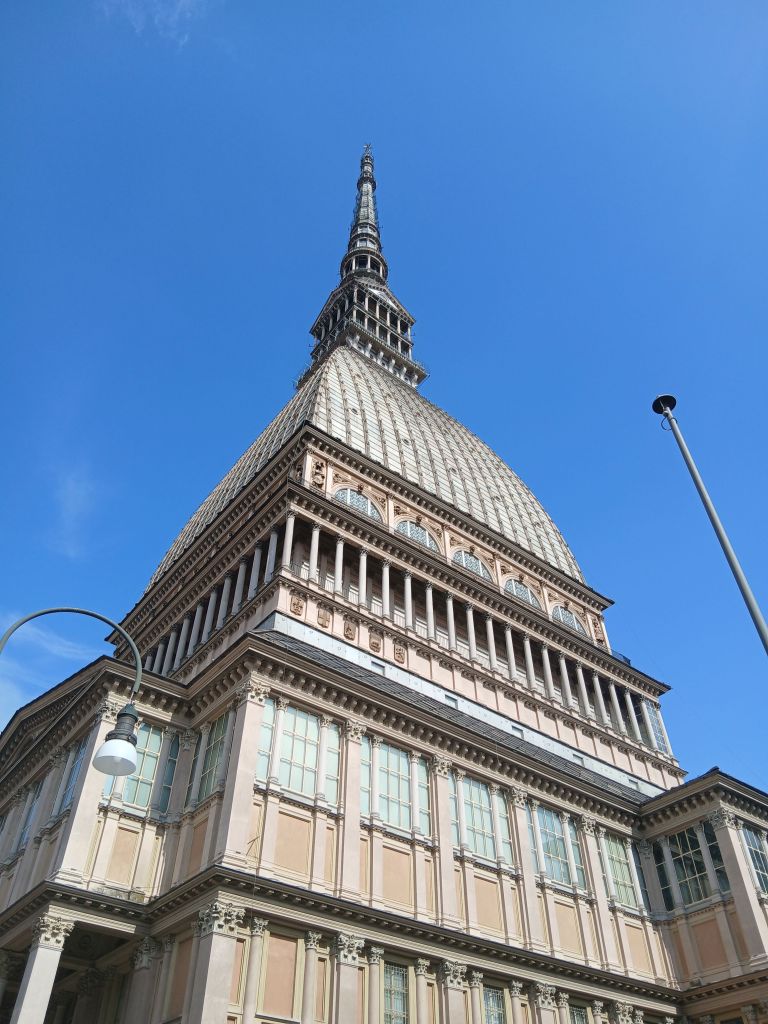
That’s not to say there is nothing worth seeing; far from it. The architecture is grand, the piazzas expansive. The Mole Antonelliana (top) is just ugly. The French and Savoy influences are clearly there, so there is perhaps less of the sheer exuberance of much of the rest of Italy. That we had expected; the globalisation less so.
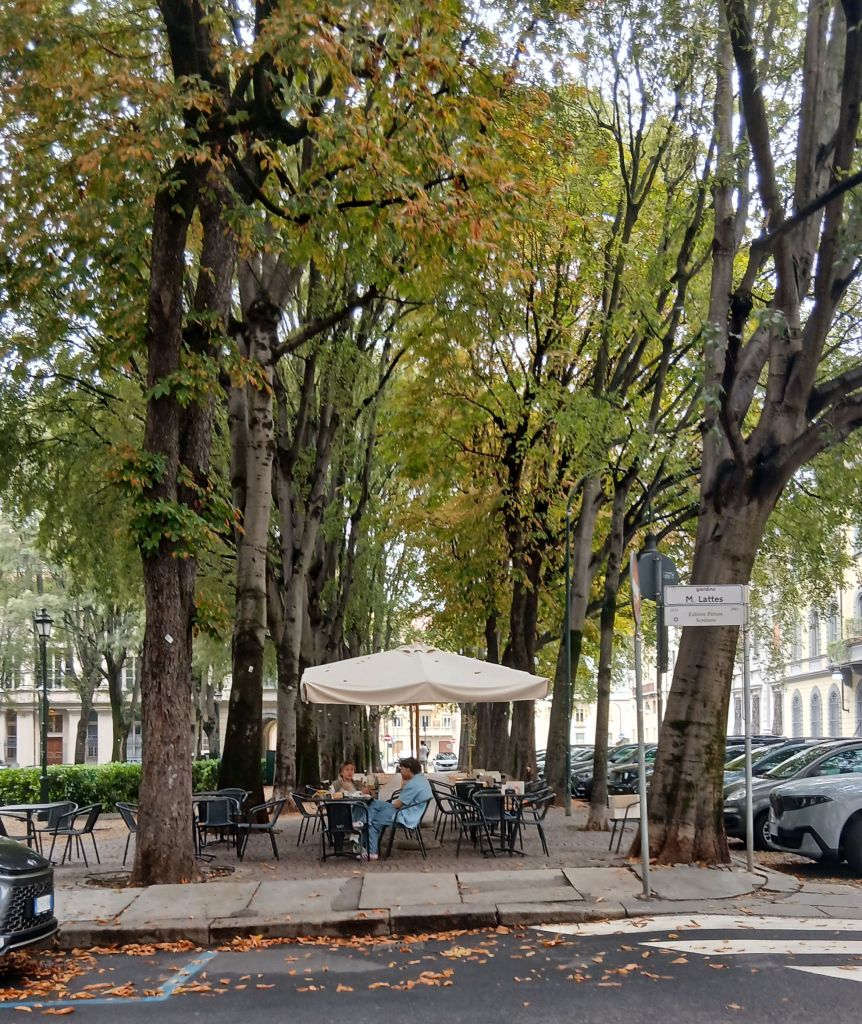
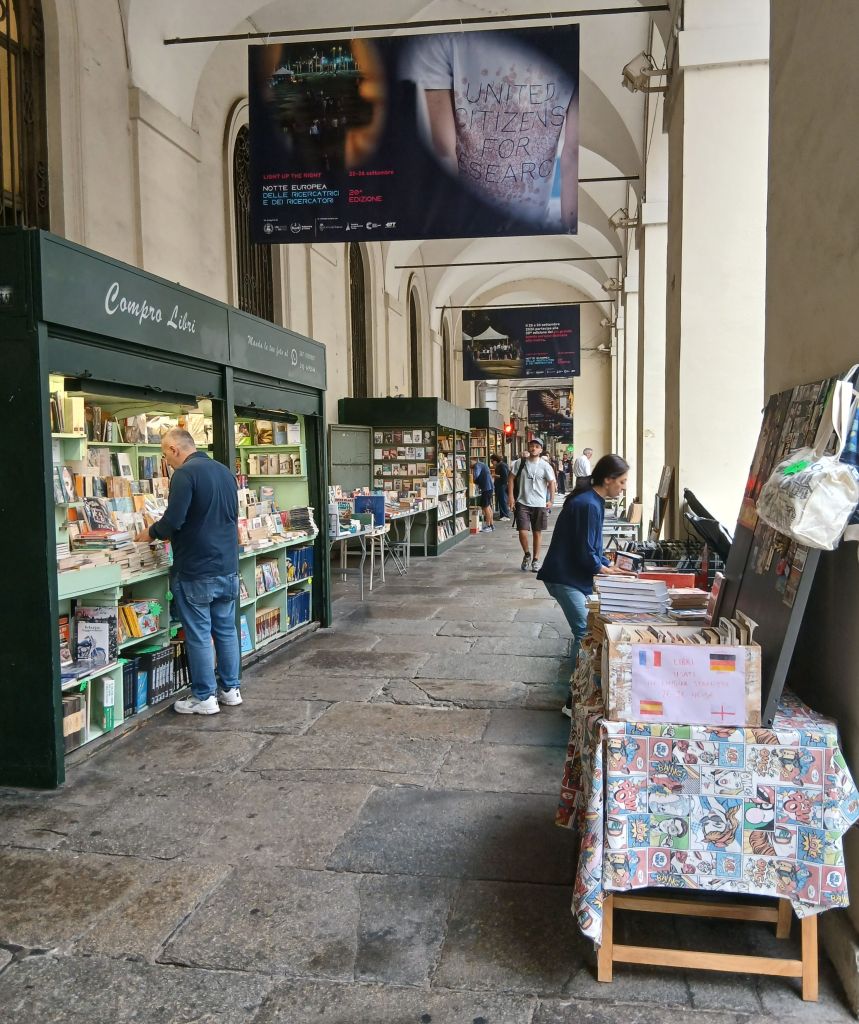
The arcaded streets and many small shops typical of Italian towns are also still there, but the big international brands (of which quite a few, I suppose, are Italian in any case) are certainly making their presence very known, as are fast-food style eateries, many of which now look like chains even when they are not. It was hardly wall-to-wall McDonalds; what seems to be happening is that Italian food is moving with the times and promoting itself in a brasher, more commercial way. Pizzerias are everywhere and seemed to be the food of choice. There are also a lot of focaccerie, also in plenty of cases modelling themselves on fast-food joints, even if the products were completely Italian and far-removed from what you would probably find elsewhere.
But we had to work hard to find anywhere serving traditional pasta dishes, or the traditional primi/secondi/dolci menu. In desperation, on the second night, after trudging much of the centre for somewhere that felt right, we settled for one of the more modern restaurants – and ended up with probably the worst meal we have ever eaten in Italy, from which we quickly fled. Maybe it is reassuring that even Italians can mess up a bowl of spaghetti with poor ingredients and inadequate cooking – but it is disappointing if hitherto universal skills are becoming no longer quite so universal.

It is sometimes difficult to figure out what is going on: another issue was the lack of vegetarian dishes for my wife, not normally a problem in Italy. Is that because Piedmontese food traditionally is meat-heavy? (Yes, to some extent) – or is it more evidence that Italian tastes are changing? The longest queues we saw were outside a new burger bar. This, we should not forget, is the wealthy industrial core of Italy, where more internationalisation is probably to be expected. From recollection, Milan is even more like it.

I suppose this is just the latest evolution of the national style: there is of course no reason why Italy should preserve itself in a picturesque bubble just for the sake of the tourists. The same global forces are at work everywhere, and they are bound to have an impact. I can’t say that I noticed widespread displays of the famed Italian dress-sense either, though to be fair, things picked up a bit on the Monday as the working week began. But for the weekend, jeans, tee-shirts and trainers seemed to rule.

I bought a jacket in the end-of-summer sales, from a branch of a well-recognised and long-established Neapolitan tailor. Perhaps the low price should have been a clue: despite acceptable Italian colour and styling…. Made in China. Still, a frustrating reminder that in their homeland, nicely Italian-styled clothes do not need to cost the fortune they do when purchased in another country. The underlying aesthetic is still there; I could have bought much of the shop. But “authentically Italian”? Not entirely.

To be fair, most people still looked neat – one does not see the downright shabbiness that is the norm of much of the British population, and people still seem to take some pride in grooming well. They also still seem to exercise restraint in the way they behave in public: we saw none of the carnage of evenings in British towns, partly perhaps because people of all generations are still out in the warm September weather.

In some ways, the bus ride from the airport is more informative: this is where you see the city that most of its residents actually inhabit. Outside the centre, large blocks of flats and wide traffic-clogged streets were the norm, and it’s difficult to see whether the local shops and neighbourhood facilities are still there, tucked away out of sight. I hope they are. But Italy too is embracing electric buses, cycleways and multi-way recycling bins. More trees are being planted. Does it still look Italian? Well, yes it does – there is no doubt that a strong national identity is being stamped on all these aspects of modernity. And for all its ancientness, Italy has always embraced the future, albeit of an eccentric kind; perhaps more so than Britain. Another contradiction, since both countries are generally socially conservative – but it is Italy that seems more go-ahead at the moment.

After our dismal meal on the second evening, things improved substantially. I will cover the following day’s trip to Genoa in a separate post, but we also managed to find a small caffè for breakfast, the very epitome of what such a place ‘should’ be, run by an elderly couple and just a short distance from our flat, in a direction that had previously not looked particularly promising. Perfect cappuccino (with a small glass of water) and filled crescante, while the old gents of the district took their espressi standing at the bar, chatting loudly. On our second visit, senora, clearly pleased by our return, brought out some complimentary biscotti….
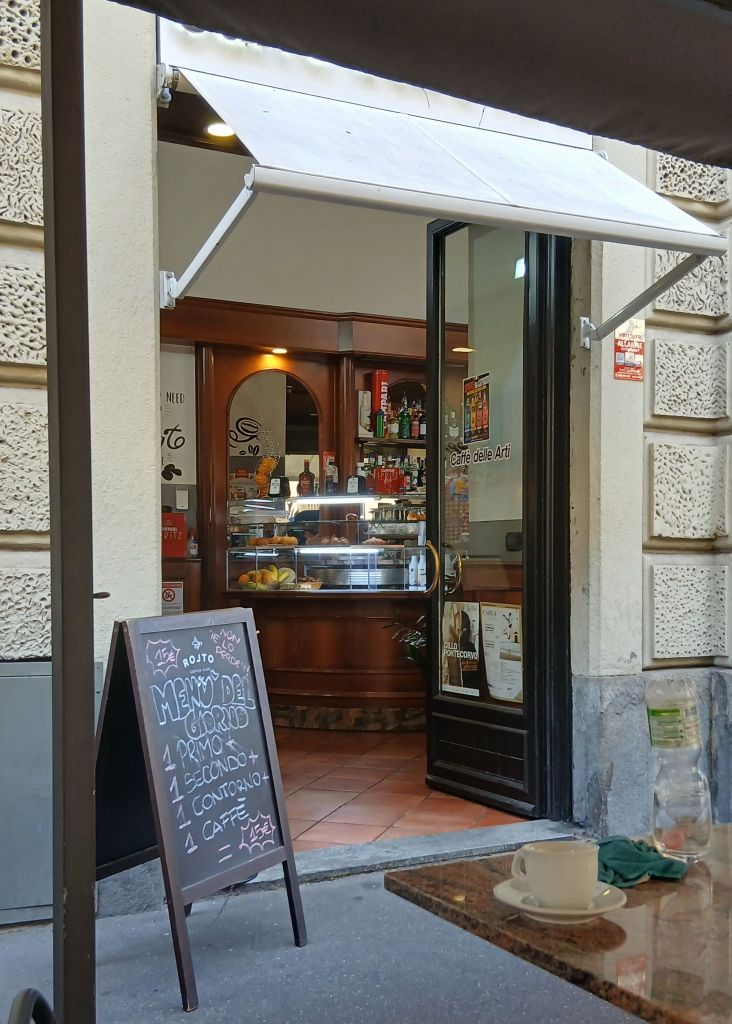
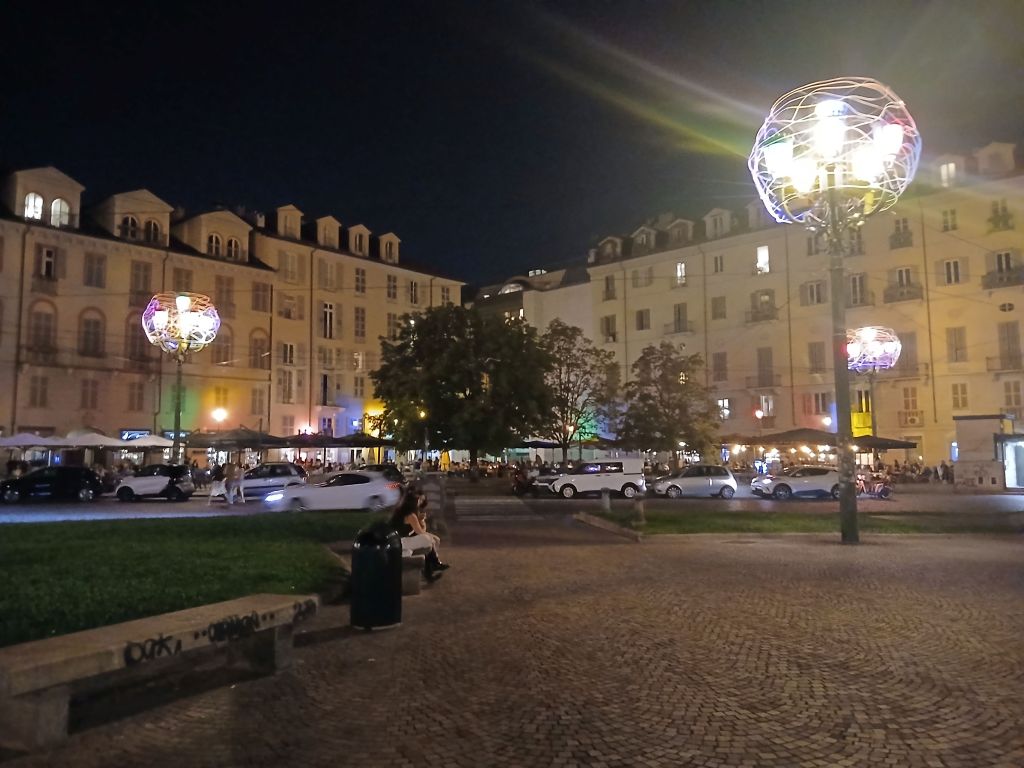
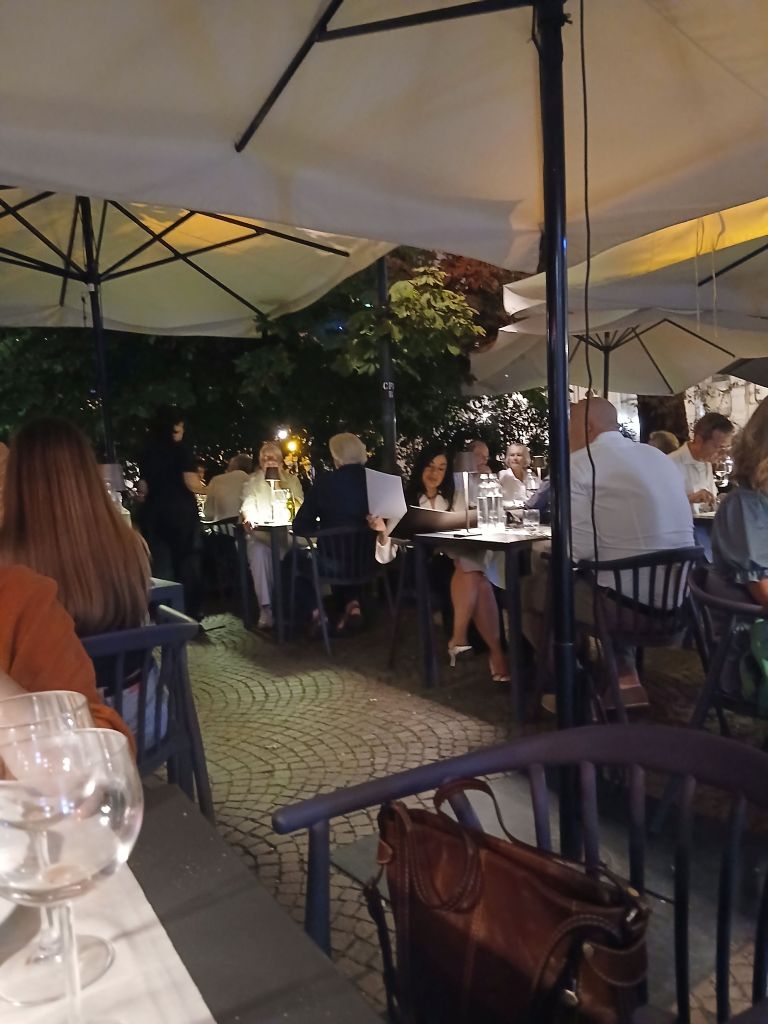
And just round the corner, also somewhat off the main drag, was the Piazza Carlo Emmanuelle II, which turned out to be a well-patronised dining location, including a restaurant where we had perhaps one of the best meals we have ever eaten in Italy. It can still be done: albeit not at ‘high street’ prices but certainly excellent value compared with the U.K.
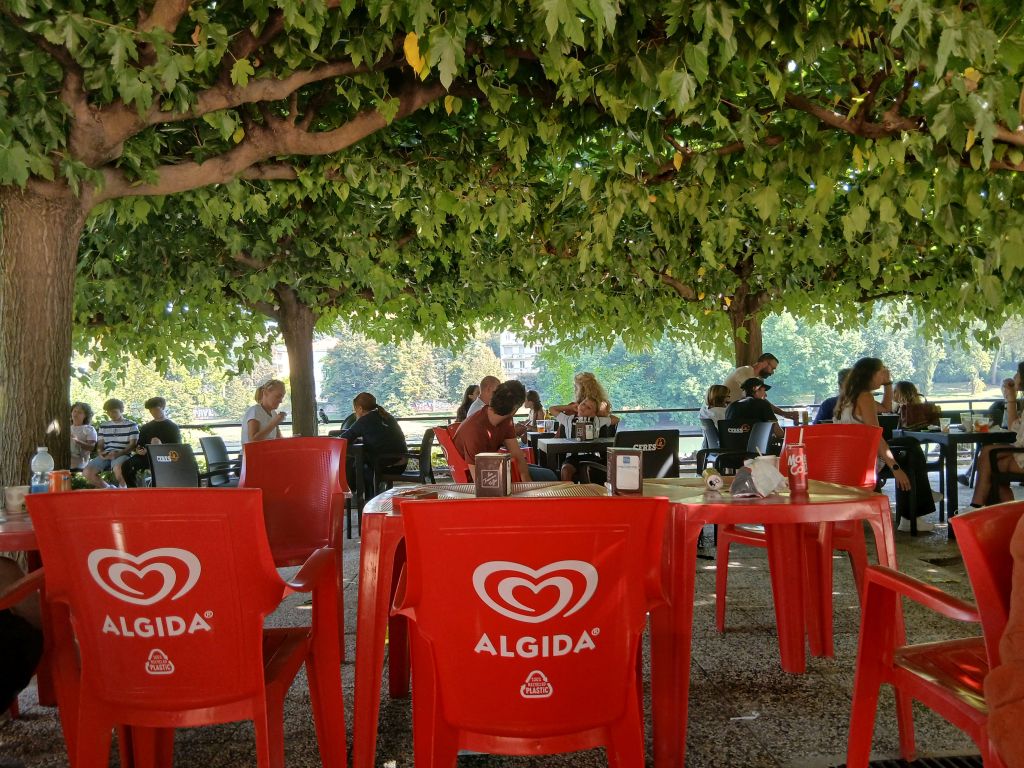
Sunday was spent following up a few remaining areas, including the promenade and park along the Po, which seemed another popular spot for hanging out in the late-summer heat.
I don’t want to give the impression that Turin is not worth a visit; it certainly is – though it is probably not going to make my must-return-soon list. Part of the reality check involves precisely the process of adjusting one’s impressions to the actuality of the real place. For all our template, we are fully interested in knowing how the real Italy is. Otherwise, it would just be a condescending, picturesque tourist stereotype.

The ways in which traditional cultures are adapting and evolving in the modern era is fascinating. As internationalisation reaches everywhere, some of the old, appealing things are being lost, but others are not. In some ways, it is internationalisation that is adapting instead. There is a strange collision going on between the totally international (including the fact that we can eat better pasta in the U.K. than in a certain restaurant in Turin…) and the still-local. People mostly drive the same cars everywhere. The airport bus was provided by Arriva, a company headquartered in Sunderland. We can pay contactlessly now, and tap in and out on the trains, just as at home. WhatsApp looks just the same on an Italian phone. But I wonder if the conversations are different, still more traditionally Italian.

The quirky trains of my earlier visits now sit rusting in the sidings (as did their predecessors in their time); Trenitalia is now a modern (mostly) reliable operation much like those elsewhere in Europe; indeed, the trains are often the same. On the railways – and everywhere else – almost all announcements and signs are now in English as well as Italian, even if often digitised.  Most of the people we interacted with had at least a little English (though we persevered with our limited Italian, as we should…)

I suspect that most Italians are still as sentimental about their country as ever. But they are probably not sentimental about the same Italy as the likes of us, and the hordes of tourists who file dutifully through the historic centres and major museums. A little research provided the thought that (world-wide) most museums are visited more by tourists than by locals. Meanwhile, real life in Italy is in many ways an entirely different thing, probably at least as full of frustrations and contradictions as ever it was. Or maybe that is changing too?

Perhaps more intriguing (and confusing) in Italy than in other places, is the difference between the ‘seen’ country and the social/economic/psychological landscape that in one sense is there in plain sight animating the actions of the locals one encounters and the development of their cities, but still fundamentally invisible to few-day visitors.

It is a major factor to understanding the place, and why even one of the most distinctive countries in Europe may be choosing (or at least allowing itself) to go down the path of internationalisation. For us, being provoked, however uncomfortably, into reflecting on these things hopefully creates a different understanding of the country from following the over-trodden culture-vulture tourist trails.
Food, Opinion & Thought

Mr Hanna’s

Localism seems to have got itself a bad name. The Fifteen-Minute City is a concept that has been known to us geographers for a long time, albeit not with that name. It is a model for making communities that are sustainable in both human and environmental terms – and hopefully economic ones too.

Yet the phrase seems to have been grasped, without comprehension, by certain groups as a conspiracy theory for total control of people’s movements. In reality, all it describes is the ability of people to access the services they need, ideally on foot, within fifteen minutes of their home.

The concept was there, if not the phrase, when my wife and I moved to the small town of Coggeshall in north Essex, U.K. in 2002.

It is a small town of around 4000 people, in a rural setting about 45 miles north-east of London. While many people who come here (often from London) seem to be seeking a rural idyll, Coggeshall is more than that; it has a history going back to Roman times and a market charter dating from 1256. It has a more recent history as an industrial centre for the textile industry. I had known it since the mid-1980s, and when we moved here, we were attracted to precisely the urbanism of a small, relatively sustainable centre, where we can indeed access pretty much everything we need on a daily basis, within considerably less than a fifteen-minute walk. With many listed buildings, it does sometimes feel like a time-warp, but Coggeshall has not been immune to the various pressures of modern times. Its retail offering is still impressive for a place of its size, when many others in the region have few or no shops at all. But when a new local supermarket opened at a distance from the centre around ten years ago, the impact on footfall in the centre was immediate. Numerous shops have struggled to survive ever since.

Which is why the latest opening is so important: fully in the spirit of the fifteen-minute neighbourhood, Joe Hanna and his partner Harry, have opened a new café. Not exactly news of global significance, but within one week, their premises has brought back all the life to the centre of our small town.

We should not ignore the impact of a pre-existing tea-room, which has been making headway since Lockdown, but the new premises are perfectly attuned to the needs to the hitherto-urban population now living in our small town, and has added significantly to the critical mass of attractive eating and drinking places in the centre – enough to draw people back. And while the current addition of a considerable amount of new housing has caused much heartache, perhaps a benefit will be a larger local market to sustain such services.

Joe and Harry seem to have an unerring eye for detail and atmosphere – in all the ways that so many cafes in the U.K. disappoint, this one doesn’t. They have taken well-observed inspiration from café culture in France and Italy; they have taken care to provide high-quality products, rather than the usual disappointing clones that even many independents now purvey. They have resisted the trend to base the design and décor on the chains, preferring instead the full continental-café vibe. They have bothered to secure an alcohol and music licence, and permission for pavement seating, and are offering open-all-hours availability which, if it doesn’t kill them, means we in Coggeshall now have somewhere we can go at pretty much any time of the week. It all works magnificently.

Mr Hanna’s has only been open for a week, although it feels much longer than that in the way it has already bedded in. Already, they have been cleaned out of stock several times, and the queue has almost permanently been out of the door. Time will no doubt improve the slickness of the waiting, not that it is by any means bad.

Hanna’s is an excellent summertime hangout – but it promises to be equally good as the days draw in. By showing real verve and not cutting the often-cut corners, Mr Hanna’s offers a model for what can be achieved even in a small community like ours. Too often, it is precisely the cutting of corners that results in a lacklustre offering that disappoints, and which people soon grow tired of.

Amenities in small communities have been under assault for so long in the U.K. that it feels like the natural way of things. But it need not be so. Given something really appealing, people will still use their local services – and I think they actually prefer that to the anonymity of the huge chains and retail parks. Offering something inspirational is what makes all the difference.

There is nothing to fear from fifteen-minute communities, indeed quite the opposite.

Food, Travel

When in Cambridge….

An impromptu book-buying raid to Cambridge is always a welcome thing – all the more so on a Monday, something we are still getting used to, having cut down our working week. And it’s better still with the sure knowledge that there will be a good lunch attached.

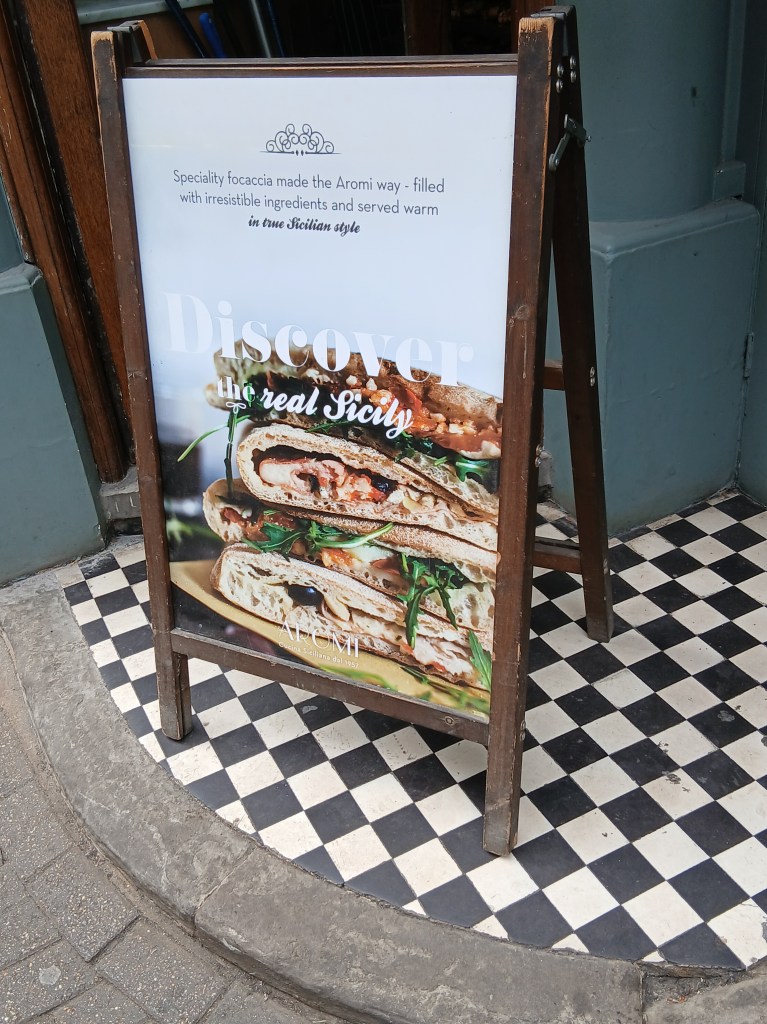
Our default pitstop in Cambridge is Aromi, in Bene’t Street just round the corner from the market square.  Having spent good time in that country over the years, the feel of a proper Italian eatery is something you just absorb – and when you find the same thing – the proper thing – somewhere else, a light of recognition goes on in the head.

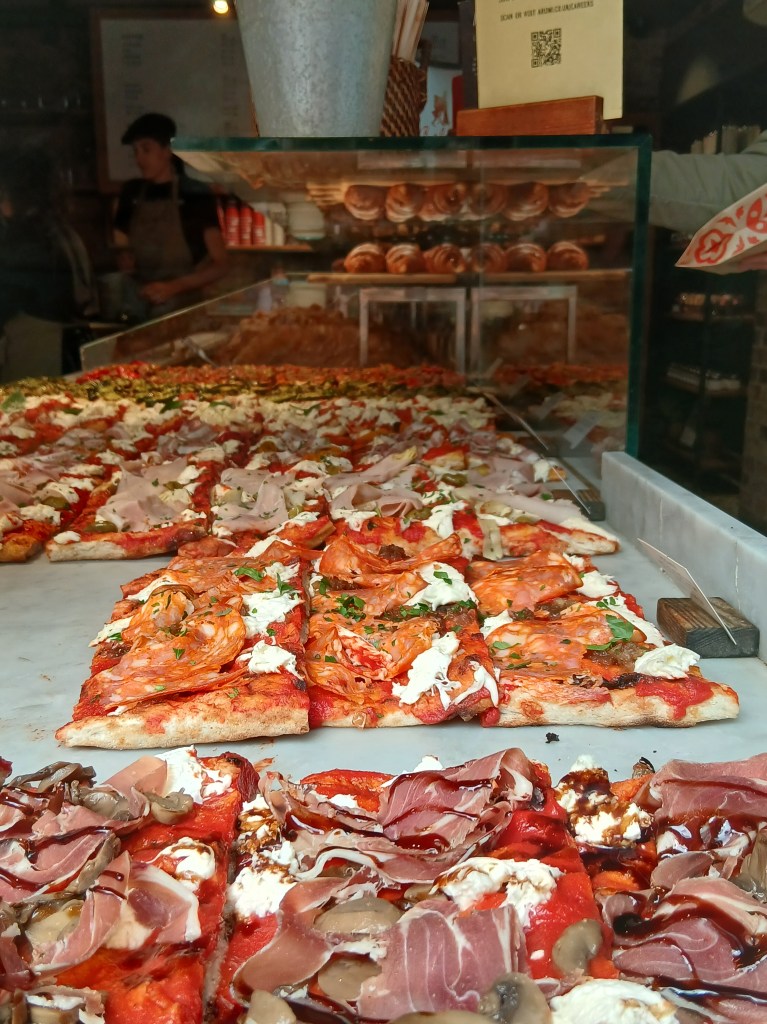
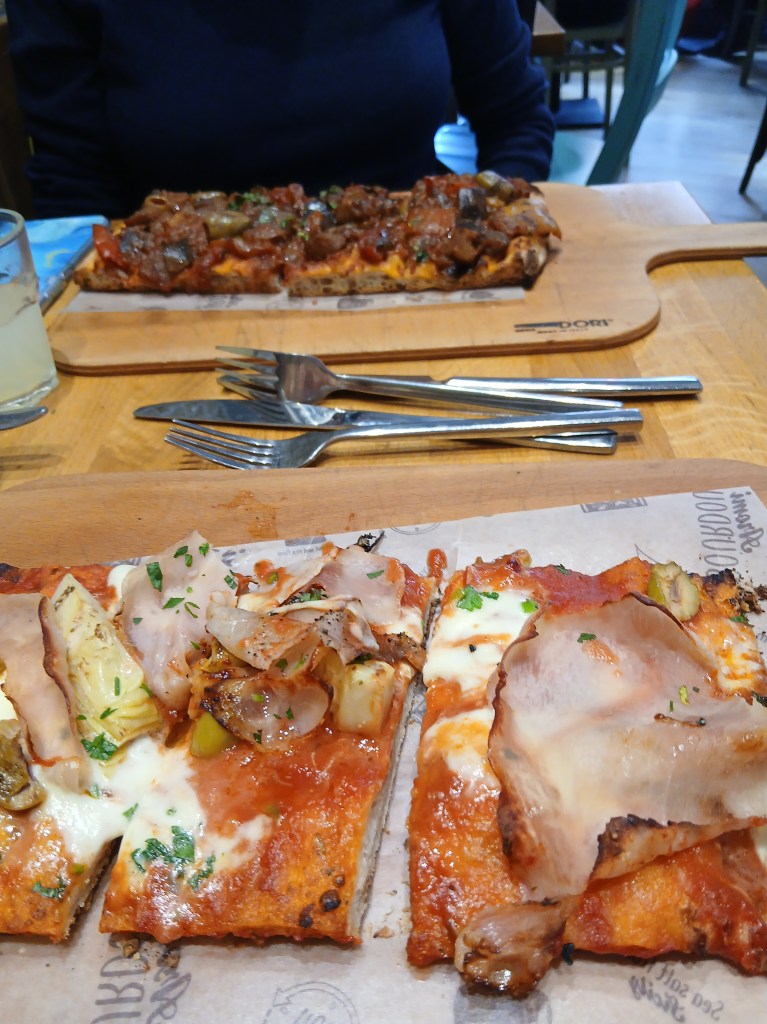
So it is with Aromi, first opened in 2013 by the younger generation of a Sicilian family, and now extending to three outlets across the city. This is not pretentious or themed food; the place is fairly unprepossessing, but everything is right. Its only drawback, in summer and weekends at least, is the lengthy queue. But it is worth it: as soon as you see the counter display with rows of pizza and focaccia slices displayed like no dull chain will ever master, the range of dolci and the brands of Italian coffees you know this place hits the mark.

Service is brisk but generally good humoured, as it probably needs to be given the rather cramped seating area. But again, as with all such places, the inconveniences are part of the character. And the flavours justify all.

Twenty years ago, Cambridge was curiously under-served by eateries, but as with many places, the intervening period has witnessed an explosion of places to eat – but sadly, mostly of the chain variety (with some honourable exceptions), and there is a good choice of street food in the market. Against this, Aromi still manages to be over-subscribed.

I believe that ‘quality will out’; that if you give people good choices, they will respond. Just opposite the original branch of Aromi is a branch of one of the ‘Italian’ chains. I have no idea why they thought this would be a good place to open, and I don’t think I have ever seen anyone going in. And why would they, given the much superior offering just a few paces away? Jamie Olivier also used to have an Italian restaurant just down the street, but that went some years ago too.

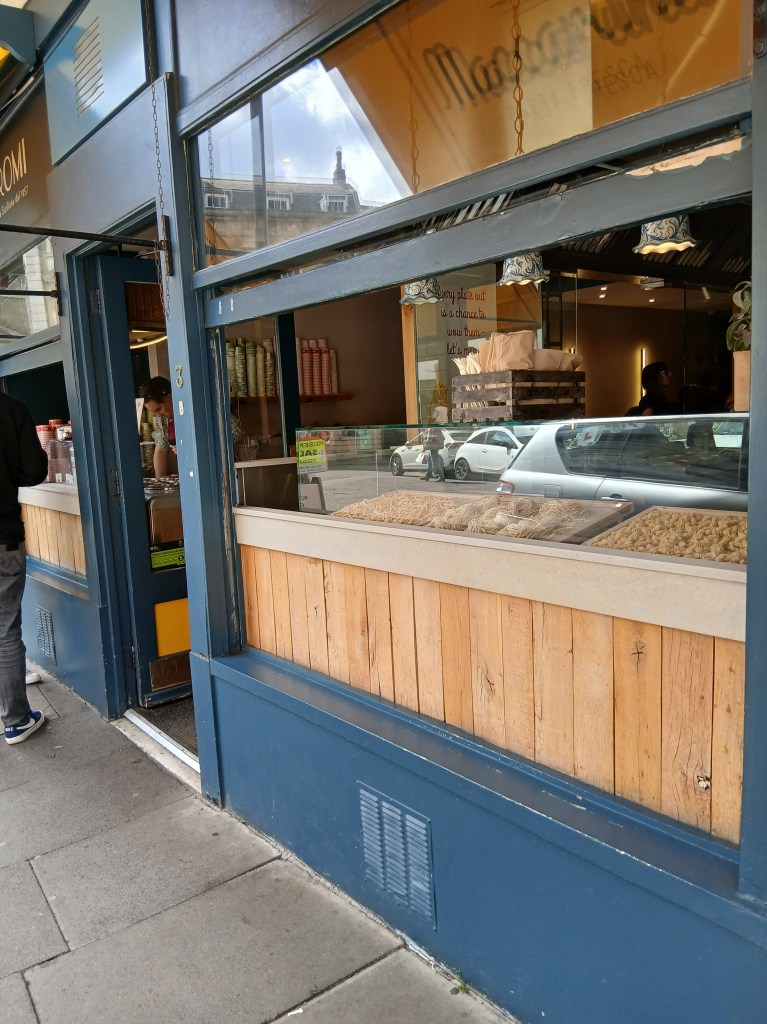
Meanwhile, Aromi has opened another café across the city, and just around the corner from ‘our’ branch, there is now a takeaway kiosk where they are selling excellent gelato and fresh pasta.

If there’s anywhere in provincial Britain where such a venture can succeed, it is probably Cambridge, which always feels as though it is one of the few British cities that can come close to the continental vibe – helped of course by a cosmopolitan mix of students, academics and tourists. The temptation is to wish that Aromi might spread its wings and start catering for a wider geographical area (one nearer our home would be a good start) – but I guess that is precisely where the rot tends to set in, once a unique venue becomes a chain. Better to keep it small and cramped, the food of a great quality – and a treat for the times when those Cambridge raids are on the cards.

The views in this review are entirely independent.

Opinion & Thought

Had

I wish I did not keep getting a vague feeling of being had: of being short-changed by life in present-day Britain: of occasions where reasonable expectations are rarely met. While one might have to cut some slack for the longer-term effects of the pandemic, and social changes such as the shift of almost everything online, too often it feels as though the concept of fair value has disappeared.

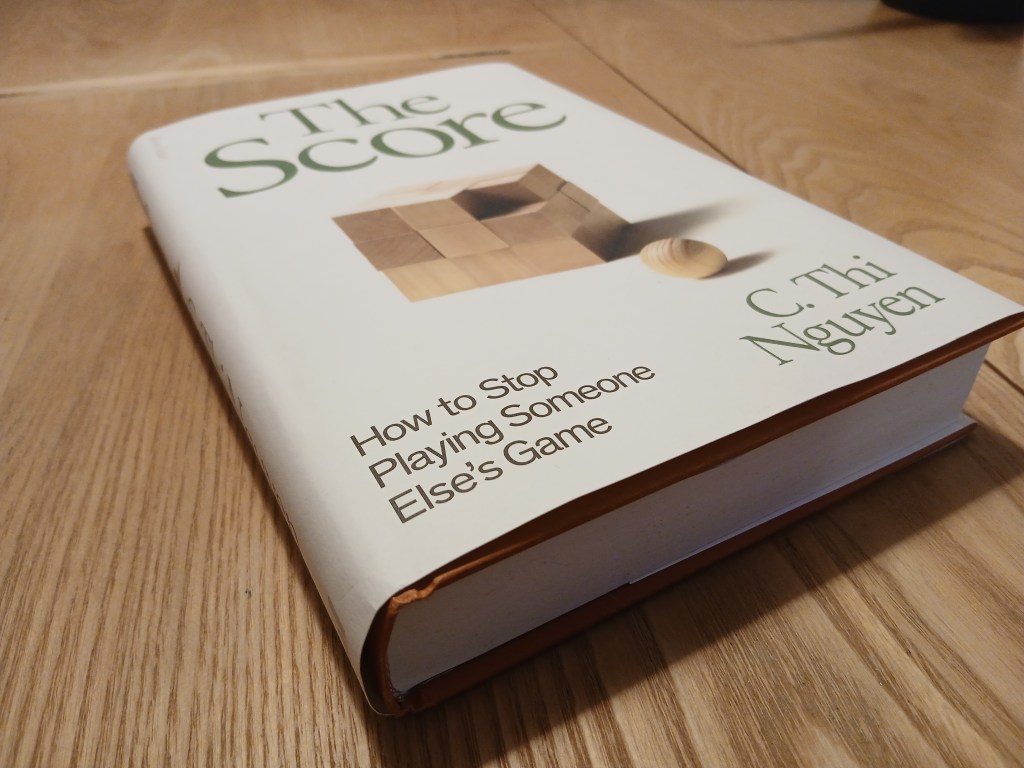
I’ve just finished reading C. Thi Nguyen’s book The Score, which surely is a candidate for the geek-book of the year, but it nonetheless shines strong light on some relevant concepts. First amongst these is something I have long been preoccupied with, namely the way in which explicit targets corrupt genuine value. Nearly fifty years ago, the incoming Thatcher government would have had us believe that target-driven privatisation was going to provide wider choice and lower costs; half a century on, it is apparent that state monopolies have simply been replaced by even more powerful and insidious private ones, which now have virtually total control over the way markets, even countries, function.

Nguyen calls targets Metrics, by which he means the ways in which modern society has come to benchmark almost everything. He argues that the benefit of this comes from fungibility – in other words, the ability to quantify standards and procedures irrespective of which interchangeable human-being happens to be on shift today. And so, we get standardised products no matter who is frying the burgers. But he also argues that the downside of metrics is that they all-too-easily become targets in their own right, often behaving in perverse ways.

One of his most arresting examples is certain (presumably American) Law Schools, whose success metric bizarrely included the number of applications rejected – presumably in the interests of remaining exclusive. The outcome was an increase in offers made to patently unsuitable candidates, purely so that they could be rejected and the metric met.

I felt a surge of recognition at this story, as my own experience of the British education system over several decades was similar: since emphasis was placed on league tables and exam results, almost the entire education system has shifted from teaching subject matter for its own sake to teaching students explicitly how to pass exams (gaming the system might be a better description). Exams whose results are invalidated by the fact that they are all too often not supported by genuine student insight. From this emerges a mindset that cannot accept justified failure on the part of some as the price for genuine success by others – and along the way, both groups of students are sold short. Few teachers dare to swim against this tide; I was one of them, and I paid a heavy price for doing so.

But to return to my initial sense of being short-changed…

Metrics have the additional effect of measuring the measurable, rather than the valuable. And so the emphasis shifts away from what is truly of value towards that which can be measured. Everything is effectively dumbed down because simplistic things are most easily measured – for example, the amount of money a sales assistant took in their shift – but not the quality of service they provided, or the satisfaction the customer did or did not experience. And that’s where the feeling of having been had comes from.

I think this mindset has now infected almost every aspect of life in the U.K.  Somewhere in my residual awareness is a sense of a fair transaction; I accept that one cannot have something for nothing and I expect to pay a fair price for things I buy. In some cases, I am prepared to spend quite a lot, but I expect good quality of service and product in return.  Would that the other parties in such transactions still seemed to think the same thing. But fair service seems to have gone by the board; what matters to most commercial organisations is solely the metric that delivers the largest annual profit. From this perspective, the sole reason for the troublesome existence of The Customer is to feed the corporate bottom line. Whether they get good value for money – or even a fit-for-purpose product – is simply not an issue.

There is an aggregate effect here too: there seem to be two models for company profit: one sells disposable junk at a bargain basement price, while the other sells premium products to the vanishingly small percentage of the market for whom being fleeced is not a concern. And in some cases, the only difference seems to be the price of the twt….

 In between the two, those who are willing or able to pay moderate amounts for decent quality have been squeezed. The situation seems to have become more extreme as the income of the wealthy few has soared, and with it the prices of products that want to preserve their “exclusivity”, while I guess, if you are prepared to settle for cheap junk, you don’t care less in the first place. This is another manifestation of inequality, and it shows even in my local town. Home to around 200,000 people and relatively affluent, it is not a backwater – and yet its retail offering has been hollowed out so that it really only serves these two markets. Choice is an illusion, though to be honest, I doubt this is an issue that probably concerns the vast majority, for whom cheapness seems to be the only criterion in town.

It has been made worse by the widespread disappearance of local businesses, ones for whom good customer service and value were essential aspects of what they provided. A particular hurt has been the disappearance of the last specialist menswear shop in my town, which served me for thirty years with intermittent purchases of good quality clothing. I can hardly begrudge Duncan his retirement, but it has left a hole. There is now nowhere locally where I can buy any clothes that I am prepared to part with cash for.

In the search today for a new summer suit, I have instead been investigating one of the longer-lasting (now only) high street brands, which at least still seems to offer a reasonable selection. They even offer some suits made from good-quality Italian fabrics. On my first enquiry, we ascertained, however, that the cutting and stitching was nonetheless done in China to a British template, albeit apparently at a factory that did seem to know what it was doing. So not really an Italian suit at all. I went back for a second look today, and a different assistant assured me that beyond doubt the suits were manufactured in Italy. I did not push for a second look at the label: the “Made in Italy” label is not applied to anything lightly, and I knew it would not be there.

The question is, why would I spend money at a shop where either a) the company does not care about dissembling on the provenance of its clothes (the “Italian fabric” was writ large, while “made in China” was quite the opposite) and b) where the staff is either unknowledgeable or dishonest enough to tell a straight lie even to a customer who was proposing to spend a not inconsiderable sum?

A similar thing can be seen with food outlets; in theory, the increase in such places on the high street ought to be a cause for celebration – and we are still some way from the density of cafes and restaurants found in many continental places. But it is not – because they deal almost exclusively with food treated in the same way as junk clothes: a huge, spurious choice of various incarnations of mass-produced chain-food pap, and virtually nothing for those who want choose a different deal, who would – yes- be prepared to pay (an amount) more for something of genuine quality. That still tends to be the difference between British towns and their continental counterparts.

The answer, of course, is that 99% of the time, they get away with it. People who know or care about these things are so few and far between that we make next to no dent in the companies’ income whether we decide to buy or not. In the UK in particular, the mass market buys almost entirely on price, while what matters to those on the selling side is simply whatever ruse they can deploy to maximise their revenue; all else is irrelevant. Even, it seems to the point of not caring about those sectors of the market who want something else. It is a matter of put up or shut up. To avoid repetition, I will skip details of several other recent experiences; suffice it to say the above were not unique events.

There is, of course, an aggregate impact of all this: I am a strong proponent of local shopping. Town and city centres are essential parts of their communities and I would be very happy to purchase as much as possible in such places. And you can’t feel fabrics or taste food online. But what am I to do if my needs are increasingly ignored? If I am not able to spend my money on things I genuinely want, then I cannot – or will not – patronise such shops. I am not prepared to feel that I have been had. We are left with places that largely purvey junk – while those with the means and (maybe) the taste patronise somewhere else entirely.

I am then left with no alternative but to do the legwork virtually – and shop online, where at least I know that the sales assistant (me) will give the customer (also me) the care that his purchase deserves.

Food, Opinion & Thought

Vanilla

It’s the hot chocolate that gives it away. A week or two ago, we were in a fairly average café in our local town, and I ordered one. It arrived promptly enough but turned out to be – as expected – the usual disappointing fare of over-sweet Cadbury’s powder, though in this case worsened by the fact that it was over-dilute and tasted mostly of water.

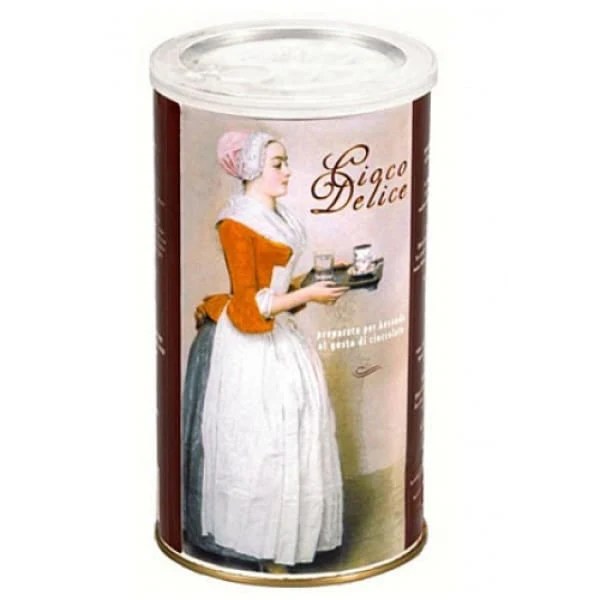
A few hot chocolates previously, I was in Lille, where chocolat chaud arrived as melted chocolate and a jug of hot milk. The same is normally the case in Italy, where hot chocolate has the consistency of double cream and almost needs to be spooned.  Inspired by this, at home we have taken to using Molinari which is at least available online in the U.K.

The trouble is, one’s palate adjusts to the flavours one consumes, which makes the insipid British offerings all the worse for us… We have the same experience with coffee; at home, we habitually drink Illy Italian coffee and make it with a Gaggia espresso machine, which delivers something like Italian strength – which is now our natural point of reference. What we mostly find in the coffee shops on British streets, despite their proliferation, is brown bathwater. Despite the coffee shop hype, and multiple gimmicky flavourings,  the baseline product repeatedly disappoints.

A couple of decades ago, I welcomed the spread of coffee shops across the U.K. It seemed like a major step forward for civilisation. In particular, I recall an early branch of Costa at Liverpool Street station, when it was still independently owned, and still felt like a proper Italian coffee bar, complete with polished granite counter, chromed high stools, proper pastries, and baristas who knew what they were doing.

Sadly, in recent years, I’ve all but given up on getting a good coffee in the U.K., at least outside a specialist restaurant. Coffee shops have become just another retail outlet clone for big business. Both Costa and Pret a Manger (hitherto my fall-backs for a half-decent cup) seem to have travelled the dumbed-down route. In lieu of decent drinks, both now offer the same buckets of dilute brown precipitate as Starbucks, to be sucked through the plastic lid of a cardboard takeaway cup. As with most things in Britain, we are only ever given a diluted version of what happens elsewhere.

My guess is that the loss of distinctiveness of such brands is not unconnected to the fact that both were bought out by large conglomerates, which broadened the reach but, in the process, completely destroyed the product. My second guess is that this trend is another import from the U.S.A, whose coffee, if the average Americano is anything to go by, is even more anaemic than ours. Once again, quantity over quality. It seems that the mass-business model is not to offer anything that might offend anyone by being too tasty. But in the process, they only end up giving even greater offence to those of us who prefer something more distinctive.

Apparently, the growth in the café sector in the U.K. at present is with independents. We do have some locally – but sadly they mostly seem to have used the chains as their template, both in terms of ambience and product.  https://www.lovetoast.co.uk/toastwitham   They talk the talk about loving coffee – but my experiences of drinking there revealed the same over dilute buckets as everywhere else.

From hot drinks to life in general.

What concerns me here, is why the British public puts up with this treatment. Which comes first: the companies diluting standards, and with it, expectations – or a public whose taste is so vanilla in the first place, that the companies know they won’t sell anything more distinctive?

I don’t have anything against genuine vanilla either – it is a very pleasant flavour used properly (which is not in gimmicky flavoured coffees…) But there’s a reason the word has also come to mean bland – and in that respect, it seems to describe British taste perfectly. In fact, those flavoured coffees tell a tale of their own: of a market that values gimmicks over good basic quality. Novelty to distract from the inferior quality of the basic offering.

One might have hoped that by now the much-vaunted British food and drink revolution of the Nineties and Noughties would have embedded itself in the national psyche of successive generations, but in actual fact, Vanilla seems to be getting worse. The end-product of that ‘revolution’ with regard to food seems to have been the gourmet burger – which ultimately is still just a burger –  and an increased range of pseudo-ethnic outlets which, from what I can see, just offer various incarnations of fast food. Packaging it as ‘street food’ doesn’t deny what it ultimately is: processed junk.

One might also have thought that increased health awareness would have had an impact, but my close professional contact with the current generation of teens suggests they eat more junk than ever before, and a lot of them don’t touch anything that isn’t Coke or ‘flavoured’ water when it comes to drinks.

One of the repeated experiences I have across the Channel is places where one’s senses are fed rather than ignored. I can’t help it: it just happens. Time and time again. As I wrote a short while ago, the experiences of different countries do strongly suggest that tastes and expectations are not the same everywhere. One can debate whether the products on offer reflect the market or dictate it – but either way, I am still bemused why British tastes are just so, well – vanilla. Anaemic. Or as one writer put it, Taste Free.

It is not only hot drinks: as I’ve bemoaned before, the same goes for standards in everything: the overriding principle is Bland. I’ve learned never to trust the reviews on Trustpilot – most people seem to have completely different benchmarks). Everything seems to need to be diluted, its teeth and claws removed, before it is acceptable to the anodyne ‘Great’ British public. Or are many other people also sitting there in their local Costa secretly disappointed at the offering? And if so, then Why?

Despite much mulling of this over the years, I still am not much closer to an answer. When presented with such an opinion, many people become indignant, as though national pride could and should not be affronted in this way. But if they are part of the problem, they are scarcely going to understand it. For them, Italian coffee will just seem unbearably strong. Maybe the climate has something to do with it, or maybe it’s what a historic Protestant ethic of self-denial does to our feelings about sensory indulgence? But then, other northern European countries, just as cold and just as Protestant, don’t seem to have the same difficulties producing decent Kaffe und Kuchen and indeed good quality other things too…

I suspect that knowing your own preference is part of it, something else where, in the taste stakes, it seems that  many Britons are still in the starting blocks. It is certainly the case that stronger tastes become – ahem! – more Marmite – you either like them or you don’t.  If you do not know your own preferences, you cannot be discerning. You will meekly, passionlessly, accept what you are given, in a way I suspect the French consumer, for example, rarely does should it be substandard. Until people boycott places that offer inferior products, those places will carry on getting away with it.

A recent YouTube watch, mulling the British mindset seemed to major on “easy going” as a British characteristic. Perhaps: so easy going as never to stand up for decent standards when they are needed.

It doesn’t give me satisfaction to have these experiences. It is a great disappointment that life on this side of the Channel sometimes seems to be lived in diffident shades of grey compared with what happens elsewhere. I can’t see any other real reason why it should be so – except that the culture itself is now so diluted that people never want to do the work to appreciate anything more distinctive. So used have they perhaps become to the bland offerings of big commerce. In other words, it is as it is simply because the majority of people are themselves now so vanilla that they are content to let everything else be, as well.

Arts, Architecture & Design, Food, Opinion & Thought

Props

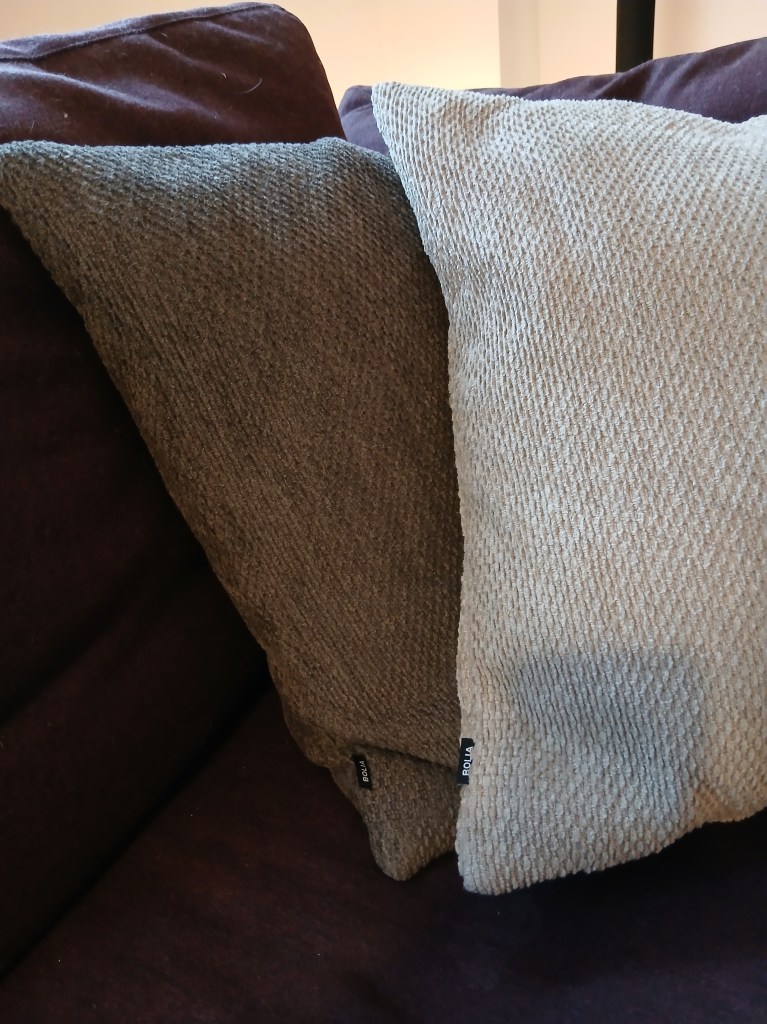
On our dusk walk back to the station during our visit to Lille, our eye was caught by a brightly-lit interiors shop. As with so many shops on the continent, it was the enticing window display that did it. Before we knew, we were inside. We had gone to Lille minus hand luggage, which is just as well, since we exited sporting two very large bags containing four nicely textural wool cushions for our sofas. It was also just as well that we had restrained our other purchases that day to a box of pâtes de fruits from Méert, since we had quite a job getting through Eurostar check-in and onto the train.

So once again, we returned from France with enticing stuff, an eventuality much more likely from there than here. And it started my mind rolling on why stuff is important; after all, I spend a lot of time on this blog talking about it…

In my head, I can hear a riposte to my frequent laments about poor quality in the U.K.: people who are secure in their identities and lives do not need emotional props to make their lives worthwhile. Maybe that is why the U.K. plays everything down: its citizens are already wholly secure in themselves….

If only the evidence supported it. Quite apart from the mental health crisis, it is not that the British eschew stuff: consumer culture has never been more dominant in the nation’s life, and shopping is apparently still a national recreation, even if now done online rather than on the high street. We have so much stuff that apparently self-storage facilities are a growth sector… But when we have so much, how can we possibly appreciate it all? 

I’m not going to decry stuff as a modern sin; people have coveted attractive objects since early human times. What has perhaps changed is the balance between quality and quantity: we are now so used to it, that stuff is as cheap psychologically as it can be monetarily.

So I am not going to apologise for, in effect, arguing for more veneration of stuff. Quite apart from purely practical necessity, personal possessions may well be props for our fragile egos, as they have been since early times. The secret lies in the appreciation: choosing more carefully in the first place, and then actively appreciating what we are lucky enough to have, rather than taking it for granted, throwing it away – and buying more. People have long had possessions – but the important bit is the treasuring – rather than taking for granted. If wool cushions can genuinely add a small amount of pleasure to one’s life, then why not? But choose carefully and don’t throw away and replace after a short period!

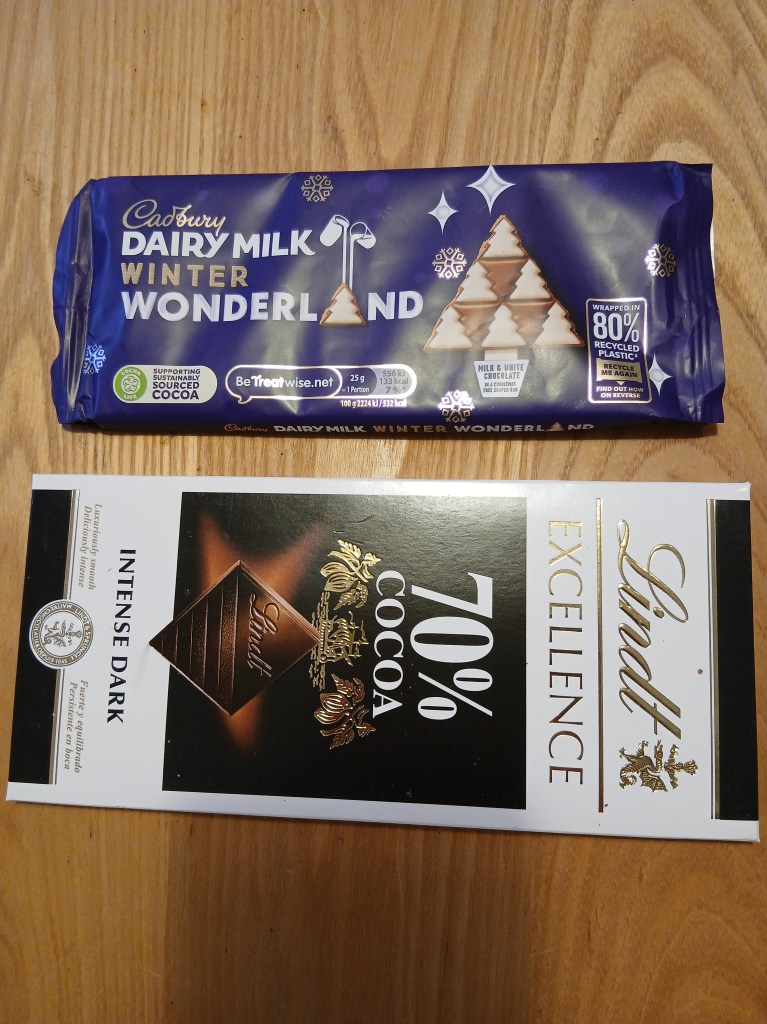
While writing this, my attention turned to the contents of our chocolate basket, sitting on the post-lunch table.  Even there, the issue was clear: Exhibit A (below) shows the contrast in how chocolate is presented in the U.K. and Switzerland. This is not contrived: the bar of Cadbury was given to me at Christmas by a student; the Lindt was our regular fare bought from a local supermarket, and is reasonably representative of how chocolate is packaged in Switzerland. And yet it is Cadbury’s that is the most popular chocolate in the U.K.: cheap – and almost taste-free. Once again, dumbed down ‘product’ triumphs over something altogether more rewarding.

I tried a square of the Cadbury but could eat no more. The packaging said it all: 20% cocoa solids and “contains vegetable fats other than cocoa solid”. Enough to have hitherto made the EU exclude the British product from being described as chocolate in continental markets. It tasted of nothing but sugar. The dumbed-down packaging says all one needs to know about the mindset of how such products are marketed in the U.K.: a childish candy, rather than the more complex, adult offering of the Swiss. To be fair, Hotel Chocolat and others are slowly educating the British public about the possibilities – but there is a long, long way to go….

While I’m generally a fan of mindfulness, I found the concept of appreciation journalling a bit over the top  – until it occurred to me that in part, this blog does exactly that: it makes the case for choosing and owning of stuff as something less trivial: a matter of active celebration rather than mere mindless routine. One might still have the guilt-trip about needless consumption, but one solution is to turn ‘mindless’ into ‘mindful’. Material possessions can bring real pleasure to our lives – if chosen carefully and appreciated to the full. And in terms of ‘total consumption’, I suggest that choosing better is more likely to decrease our overall consumption, since it reduces levels of boredom and the need for the constant replacement of what we own.

Purchasing may be fun, but the defining part of the process should not be that moment, so much as the ongoing process of appreciative ownership. Indeed, purchasing is more pleasurable when one has the anticipation of a meaningful relationship with what one is buying. I suspect the Saturday afternoon arms-full leisure-shoppers don’t get this: our culture shops on quantity over quality every time. Mainstream retailers probably prefer it this way – but if one does decide to patronise a more discerning supplier, one finds a rather different attitude, where fewer-but-better still makes sense…

The French, Italians and others seem to know this better. My impression is that they are not as indiscriminate in what they buy as many British. Food is a perfect example: the veneration takes on almost cult-like status with renowned foodstuffs, and the knowledgeable selection of ‘good stuff’ is the informed customer’s part in this ritual. It’s a courtesy to the producer to have a deep appreciation for, and discrimination of, what one is buying. It can apply to other things too: it’s notable that many of the world’s great brands come from these countries. But I am not suggesting that brands are essential; while they acquire their reputations for a reason, there are plenty of good products out there from unknown suppliers. It’s the quality, not the label that is important.

The word ‘prop’ has another meaning: as in the ‘properties’ that actors and artists use to express their lives and work, to make that work more intense and more effective. Every day is part of the drama of one’s own life; the careful use of props to amplify and express our experiences, even to affirm our identities, is not a crime, but an integral part of the human experience – at least if done in the spirit of genuine appreciation.  

But as with chocolate, in that respect not all stuff is equal.