Opinion & Thought

Discriminating? Discerning? Definitely!

wine

I can’t remember where the phrase comes from – perhaps an episode of Yes Minister, or maybe The Good Life – but it goes, somewhat pleadingly, “…but we are discerning people…!”

The implication is that there is a group within society whose views in matters of taste and judgement are superior to the rest. It is something that has intrigued me for a long time, simply because of the very complex questions it raises about matters of aesthetic merit, quite apart from the less appealing but still interesting overtones of social snobbery and elitism.

Even the words are difficult: while we might accept that discrimination may be a good thing when it comes to a choice of wine, it most certainly would not be were the issue the politics of race, gender, age, disability or intelligence –  and quite rightly so. Discernment is perhaps discrimination’s gentler cousin – but it still implies the ability (and entitlement?) to make the ‘right’ judgements about things.

I suppose the deep assumption behind this blog is that discernment – discrimination even – is at least part of the secret to a satisfying life. Some people might see even that claim as rather totalitarian – but I really don’t see the point in allowing all sorts of indiscriminate twt into one’s life, whether that be in one’s personal mores, the way one treats others, the general ‘standards’ one aims at, or the material or intellectual things with which one surrounds oneself. And I don’t think that hair-shirt wearing simply because others may be unwilling or unable to follow suit is really the best way to tackle that particular problem. Otherwise, life simply becomes a race to the bottom.

We don’t have very consistent standards about this though: many would probably accept that some people have better judgement than others when it comes to a matter like wine, antiques or art, less so when discussing food, perhaps and very few might accept the same when considering music or fashion. Why this should be so is difficult to fathom; perhaps it relates to the perceived ability or entitlement of individuals to access those fields and make meaningful decision about them.

But there still remains the difficulty that verdicts about good/bad and right/wrong can ultimately be nothing more than the product of subjective consensus between individuals – and then we get into the whole social minefield of which groups (should?) have the authority to decide what, for example is ‘good’ art. Very often, the whole matter is inextricably tied up with matters of social class and power, with Establishment values both holding sway, and also being used as a kind of passport to entry of that particular clique.

Yet history shows that quite often the Establishment gets it wrong: given that ‘genius’ often correlates with individuals who disrupt established norms, the wrong-footing of the cultural elites is a regular feature of art history. Bizet, Modigliani and Miles Davis are just three examples of people who were initially rejected, only to be hailed for their genius at a later stage. So even now, can we really be objective that Picasso was a great artist whereas a graffiti-hoodlum is not? What about Banksy? Or the political murals of Northern Ireland and elsewhere?

So social acceptability is actually a very unreliable measure of quality, for all there are plenty of vested interests that might want us to believe otherwise.

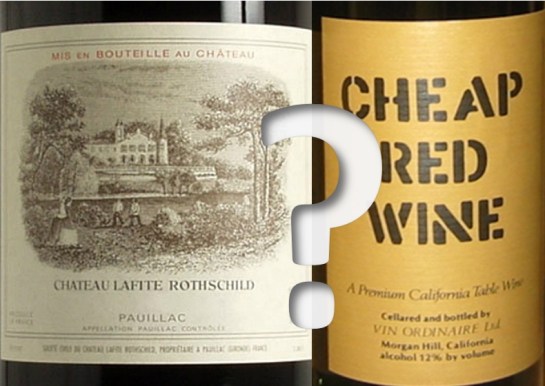
Are wines that sell for hundreds of pounds a bottle really worth so much more than the average supermarket offering? I suspect many people would say not; the usual argument seems to be that if you like it, that’s all that matters. And yet, on the one occasion in my life when I tasted a truly distinguished wine, a Château D’Yquem, I was forced to concede that the experience was unlike any other wine I had ever drunk. The fact that it is only periodically produced, using techniques of the most extreme care and – yes – discrimination regarding what is acceptable, produced an incomparable result.

So perhaps it comes down to matters of aestheticism: the surprise about that d’Yquem was the fact that I could still taste it a good ten minutes later, so intense was it, even a slightly unnerving experience if you are not expecting it. And from that, where are we to go with all those other fields where discernment appears to play a part? What about music? Food? Fashion?

Having listened to almost no music whatsoever during my illness of the last year (when you’re not in the mood, it’s just annoying noise) my first resort has been classical music; after that long silence, it is all the more clear to me at least, that the intricacy of that music, the purity of the sound, and perhaps above all its ability to capture mood and emotion really does transcend all other types. And yet, even that is not going to convince many!

But as I have listened more, I have also rediscovered the lighter but still very subtle nuances in the various traditional musics that I enjoy, particularly the Irish and Scottish traditions. They too are capable of being very moving indeed, but they are also perhaps one of the less socially-acceptable forms of music according to conventional tastes.

As my sense of enjoyment has returned, food has started again being something more than mere fuel, and the pleasure of properly made pizza, pasta and other simple dishes is back. But note, my use of ‘properly made’: I still have preferences that I consider to be superior to the alternatives – for there is a huge difference between an wood-baked artisan pizza and the average chain restaurant offering, and having eaten both, no one will persuade me otherwise!

In the final reckoning I think it has to come down to how receptive one is to aesthetic experiences. It is also a very complex matter: knowledge of the ‘authenticity’ of that wood-oven pizza is most definitely part of the package – but why should the cognitive aspects of the experience be disregarded? Likewise, some music simply has more innate sonic qualities than other – but the ability to know that depends not on the music but on the receptiveness of the listener. It does not mean, incidentally, that other forms of ‘aesthetically lesser’ music do not have their place: they simply have different purposes – but it may be pushing it to claim that all forms of music are aesthetically equal.

When it comes to clothing, for me there are certain fixed qualities, such as tactility , colour and texture of the material, the fit (whether it flatters or not), and the standard of the craftsmanship. Nothing especially to do with a particular ‘fashion’ though most certainly the cultural connotations that clothes can carry can influence the emotional experience one has of them.

Some things are as close to ‘definitely better’ as it is possible to be: I think that natural fibres are superior to synthetic ones for very deep, primitive sensual reasons, nothing to do with conscious preferences. In the same way, I suspect that acoustic music tends to chime more deeply with the human psyche than the inevitable distortions of amplified sound – which more often than not then tries to compensate by use of excessive volume. Not at all the same thing.

What I do not accept is that some sectors of society should – or do – have a monopoly on ‘good taste’. This seems to afflict some nations more than others: the consensus about what makes a ‘good’ espresso or croissant are pretty-much universal in the cultures concerned, the ‘rules’ surrounding them are there for widely accepted practical reasons and cross social boundaries.

While high demand does tend to inflate prices, the ability to buy is not in itself a measure of aesthetic value. I do not like the way in which the Establishment often considers it has cornered the market in good taste and priced it accordingly – but equally I am not keen on the kind of inverse-snobbery of those who will do anything just to prove the opposite.

Discernment in aesthetic matters has the potential to enrich the lives of any and every one: ‘judgement’ is a skill that can be learned through experience; it does not have to carry a huge price tag, just the willingness to look, feel, reflect and compare. But I equally do not accept (or even entirely understand) the opposite viewpoint that discernment should be reviled for its supposedly-elitist overtones: even at the most basic sensory level, not everything is equal in this world.


Sartoria

Lussoti – Anglo-Italian style on a good footing…

Luss01
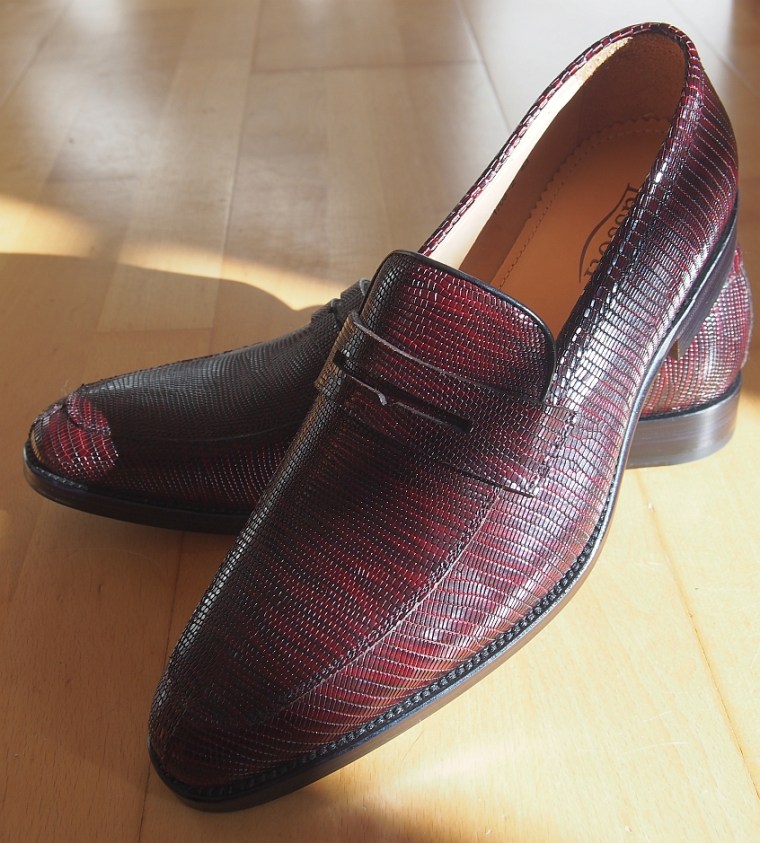
Giovanni penny loafer

For some time I have been bemoaning the fact that much British men’s footwear, as well as being deadly dull, was not even well-made any more. Having run out of patience with offerings that lasted barely a season, and given the local famine of inspiration, I got myself up to the West End to see what might be had. I tracked down one of the few self-owned Loake outlets and my jaw hit the deck: £800 for a pair of ordinary-looking black brogues… Well, I suppose I should have expected that from the Burlington Arcade – but when even Russell & Bromley who, while a quality shoe-maker are hardly top of the tree, charge in excess of £200 for a similar pair, I began to realise that it was probably my frame of reference that was out of date…

What’s a man of average means to do? The kind of money I was used to spending on shoes was all too evidently a false economy. Luckily, the dear old internet came to the rescue once again, and doing the virtual rounds of Tuscany, I found several makers who would dispatch to the U.K. – but again, Italian shoes don’t come cheap…

Enter two companies who can provide something of an answer: Scarosso, who are a small German-Italian outfit, and the newcomer Lussoti, who are based not in Chiantishire so much as Chesterfield. Lussoti Shoes may have a convincing Italian ring to the name, but there’s more to it than meets the eye.

The company is the project of Luke Twigg and Garry Marshall, who were equally fed up with the lack of good quality, reasonably-priced men’s shoes on the market. Having met little success in sourcing shoes from other makers, they set up their own brand, largely designed in-house, but manufactured using the top-notch  labour and materials of and in Tuscany.

The result? A small selection of hand-made shoes which display a distinct Italian styling but with prices which, while not exactly cheap, at least make the occasional acquisition a distinct possibility. By keeping out the middle-men, cost-savings can be passed on to the customer, and result in a collection the majority of which comes in at between £100 and £250. I have by now re-educated myself such that this is an acceptable price to pay for a product that will hopefully last and last – and after all one does not need new shoes every day…

What makes a significant difference, too, is the quality of the product. Not only are these designs that are quirky and sharp enough to be different without marking oneself out on the mean streets of Chesterfield or Colchester as a full-on Mafioso, but the material quality and craftsmanship really stands out. From the sturdy slip-type box, to the dust bags and complimentary shoe horn, this is a very good all-round retail experience for the price. The two pairs that I now own are light but sturdy, and were almost like wearing slippers from the word go. None (yet) of the six months of agony needed to wear in a pair of Loakes. I like fairly pointed shoes, which are more interesting than blunt-nosed British types. These are just right, with ample toe-room, which is not always the case.

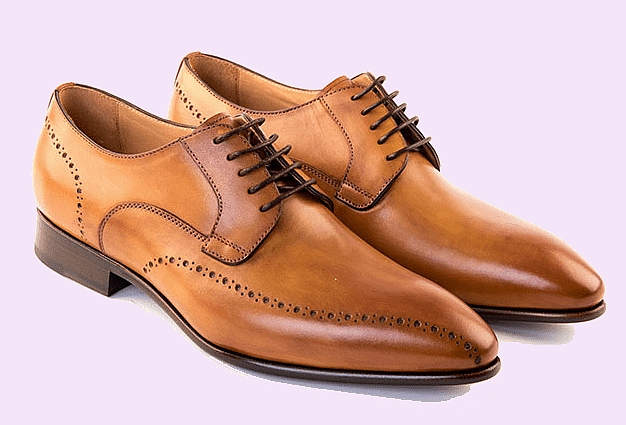
The Nero derbies are extremely supple and while I don’t really like brogues, I find the hand-stamped, oblique reference to those over-elaborate items vaguely amusing. I ordered a pair/size combination that was out of stock, Luke scoured his retailers until he secured a pair for me in just a couple of days.

Luss02
Nero derbies

The more recently-arrived Giovanni embossed burgundy penny loafers are also delightful, though needing slightly more walking in. For someone who dislikes ‘boring black’ shoes, these are a good, slightly subversive alternative with grey or black suit or trousers.

As I mentioned in the previous post, I am intrigued to see a number of pan-national companies like this arising as a means of reconciling demand for distinctive products with the places that can supply them. Although the company has only been established since 2015 their shoes are already being retailed in selected shops across the U.K. and at one place in the U.S.A.

Full marks to these gents for the initiative and I just hope that the madness of Brexit does not do too much harm to business models like this.

https://lussoti.com/

The views are solely my own, though the review was written with the co-operation of Lussoti Shoes. The appalling puns are entirely my own work; well, it was one of those afternoons…

Opinion & Thought, Politics and current affairs, Sartoria

Suits E.U., sir!

I can hardly be the only British gent who is regularly bombarded by advertising from Jermyn Street shirt manufacturer Charles Tyrwhitt. I wrote to them several years ago pointing out that while I approved of their democratising marketing strategy, I would be more happy to buy their clothes if their tailoring and design was not all so old-school British. I pointed out that traditional British menswear is often starchy-formal and has associations of occupation and social stereotype that I don’t feel happy with – and that’s without the age profile that it still implied.

I received one of their habitually jolly letters in reply, explaining that this was what the British market still wanted. Well, some years on, I note a distinct modernisation of Tyrwhitt’s catalogue, with sharper styles and fabrics sourced from amongst others, good Italian mills. I also noticed recently, the first appearance of a non-white model in the catalogue: well done – but about time too! I’m certainly not claiming any influence over the decision, but I think it has made Tyrwhitt a more appealing clothier, and has hopefully broadened their market as a result.

While there’s no question over the quality of traditional British men’s tailoring, my reservations still hold, and this is why I tend to prefer French and Italian style – it is slightly sharper while also less formal, more open to interpretation and relatively devoid of the overtones of social class.

So I’ve been delighted to discover more recently, a number of British companies that are challenging the conservative norm by offering British clothing – designed for British body shapes – while looking to the continent for some of their design inspiration. I will be reviewing items by a number of these companies in forthcoming posts.

In the meantime, I must admit I rather worry about the effect of Brexit on this welcome development. Here we have companies doing their design work in one country, sourcing their materials and doing their manufacturing in others, and retailing from others again. A number of them seem to be relatively small start-ups, and one might almost suggest that there is the making of a pan-European industry here, which provides for a range of clients by taking the requisite elements from the different traditions. And that’s without the large number of European companies now selling internationally. If it leads to an improvement in the general sartorial standards of the male British population, that will be a welcome bonus, too.

I will mention the names of Chester Barrie clothing, Lussoti Shoes, Scarosso Shoes and of course Charles Tyrwhitt as some that seem to be taking this route (there are others) – and end by saying that I hope they have plans for dealing with Brexit, because it would be a great shame if their interesting business models and the stylish, well made products they are making, were destroyed as a result of this madness.


Food

Zen and the art of pastry-making

patisserie

Pâtisserie production is a notoriously fiddly process. The fineness of the pastries, choux, custards and glazes all takes time and there are few short-cuts that aren’t immediately obvious as such. There has been quite a debate in the press in recent weeks about the virtues or otherwise of various mass-produced croissants, perhaps prompted by news that the old techniques are in decline in France too, no doubt provoked by a shortage of butter.

My last encounter with a full-on traditional croissant was in a rather ‘proper’ cafe in Lyon, the summer before last – and suffice it to say that it was a world away from the things one is routinely forced to accept in the U.K.

I know that croissants are not fully-considered patisserie, but the principles are the same – and I was suddenly taken by the urge some weeks ago to revisit some of the recipes I used perhaps twenty-five years ago, after my first proper encounters with the real thing in France.

I find it actually rather pleasant to spend the afternoon doing some non-essential cooking. And with my other interests including distinctly-obsessive attention to detail, the intricacies are even rather welcome. I will admit, too, that some of the intimidation that proper cooks feel for patisserie had simply, out of ignorance passed me by. My wife, who has never before known me do such things was, I think, rather impressed when she arrived home to find I had made a very satisfactory pâté brisée; I simply didn’t know it was meant to be difficult…

OLYMPUS DIGITAL CAMERA

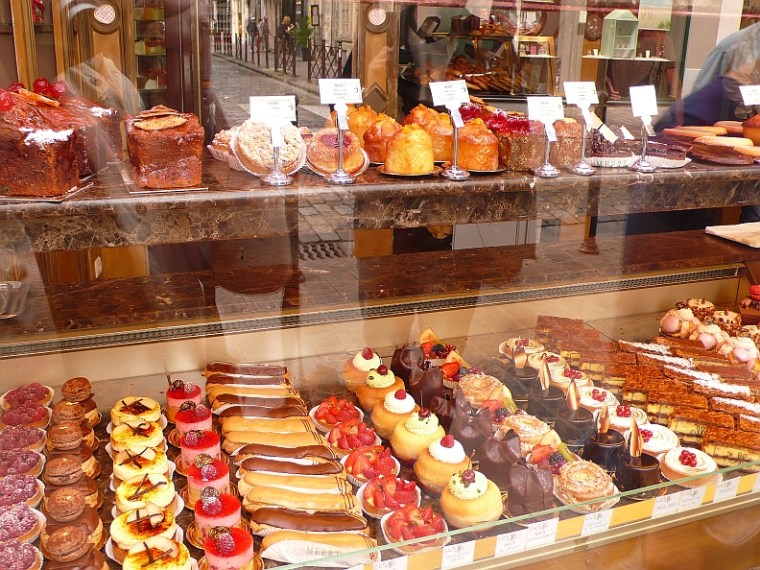
I think the other thing I like about patisserie is that it is meant to be spectacular and it appeals to the closet exhibitionist in me. Quite often it’s easier to do than it might appear, once you know the secrets. Think about the effect seen in a shop window in the 16th – Patisserie Valerie is a worthy contribution in this country – but it has a good way to go yet…

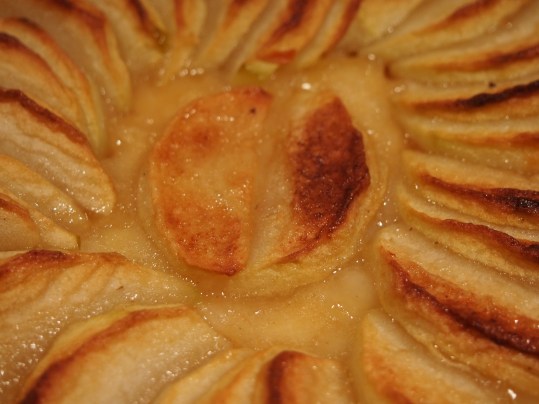
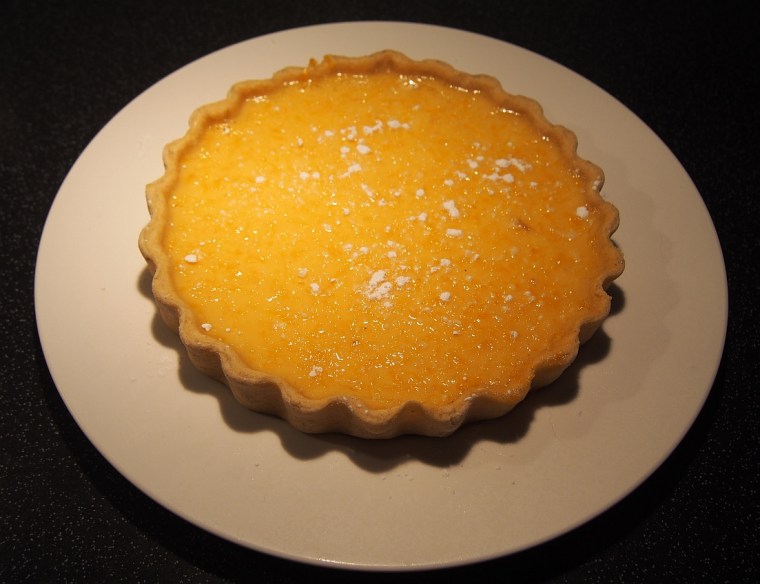
Anyway, I offer by means of evidence of my endeavours one old and one new (at least to me): the tarte aux pommes is one I resurrected from my earlier efforts, while the tarte aux citrons is the result of a request – no directive – from my wife having eaten two of the apple ones. Next on the list may indeed be home-made croissants, which I did make a couple of times many years ago with reasonable success, or perhaps chocolate éclairs – but I am also tempted by an opera cake, which is just that bit more jewellery-like flamboyant again. There’s a bit of brushing-up on technique and presentation required yet; I will report back on progress in due course.

And the secret for all those of my countrymen visibly shrinking from the thought of voluntarily spending time in the kitchen: it’s not work when you don’t have to do it.

TaC


Arts, Architecture & Design

Don’t (just) Dream

OLYMPUS DIGITAL CAMERA

First World problems.

Some months after my wife bought one, I eventually yielded to the temptation of a tablet computer, the main reason being a wish to cut down on the amount of recycling generated by my rather sizeable magazine consumption. I’m happy to say it worked – but I felt that if I was going to be spending quite a lot of time with that item, it deserved to be done properly. In particular, I like a book that I am going to be holding for a lot of time to be pleasingly tactile, and I didn’t see why a tablet case should be less so. One can also add that a tablet is both more fragile and more expensive than the average book, and so perhaps needs a suitable case all the more.

The official Samsung case came in at about £50 and was only available in a very limited range of colours and finishes, so I  hunted through the hundreds of cases available online. Most were surprisingly cheap; I eventually bought one that looked promising. It started well, but inside a month, two of the clips holding the tablet in place had broken, and there were signs of further imminent deterioration. So after another considerable hunt, I bought a slightly more expensive replacement. This lasted rather longer – but it had several design flaws, not least the inability to charge the tablet with the cover closed – and it too soon started to deteriorate. At this stage, I also found out that ‘PU leather’ is a euphemism for polyurethane and is, in my view pushing its luck with trade description law. Time for another re-think.

Next I bought a Danish-designed leather cover – albeit made in India. This would have been quite costly had it not been an end-of-line model. It was better on the tactility front, but it turned out still not to permit case-closed charging, and after a few weeks, the ridges against which the open cover rests came loose inside its lining, meaning the tablet would not stand up properly.

Further searching – and eventually I landed on the Noreve website. This company specialises in what it calls ‘haute couture for devices’ These covers are hand-made to order in St Tropez no less, from top-quality leathers, the colours and finish of which can be specified on ordering. They have a small range in stock, and there is a wait of about two weeks for a made-to-order specimen.

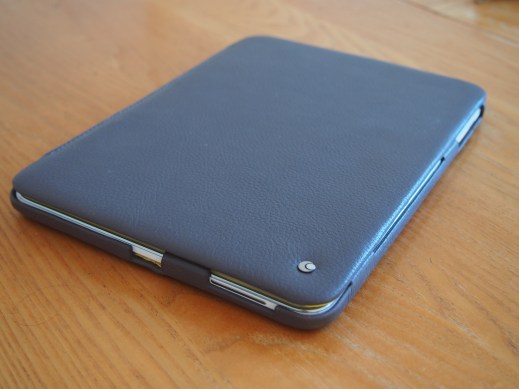
As always, I staked out the website for several weeks until a sale came up, with a significant reduction on offer; I pounced. The case eventually arrived, not only well-packaged, but also in its own box and cloth travel-bag. Très chic. The claims made by Noreve are not over-stated: the case grips the tablet firmly but unobtrusively, and it is still possible to remove it when needed; strong magnets hold the case closed without the need for a strap. All of the function ports are fully accessible and the material finish is beautifully tactile – rather akin to holding a leather-bound volume in one’s hands. The experience of using the tablet is significantly enhanced as a result. My only criticism is that there appears to be no magnetic auto-off function when closing the case.

OLYMPUS DIGITAL CAMERA

Six months later, Noreve emailed me asking if I wanted to replace the case with a new one; it was very tempting to reply by asking whether they were expecting the original to have fallen apart, not that there appeared to be any chance whatsoever of that happening. Indeed the case is just starting to loosen up and mellow nicely.

Judging by the prices of other goods on their website, I suspect that many Noreve items are bought by those who can afford to treat them as disposable – which I most definitely cannot, neither would not wish to. Judging from progress to date, this will last many years – and as it is what I had had in mind to begin with, there is going to be little temptation to change. Some may be interested to note that they also provide mobile phone covers for a vast range of phones, as well as specs cases and other niceties.

The £75 I paid for the case was about 50% higher than the Samsung one, and about the same amount more than the total cost of the several failed cheap efforts I had purchased to begin with. But I expect this to last many times longer and therefore justify the outlay.

Moral of the story: always follow your own advice and buy the best you can afford to start with.

https://www.noreve.com/en/

Noreve products are also available from third-party suppliers including Amazon, though in limited styles and not to order.

(Usual disclaimer)


Food

Pastaciutta, Chelmsford: first impressions count.

Pastaciutta1

…but not always in the way you might expect.

I suppose it’s a worldwide phenomenon, the dressing-up of ‘ethnic’ restaurants to conjure up the ambience of the homeland…. and yet I tend to be suspicious. Anywhere that needs to ‘theme’ itself strongly may be saying something about the inability of its food to do the job without help.

Pastaciutta is about as far away from that as possible. Started a couple of years ago by husband-and-wife Alessio and Laura Maugeri, it is tucked away under a multi-storey car park in the less attractive part of Chelmsford Market. Yes, Chelmsford, that well-known hot-spot of refined eating. Well, perhaps the ghost of Marconi lives on, for it was from here that he made the world’s first radio broadcasts.

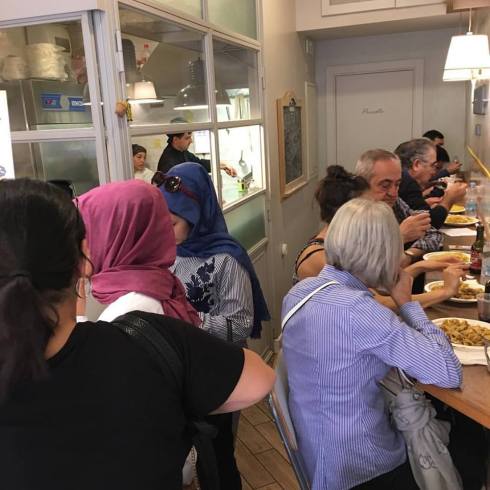
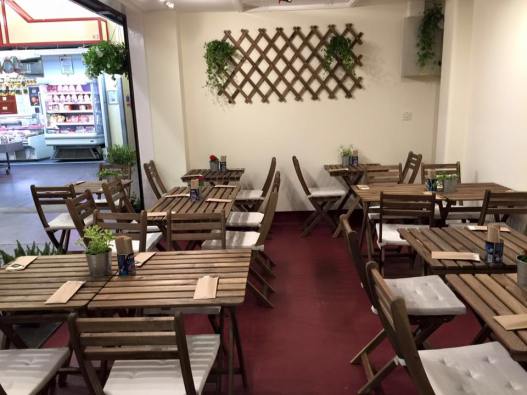
Pastaciutta is not a restaurant; a working kitchen with a canteen tacked on, would be a better description. There is a glass display counter out front, full of the most wonderful home-made pasta, and a small eat-in area comprising folding wooden chairs and tables. There is a little attempt at homeliness, but it’s no more ‘themed’ than you would expect in the back streets of a small town in Sicily. When we visited, there was a good babble of Italian not only in the kitchen but amongst the clientele too, and Alessio and Laura seem gradually to be colonising several other nearby pitches in order to gain more seating space. Take-away trade that weekday lunchtime was booming, including service to a number of the other stall-holders.

Pastaciutta3

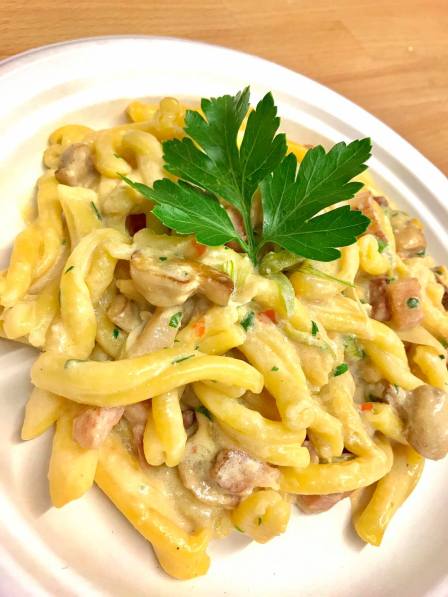
Whether you eat there, or take away, the food is served in disposable dishes with plastic cutlery. But who cares, when it is as good as this? There is a choice of sauces including daily specials, which you can mix and match with a pasta of your choice. I went for the acid test, namely a meat ragu with tagliatelle, and having eaten a good many of same in Bologna, I can attest that this is no pale imitation. My wife’s Norma was equally spot-on – in the best home-cooking sense. Pleasingly, they also offer less-known dishes too.

Espressi followed, possibly the best had in the U.K. for a long time. Only an inch deep and thick enough almost to be a savory. We left toting two slices of torta caprese, which did not last long when we got back home.

I think getting a license might be a good move – I’m sure they could source some equally good wines to match, though it might slow the throughput, I suppose. I do like a good Italian restaurant, but while at first sight this place can look rather basic, that is pretty much what small-town Italy is like. But just as there, it makes the food all the more of a delight.

https://www.pastasciuttashop.co.uk/

https://www.facebook.com/PastasciuttaChelmsfordMarket/

Pastaciutta2


Sartoria

Shop-keeping done well


SCS2

I’ve never accepted that, if you live outside a major city the local M&S should be the apex of your clothing options – so it was a great pleasure to discover, a few weeks ago a shop that is confirming the view that regional-town Britain can and should support great independent traders.

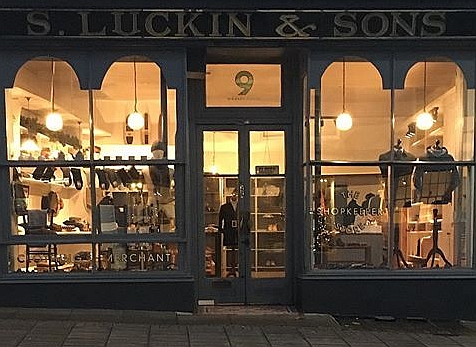
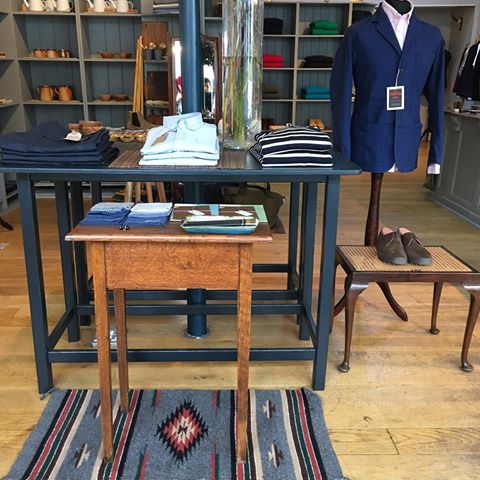
Ian Johnstone has established The Shopkeeper Store in the small Essex town of Great Dunmow. Ian has done an excellent job of creating an interior very redolent of traditional shops with wooden floors and a long serving counter.

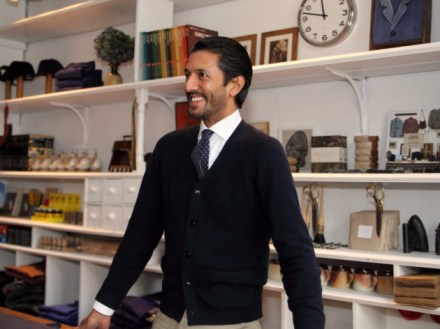
The selection of goods on offer is what I suppose one would call Gentleman’s wares, ranging from clothing and shoes, through grooming accessories to a small selection of home wares, stationery and books. It is curated (which seems like the right word) with a mind to quality, craftsmanship and sustainability. Most pleasingly of all, the defining criterion for the stock is simply Ian’s own (very good) taste, and as a result he has achieved both a consistent ‘look’ and an extensive knowledge of his goods. It would be nice to see a growth in the more formal though still creative end of his clothing range as his enterprise grows.

SKS01

The very courteous personal service and genuine enthusiasm for what he is doing is the icing on the cake, and I sincerely hope that Ian makes a success of this relatively young venture.

It is possible to buy from The Shopkeeper Store online, though if you are close enough, I would recommend a visit just to experience the lovely ambience. Oh, and there is an excellent independent wine merchant next door…

The Shopkeeper Store,

9 Market Place, Great Dunmow, Essex CM6 1AX

www.theshopkeeperstore.com

(Usual disclaimer)

scs4


Opinion & Thought, Politics and current affairs

Getting on with the in-laws

Pont d'Europe
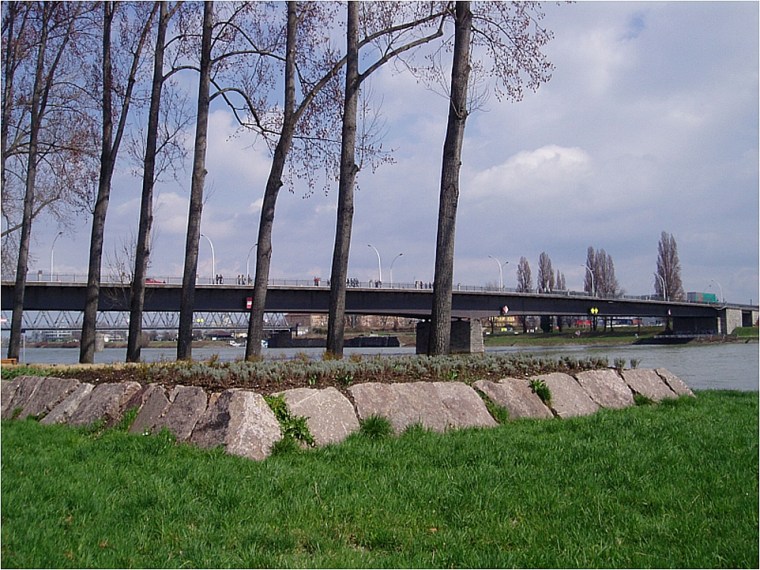
Pont de l’Europe, Strasbourg. France on this side, Germany on t’other.


The marriage vows of the Christian church revolve around the notion of lifetime commitment. If there is a lack of commitment, or a failure to take those vows seriously, the chances of the marriage lasting are immediately weakened . So it has been with Britain and the rest of the E.U.

A few brave souls have recently been suggesting that there should be more rather than less European engagement in Britain, and it is perhaps instructive to consider what might have happened had British domestic power decided to encourage the nation fully to engage with the E.U.

I wonder how many people know that the southern counties of England and the northern regions of France technically constitute Trans-Manche Euro-Region. It is part of a policy called Interreg dating from the 1990s to foster cross-border co-operation in all parts of Europe.

Here is how the Daily Mail reported it in 2006:

New map of Britain that makes Kent part of France…and it’s a German idea

For centuries the people of Kent have called their county the Garden of England. So they might find it quite a surprise that – according to the European Union at least – they are actually part of France.

Along with next-door Sussex, Kent has been rolled in with the Calais area on a map drawn up for Brussels.

The Tories accused the EU of plotting to undermine nation states and even “wipe Britain off the map”.

Never failing to use the E.U. to make domestic capital, Eric Pickles claimed:

“Under the Labour Government, Britain has already been subdivided into regions as part of John Prescott’s empire building.

“I fear Eurocrats could literally wipe Britain off the map and hardworking families and pensioners should be concerned that Europe wants the authority to build a database of their homes – this threatens to lead to an EU-wide property tax.

The Daily Telegraph reported the same development thus:

New EU map makes Kent part of same ‘nation’ as France

They have tried to redraw the map of Europe before. Now a German-led “conspiracy of cartographers” stands accused of trying to use a new European Union directive to give Brussels the power to change national boundaries.

Under the changes, those living in Kent and East Sussex would find themselves not inhabitants of Britain, but the TransManche region, where their fellow citizens would not be their English-speaking neighbours but the French-speaking population of northern France.

North of the TransManche would be the North Sea region, taking in all of eastern England and vast areas of Scandinavia, Germany and the Low Countries.

Western Britain and Ireland would become the Atlantic region, a huge zone that also takes in parts of France, Spain and Portugal.

Perhaps most bizarre would be the Northern Periphery region, lumping together the population of north-west Scotland with their very distant cousins in Norway, Sweden, Finland, Greenland and Iceland.

The barely-disguised xenophobia made no attempt at balance, barely even at accuracy, beyond a footnote to the effect that the Euro-regions were largely intended to co-ordinate economic, environmental and transport planning, and that they were chaired by local authorities. There was no attempt whatsoever to consider why such co-operation might have been beneficial.

No matter that plenty of people in northern Scotland do not consider Scandinavians to be ‘very distant’ cousins, or that there is already a healthy cultural exchange going on between the ‘Celtic fringe’ nations of Europe.

The implications of such reporting for British perceptions of Europe hardly needs further explaining.

Our failure in Europe became a self-fulfilling prophesy. Had we joined Schengen and the Euro and –yes – shared the associated risk, the practical impact would have been significant. For example, the planned trains from the British regions to the continent would have remained viable because domestic passengers could have filled empty seats (as happens every day on the continent), rather than their being neurotically ‘sealed’ on departure. Without the deterrent of airline-style check-in at the Tunnel, it would become as easy to commute from say Ashford to Lille as it is across any continental border. The Channel would have become no greater barrier than the Alps. Had we joined the Euro, there would not even be the inconvenience of differing currencies.

I have a friend who lives in Basel; every day, his son used to travel to school in Germany and thought very little of it. Every day, thousands of people travel from Belgium into the Greater Lille area, from Kehl in Germany into Strasbourg, and from France into Basel and Geneva to work or shop. It is a non-event. But we British have never been allowed to find out what benefits this could bring. Our political classes have utterly failed to see that the world has moved on. Their every action still reeks of a colonial mindset where Britain’s supposed ‘sovereignty’ needs to be defended against hostile outsiders, no matter what cost to the nation. They cannot get their heads around the fact that Britain is now – and should be – just one amongst the many partner-nations in Europe. They never even got round to removing European Affairs from the Foreign Office. Which says it all.

In fact, the real issue here is the refusal of the British Establishment to relinquish power even when it is clearly in the nation’s interest. We see the same thing evident in their reluctance to move power down the scale to the regions as well. It is all about keeping maximum power in Whitehall.

I believe we would be in a very different place now, had British opinion-formers decided to commit to the European marriage rather than remaining the frigid, stand-offish partner who only ever wanted to remain single anyway.

It is true that as an island nation, we Brits probably had more work to do to get used to our new marriage: visiting the in-laws is rather more involved than walking across a bridge. But had those in government taken a different line, by now we would be seeing the benefits of a seamless relationship with our partners.

Instead of declining post-Tunnel, the channel ports might have connected and thrived – and the shameless Brexit-disdain that the residents of Dover have shown for their opposite numbers in Calais might never have happened.

Opinion & Thought, Sartoria

The God of Small Things

bresciani

It may seem rather pathetic that an established teacher, with many years’ experience and a professional blog to his name should be reduced to blogging about…. socks. But in the year since I stopped working, certain things have come into sharper perspective. Even though I worked hard to prevent it, I hadn’t realised the extent to which a regular sixty-hour week comes to dominate your life. Even while not at work, or travelling the thirty miles to and from school, much time was spent chewing over professional matters. Pretty much everything else was shoe-horned in around the edges, at least mentally, even when I was supposedly doing other things. It did me no good.

So it is remarkably pleasurable to be able to get up in the morning and have the time actually consider what clothes I want to wear, rather than just flinging on the usual work-compliant suit and tie. I have always enjoyed men’s style, and even tried to carry this through to the rough-and-tumble of the school environment. I felt it was part of setting a good example, and maintaining high personal standards.

But now I can appreciate such niceties for their own sake, along with the pleasures of fresh morning coffee or an autumn walk. For reasons unknown to me at the time, during my period of convalescence I had the urge to renew my wardrobe, and again I have had time to choose carefully. It was remarkably cathartic.

Bresciani socks are about as good as they get, being made from top-quality materials by a skilled manufacturer in Italy. There are few outlets that retail them in the U.K., but a good choice can be had from meschausettesrouges.com in Paris. Twenty pounds for a pair of socks may seem outrageous, but as with many beautiful things, it is only when you receive them that one can appreciate the craftsmanship, the excellent fit, and the superb materials. So the price perhaps becomes a small one to pay for a small taste of excellence, and the fact that the article itself is so mundane somehow adds to the pleasure.

It’s easy to sneer at such apparent vanity, but it occurred to me that there is a deeper and more significant point here. The key to appreciating fine things is a willingness to see rather than just look, to sense and savour the material qualities of the world around us rather than taking them for granted. To stop what one is doing and just appreciate our sensory surroundings is akin to the ‘living in the moment’ that Mindfulness promotes as an antidote to mental angst. It is a tendency that can be developed with practice. I think it works – it is not shamelessly materialistic to appreciate the sensory qualities of material things – and all it takes is the time and restraint to stop and do so. In fact, the appreciation of what one has, rather than envy at what one does not, is the antithesis of the status anxiety that afflicts so many lives.

But that, I fear, is the one thing hassled modern lives deprive us of: the time to stand and stare (or feel). I suspect it is also what we hurried north-Europeans yearn for in our envious perceptions of the South – the time for the leisurely savouring of life’s pleasures, in a way our cold-climate Protestant-ethic culture does not really encourage. And the more you do it, the more one learns to value superior quality, not in the envious sense, but simply for the extra pleasure it brings. I suspect that is the secret of southern European brio, and it is a cultural meme that we would do well to learn.

Much of modern life seems to me to thrive on dissatisfaction and anxiety; instead of devoting time to fire-fighting on mental health matters, maybe it would be better to dedicate good time to the appreciation of the small pleasures in life that might make emergency action less necessary.

Like an innocent appreciation of the simple, tactile pleasures of a small piece of beautiful fabric.

https://www.meschaussettesrouges.com/en/  (usual disclaimer)


Food, Travel

If dinner’s good, life is good.

BPC

A wet Wednesday afternoon in Bournemouth. The day was being frustratingly spent almost failing to communicate with the elderly relative we were visiting in a nearby care home. (We eventually pinned the problem down to dead hearing-aid batteries, but it was hard work…) On top of two hours of rather tiresome cross-country travelling to make the visit, it was proving hard on my still-tender head.

We sought a breather in a local pizza restaurant which we knew, and just as we started to walk, the heavens opened. We reached the restaurant in its rather uninspiring side-street and sat there, the only people eating in, while the kitchen staff chatted away brightly in Italian; that was enough for things to start looking up. The guy doing the home-delivery runs was working on double, though. It’s a popular place.

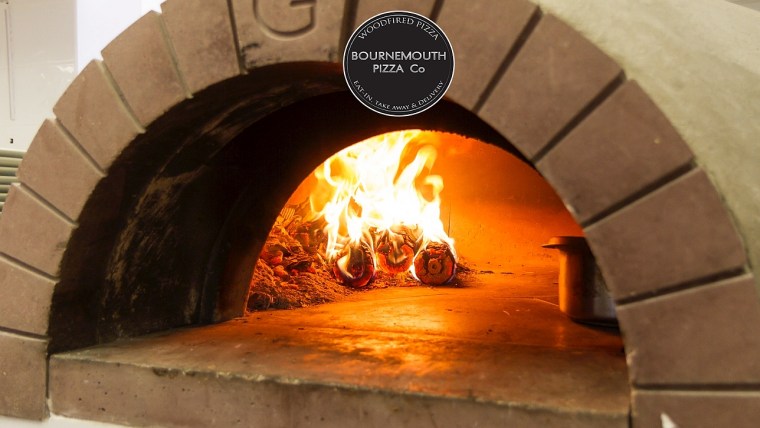
A couple of glasses of decent red arrived, followed by a bowl of olives and eventually the excellent wood-oven pizzas we had been looking forward to. I’ve eaten enough pizzas in my life, including all over Italy, to know when I’m getting a good one; forget the chains (Pizza Express probably excepted) – there is nothing like a properly-made, wood-cooked pizza. You need a puffy, springy base, a well-judged topping, and that unmistakeable wood-charred flavour.

Just as we started to eat, the door opened and a dark-skinned man wearing a Ryan Air crew tabard entered. He spoke to the chefs in Italian and proceeded to check out the quality of their dough. He was a good way from the airport, so we assumed he has sought the place out deliberately while on an away shift. All seemed to meet his approval, and he eventually went away with his pizza in a box.

We followed the pizzas with a dollop of home-made tiramisu and espresso. The day was looking much better and we returned to the fray at the care home in much higher spirits. If you know that you are going to eat well, then most things are manageable. We have a collection of such hide-aways around this and other countries, and we like to return to them when we can. Nothing pretentious or expensive, just decent honest food that knocks spots off the ubiquitous chains. All just a matter of a little discrimination and detective-work.

I don’t know what Brexiteers find so abhorrent about having other nationals in our midst. The musical patter of Italian, and the serendipitous cameo of a culture that is still discriminating enough to check out the quality of the dough in a takeaway pizza brought a little Italian sun into an otherwise dank and difficult September afternoon. Diversity is fine by me – bring it on!

http://bournemouthpizza.co.uk/

(usual disclaimer)

BPC2