Opinion & Thought, Politics and current affairs

Turkeys and Christmas

turkey-that-voted-for-xmas

‘Culture’ is a creature whose DNA is quicksilver. Trying to define, let alone analyse it is like wrestling with shadows. One is forced into generalisation, simply because there is no other way to approach the collective thoughts, beliefs and behaviours of millions of people. Neither, in one’s pursuit of objectivity, is one able to escape one’s own cultural position; this is all the worse if one is scrutinising one’s native culture. No matter how one tries, it is impossible to be certain that one really has achieved the detachment needed for objectivity. There is no escape.

Some argue that there is no such thing as culture in the sense I mean it, just the behaviour of individuals and groups that coalesce and divide like shoals of fish. And yet it is hard not to feel that national culture or identity does exist: a deep, underlying commonality in the way people in a certain place tend to perceive and react to the world. But reaching an objective appraisal of it is almost impossible.

It should by now be clear that I am not referring to matters of art, literature and so on. To me, culture is a matter of mindset, which at varying levels gives rise to the ways in which people think and behave. The more conventional meaning refers to the means by which a particular mindset finds creative expression.

An irony of European integration has perhaps been that the differing cultures of that continent have become more of an issue rather than less. Being charitable, perhaps it is simply that we are more exposed to both the similarities and differences now than in the past; that creates the possibility to celebrate them – but it is also undoubtedly what has given rise to the problem of Brexit – and the various other nationalist resurgences being seen across the continent.

I am always bemused by the enduring British use of the word ‘international’- as in ‘St Pancras International’ and even ‘Aberdeen International’ (Airport). The use of the word suggests a glamorised perception of ‘abroad’ that I don’t think I have seen anywhere else – as though the mere use of the word can bestow cachet on a concrete bunker near Dyce. In a similar vein, a few days ago, I spotted a couple of neighbours whom I know to be hard Brexiteers cooing over some ‘continental’ biscuits in a local store – without any apparent awareness of the irony. (I thought such things went out in the Seventies…) Often, the very same people who despise the EU (and by extension, perhaps all continentals) are happy to visit (German-derived) Christmas markets, take their holidays in Spain, and splurge on the Champions’ League or Six Nations on TV without once sensing the contradictions in their behaviour.

My friend Manu lives in Lyon. He recently brought his eleven-year-old daughter to the UK with the express intention of exposing her to a new culture, one in whose language she is already pretty proficient. She engaged very well – though she did repeatedly complain of how cold she was on a mild British autumn day: that’s conditioning again. And Manu, despite being an Anglophile, was still stumped by the string-pull on British bathroom lights – something to which we British never give a second thought, yet the rest of Europe seems to think is deeply, neurotically bizarre. That is the level at which cultural conditioning and normalisation works: the small things that are so ingrained that it does not even occur to us that they might not be the same everywhere. Indeed, the very act of Manu’s visit struck me as a manifestation of such cultural differences: I wonder to how many mainstream British families it would even occur to undertake such a trip. Ours is a culture that is still fundamentally insular, inward-looking and overwhelmingly self-referential. Brexit has shown the limitations of such a position – and yet still we persist, almost as if we can’t help it.

The most telling aspects of a culture are those that it exhibits despite itself: the deep values, attitudes and behaviours that are so far below the radar that they escape our modern (supposed) self-knowingness. And when one starts to examine those things, what one finds can be far more disconcerting that a pretentiously-named box of biscuits.

All those ardent pro-European Brits may feel that they represent an outward-looking, cosmopolitan nation – but I suspect they are actually just another expression of precisely the opposite. The very fact that we are so insistent about such things at a conscious level might suggest we are less sure they are present at an unconscious one. For many on the modern continent, internationalism is simply a matter of day-to-day practicality, largely devoid of the romantic sentimentalism that underpins the British version. For them, crossing borders is often little more than a necessity. British ardour for other countries, on the other hand, is arguably more an expression of frustration at, or rejection of, the limitations of our own – a truth let slip a few days ago in a discussion I witnessed on pro-Remain social media, where there was agreement that pre-2016, few had given much thought at all to a European perspective. Even today, for many British, the continent is just the nearest place to go on holiday with decent weather. So be it – but the real problem is that most don’t seem to be aware of the inherent limitations of that view.

The deepest irony of the continental biscuits, of course, is that they are probably nothing like what one would really find on the continent – and that is before we even get to the point that there is no such culture as ‘continental’ on a land-mass made up of a kaleidoscope of some fifty different countries. And sadly, as with chocolate (and most things), the British re-interpretation is often a pale and insipid caricature. What those biscuits really betray is not knowingness, but ignorance.

So much for an outward-looking view: much of the current Europhilia is actually little more than an expression of normal human loss-aversion. If it were not, we would by now be experiencing more than polite marches and distribution of leaflets in its defence, even as the participants see the protests in Hong Kong on the TV nightly. What we are seeing is not really British “natural reserve”: it is the behaviour of people who have been systematically politically suppressed by their ruling classes, excluded from the real political process to the extent that we no longer believe we can make a difference, or that Change can come. In this country “Government” is something that is done to us, not by us. And it is so normal to us that we don’t even notice.

Who told us that we are “reserved”? Mostly those who made us that way: the same people who tell us that strong governments are preferable to consensual ones, and that a more inclusive electoral system really isn’t needed. The problem, once again, is that many seem to accept this as self-evident natural truth rather than a deliberate narrative which is open to challenge. “Representative democracy”, long-trumpeted as a good thing, is nothing more than a misnomer for a system that takes away any real say and places it in the hands of people who are all too often anything but representative. Which is just what they want.

If Brexit has revealed anything, it is the depth of ignorance still prevalent in this country about both the wider world and the workings of our own country. It is as though the reach of modern media has done little to dent the unconscious of the nation. We are in the throes of a general election campaign which owes its existence almost entirely to Brexit – and yet it has taken very little to deflect general public’s attention away from that issue and back to the traditional domestic battlegrounds of health, education and taxation. How convenient. It is also a means of addressing Brexit that, unlike the original vote, will deny millions of people in safe seats any meaningful influence on the outcome. How convenient.

That Brexit also seems to have exposed the chronic deficiencies in our social and political model seems still to be passing a substantial proportion of the population by. It is said that when the doors are opened, captive animals often cower at the back of their cages, preferring the captivity they know to the intimidating freedom they have been offered. That is the situation here: we know things are wrong, but collectively we seem to prefer the wrongness we know to the risk involved in making long-overdue reforms.

There is sufficient awareness of social models such as the Scandinavian one, for this country’s deficiencies not to be accepted as inevitable – and yet they widely are. The better standards of many continental countries are seen (and envied) by many, and yet they still believe the lie that “it can’t be done here”. The view is reinforced by the ingrained cultural belief that the patriotic British Way is still best – despite the manifold and growing evidence to the contrary. In the end, we prefer to grumble – and do nothing. Therein lies the hideous difficulty involved in genuinely changing a tired culture.

The electorate seems literally unable to make itself vote for a path to a more emancipated, egalitarian society in Britain. It clings to the handed-down view of a State which is a direct descendant of a domineering, imperialist power – which gives threatening names to agencies such as the Border FORCE, and which seems to believe that a resentful, punitive approach to the needs of its citizens is appropriate for all but a privileged few. It clings to a hierarchical view of society that is simply much less evident elsewhere – and thence to the notion that politics is about personal advantage rather than collective compromise.

The most terrible aspect of all is the prospect that our ruling institutions are still wedded to an authoritarian model whose main job is to keep “the masses” in their place while empowering certain influential individuals – and mouthing just sufficient platitudes about ‘Democracy’ to keep it so. Methinks they do protest too much: even today, when this system is perhaps broken beyond repair, it refuses to countenance an alternative.

Its success lies, as always, in portraying all the alternatives as worse: the depiction a consensus-seeking leader of the opposition as lily-livered, or a “Communist” as though that label is absolute damnation rather than merely an (inaccurate) description of an alternative political position.

This – rather than any particular set of values – is where the system is seriously imperilled: the point where people stop seeing the status quo as the relative position that it is, and starting thinking of it in terms of absolute truth is a serious threat to democracy. It then doesn’t take much – as seems already to be happening in the UK – for incumbent powers to convince the electorate that there really is no alternative.

This is why Jeremy Corbyn – for all his imperfections – has not made more headway. British culture simply can’t cope with an anti-hero like him, no matter how genuine he may be, and no matter how beneficial his policies might actually be for the health of the nation. He has refused to be made into the kind of leader the British think they want. His neutral position on Brexit, for example, seems entirely reasonable given the conflicts that he faces – and yet a mature “judgement of Solomon” type position is all too easily portrayed as weakness rather than maturity. Consensus-seeking depicted as a policy vacuum by the proponents of hard power. Yet ironically, consensus-seeking is precisely the way most continental politics work – and they are not in the mess that we are.

As I said at the start, cultures are complex and ill-defined things. Deliberate change is extremely difficult to effect – but from a long perspective, it is equally indisputable that cultures do change. Whether this is by evolution or revolution is another matter – but as with all organisms, those that are unable to adapt tend to die. At the point when societies and their cultures stop believing that another way is possible, stop being prepared even to speculate that the ‘farmer’ who feeds them might not after all be their best friend, then like Christmas turkeys, they are only headed for one destination.

Opinion & Thought

Still standing…

A month ago, I was asked to stand in for an ‘A’ Level Politics teacher who was having an operation. It felt like a huge step, particularly as I had vowed I would not go back into teaching.

Two weeks – which felt like two months (in a good way) – further on…

The new chapter of my career in education is written: no longer is the ending that ignominious crash, but a successful (if brief) return to the classroom three years later. I apologise if this seems over-dramatic, but it is an important matter for someone who always took his profession seriously and with a degree of pride.

I suppose I should be less surprised at how easily I dropped back into the classroom routine – but I am no less delighted, having been given the opportunity to prove, if only to myself, that I am still an effective practitioner – and that the questions raised three years ago were as groundless as I believed.

Does mental illness change people permanently? Perhaps. I found the daily ‘cognitive load’ greater than it used to be – but that may equally be a simple lack of practice (and it certainly got easier). I was wary of the fact that I seem to have a somewhat shorter fuse these days – but thankfully the students were so docile that it was never an issue. I think I am also more inclined to optimism, having been in a position where I was simply unable to experience positive feelings about anything for months on end. And I think I am also more understanding of other people’s imperfections and weaknesses too.

Equally, an important practical point has been made – it is possible to get back into work and cope. Until now, this has felt like an impossibly huge step. Indeed, it felt strange this morning not to be going to work again. I previously felt that I would never go back to the world of education – but now that is much less certain.

Having watched the other staff dealing with the usual heavy marking and administrative load, I don’t think I want to go back full-time: there are too many other things I am now involved with, that I want to keep up. It is true that work robs us of the possibility to have wider lives.

But the chance to go back into the classroom and just teach has reminded me that I really do enjoy doing this, and I seem to get results. The positive reactions of the students (seen not least in several leaving cards after just two weeks with them) suggests I am not wrong about this. And yet I still hesitate on such matters: the legacy of years of working in a place where one’s competence was implicitly and perpetually called into doubt runs deep. There again, a (small) amount of professional self-doubt may not be a bad thing…

The question is how, if at all, it can be done on something approaching acceptable terms.

But most of all, it felt good to work in a place where the vibe is positive, and where my colleagues were friendly and supportive – and who clearly retain views, qualities and practices that have gone a good way to restoring my faith in the profession. Thank you all.

Opinion & Thought, Politics and current affairs

Failed again

The calling of a General Election, far from being a courageous decision, marks just another failure of our political system to govern the country effectively. No matter how strenuously it is denied, this election will become a de facto referendum on Brexit – but far from resolving the issue, it virtually guarantees to lock the resentments of the issue permanently into the national psyche.

Rightly or wrongly, the original referendum in 2016 asked people to express their individual preferences for remaining in or leaving the EU; the resolution of the resultant deadlock in 2019 (for, short of another hung parliament, that it will be) will not allow people to do that, because it will utterly obscure the will of those individuals behind the many imperfections of our electoral system.

The most obvious criticism is that a single issue is being addressed using a mechanism more suited to the multi-issue matter of who governs the country for the next five years. While Brexit will clearly be a major factor in that, there is simply no neat correlation between people’s views on it and their other priorities and opinions.

More important, however, is that the votes of millions of people will count for nothing. I live in a very safe Conservative seat, and the chances of a change of MP are minimal. With a Conservative majority of 18,646, the likelihood of this constituency representing my wish to remain is nil. The same is, of course, true for Leavers who live in safe Remain-represented seats.

Therefore my views on Brexit (which are as far from my M.P.’s as they can possibly be, given that she is the Home Secretary) will have absolutely no effect on the outcome of the issue, simply because I am unfortunate enough to live in an area where the majority of people think differently. My M.P. has not even seen fit to reply to my correspondence on the matter. While I have little choice but to accept this in more normal politics, in this situation, it is intolerable.

Frankly, it will not even be worth my turning out to vote in the issue that is perhaps the most critical political event of my lifetime. The resentment that this will cause – particularly if the UK does then depart the EU – will, I’m afraid, remain in my memory forever. The same will be true wherever people don’t see their personal wishes honoured on an issue that was opened on the basis that every single vote counted and carried equal weight.

The U.K.’s First-past-the-post electoral system often returns governments that are only supported by the largest minority, not the majority. This will probably happen again, and is also in itself inconsistent with the ‘simple majority’ requirement of the original referendum. Instead of addressing the issue, all this does is to lower the bar. And if there is a hung parliament, it will solve nothing.

Parliament has been criticised for failing to represent the British people over Brexit. I don’t agree: if one considers the electorate as a whole, the stalemate of the past three years has accurately reflected the state of the nation. But it has utterly failed to find the collective courage to resolve the problem in the only way that has even a slim chance of setting the issue properly to rest. What’s more, this decision has once again been made not on the grounds of the national interest, so much as what has proved politically expeditious for a government of dubious real legitimacy.

While I am a firm Remainer, my objections are not about losing in 2016 per se. They are about the failure of that event to produce a trustworthy answer, with clearly-explained choices, a sensible winning margin and an honest campaign run by both sides. (When one considers that in theory the national destiny could have been tipped by even one vote, it becomes clear how unsafe the simple majority position was).

All I want is to see a ‘fair fight’ between the two sides, which would yield a result that I could accept as being properly democratic, and compliant with international norms for such referenda. In such circumstances I would, no matter how reluctantly, accept the result if it were to Leave. I would like to believe that Leavers would say the same in reverse, though their behaviour in the past period hardly gives much confidence. That, however, should not be a consideration in the fair resolution of the matter.

The Brexit referendum was an act of direct, individual democracy; the only appropriate resolution for the matter is another. Unfortunately, the decrepit system that got us into this mess seems to have learned nothing.

Arts, Architecture & Design, Opinion & Thought, Sartoria

Proper

handle
Some time ago, my wife and I decided to upgrade the internal doors in our apartment. The advice about getting floors, doors, walls and windows right being the key to a good interior is, in my experience correct – and this was the last element in need of attention.

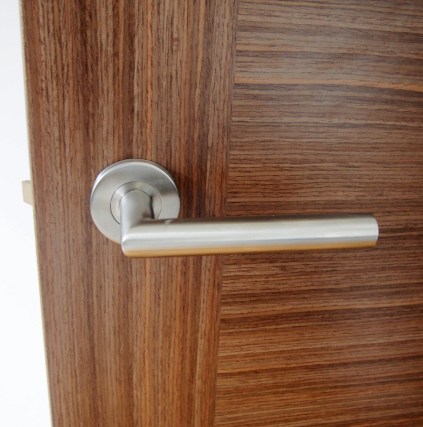
We replaced the inherited developer-standard panelled fake-Victorian moulded hardboard delights with some walnut-veneered doors in a plain finish. True to the principles of modernism, the beautiful colour and grain of the wood is all the ‘decoration’ needed. We also bought some brushed-steel bar handles which we felt would complement the richness of the wood very well. In short, while we hardly went for de luxe, we took the trouble to choose properly.

Unfortunately, over the following two years, the handles first sagged from the horizontal and then gradually pulled loose – and eventually one came away in my hand. ‘Proper’ comes in many shapes and forms, and it is surprisingly disconcerting to use a loose and saggy handle on a door. And I mean away: not just the handle from its spindle, but the entire mounting just pulled right out of the woodwork.

Investigation revealed that there were two options for mounting the handles: one consisted of holes for two bolts that would pass right through the mountings and door, linking them on either side and clamping everything solid when the nuts were tightened. The other was four screw-holes for fixing into the timber. In both cases, grub screws tightened the handles onto the spindle, providing secondary securing.

When I removed the cover, it turned out that the second method had been used – only instead of four screws, each door had only two – and in some cases just one screw holding the handle in place. Over two years, a little slack on the spindle had simply allowed the whole thing to pull loose. We suspected (correctly) that the doors were also just board beneath the veneer – but the holes for the handle mechanisms had been made in such a way that many of the screws also had little more than fresh air on which to purchase. Pulling the handle out had left it with nothing whatsoever.

A programme of re-working has just been completed, whereby the handles were secured using the first, mechanically-superior method, and we now have doors whose handles are both satisfyingly firm to the grip, and which won’t risk leaving someone stranded inside the bathroom.

Call me obsessive if you will – but all I am discussing here, really, is doing things properly. I’m very tempted to say that you would never find this problem in Switzerland, but then I am clearly biased. The fact remains, though, that I admire that country largely because of its culture of doing things properly. I have only once ever encountered a Swiss interior that might have been called shoddy – and that was because it clearly had not been updated by the elderly owner in several decades.

‘Properly’ is, however a difficult concept. It implies judgement against some kind of benchmark, and it is something that is also an occupational hazard for a teacher, whose very existence is to some extent predicated on assessing how other people’s efforts compare against an arbitrary set of standards. It can make one very judgmental.

I am not so dogmatic as to insist that my personal standards are in any way absolute, though they are often strongly-felt. To begin with, the guy who originally fitted those handles presumably had a set of criteria of his own. It just wasn’t mine. He was probably more concerned with time being money and getting home a little earlier that evening. The handle surviving for long enough to blunt any dissatisfaction of mine with his work when it eventually failed might also have been in the mix somewhere.

And yet the concept is a powerful one. It is not difficult to find a fair amount of consensus amongst the aficionados of, say, door furniture as to what constitutes Proper. The same can perhaps even be said when it comes to much more difficult matters such as bringing up and educating children. We might use it yet again when looking at the workings of the Law, Medicine, engineering, running a transport system or a government, and civil society more generally. Somewhere in the fog of personal interpretation there seems to lie a core of reasonably widely-shared values.

Slowly, however, these things do also evolve – and can certainly weaken –  over time, and a disconcerting by-product of growing older appears to be the way the goalposts move without one noticing. Some of what I consider Proper seems now to be out of date.

I was struck by this while reading Richard Goodwin’s article in last week’s Observer about the demise of formal dressing  for work. Like Goodwin, I appreciate ‘proper’ mens’ tailoring. I am not a luddite who yearns for some previous era, but for me looking smart is a pleasure in its own right quite apart from any signals I might want to send about my credibility – and, as Michael Bywater once observed, it is also a courtesy to others in the effort one takes both to delight their eye and to present oneself in a way that says you take your interactions with others seriously. Not having worked formally for several years, I still mourn the lack of openings for occasionally sporting a nice suit and tie. Even the traditional shirt and jacket seems to raise an eyebrow these days.

There are however, two inescapable truths in here. One is that my ability to do what I think is proper is constrained to some extent by the expectations of others. My efforts to dress well may in reality pass them by completely – and even worse, may simply send the (I hope incorrect) message that I am just an outdated old geezer. Maintaining what I consider ‘proper’ standards risks making me stand out for the wrong kind of reasons.

The second is that there is no way in which other senses of Proper (which I suppose I had really better call Propriety, although that in my mind has subtly different connotations) are in objective terms any less acceptable than my own. Ultimately the meaning that we attach to the word derives entirely from personal expectations and cultural norms. The same extends to matters like one’s use of written or spoken language, where propriety still in many countries depends on conformity to a predefined norm, whether that be the Queen’s English or the pronouncements of the Académie Franҫaise, to the ridicule of certain regional dialects.

The more one ponders this matter, the more perplexing it becomes. One can extend the notion even further, to matters of social groups. Traditional matters of Class in Britain depended on one’s adherence to a particular set of behaviours by which one could be seen to belong or otherwise – but which were very different from one group to another. Ejection from such groups depended to a large extent on one transgressing notions of ‘proper’ behaviour. (I am aware of the word used pejoratively to criticise someone as stuffy).

Wherever you go, the same thing crops up. Even in my arcane (to English eyes) field of Irish traditional music, much is made of playing ‘properly’ – even though doing so is often enough to make a classically trained musician tear their hair – and it still relies on a set of ultimately arbitrary norms. Yet quite far-reaching judgements are sometimes made about the standards of ‘proper’ that one’s fellow musicians personally express.

We might go further still by considering whether those expectations are even reasonable in the first place. In music, standards might reasonably differ between professional and amateur musicians, not to mention the opportunity one has had for formal training, or one’s ability to have purchased a high-quality instrument (judgements about which are, themselves, dictated why what is deemed to be ‘proper’…)

And yet, I can’t help but feel that there is some underlying truth that goes beyond personal differences or cultural norms. The most obvious is that a door handle which is not properly fixed is sooner or later going to present a practical problem. It may be that the musician who has not learned ‘proper’ technique will eventually find themselves limited by poor habits. In those senses, ‘proper’ is to some extent defined by the collective consciousness of overcoming past difficulties. When it comes to the way that door handle feels, maybe that sense of solidity that I wanted was subconsciously determined by my need for confidence that the handle would function well. The same might go for a firm handshake – or none at all. It is somehow about gravitas.

It becomes a lot more difficult in matters of aesthetics, taste and personal behaviour. But perhaps underlying even these is a ‘truth’ that certain behaviours make for greater confidence between and within individuals that are somehow connected to a desire for certainty or security. One of the good things about being in Switzerland is the sense, from all that Properness, that things are generally well with the world. Even where the avant-garde is embraced, the underlying principles of confidence are maintained. And while that may on occasions be illusory, on a day-to-day basis, I think it is quite important for our mental well-being.

When it comes to matters like speech or dress, as Richard Goodwin suggests, maybe our tendency to opt for a rather superficial ‘comfort’ betrays a lack of willingness to make the effort required to achieve anything more demanding. And in any case, comfort is a state of mind, not dress – even without the problem that dressing down can impose its own tyranny on those who would prefer things otherwise.

The sense of insecurity that a loose and wobbly door handle can create is perhaps more of a common and significant experience than my fitter understood – and one that he might have done well to think about, as I am now less inclined to employ him again. I am no apologist for maintaining the stuffy status quo just for the sake of it, but perhaps more thought ought to be going into the underlying values which various courses of behaviour transmit, because throwing the baby of long-established truths out with the bathwater of redundant propriety really is no better.

Postscript.
A telling footnote to the door handle episode was the difficulty that I had in finding bolts to fit. I visited five different local outlets, where I was told that such things were not obtainable “because no one ever bothers to do it like that”. In the end I had to order them online, and they turned out to have been imported. So much for such things not being culturally-defined.


Arts, Architecture & Design, Opinion & Thought, Travel

More schoggi…

mout01

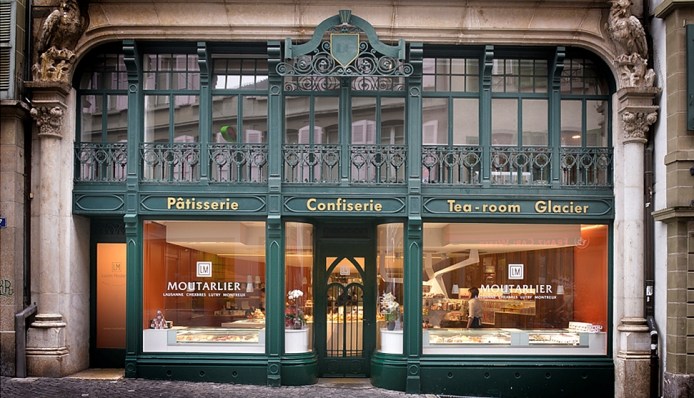
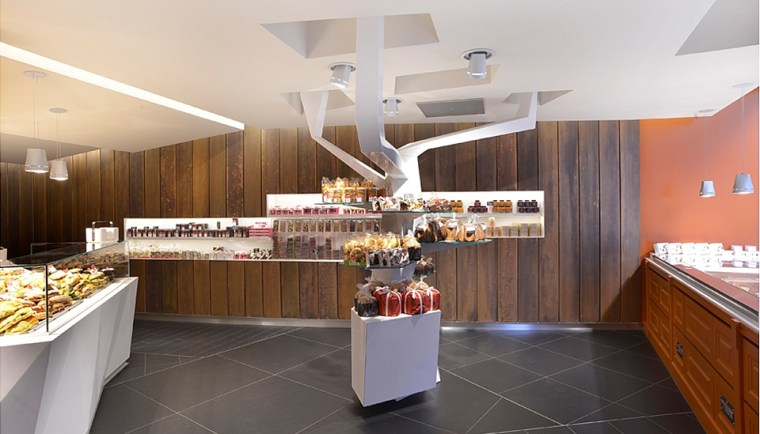
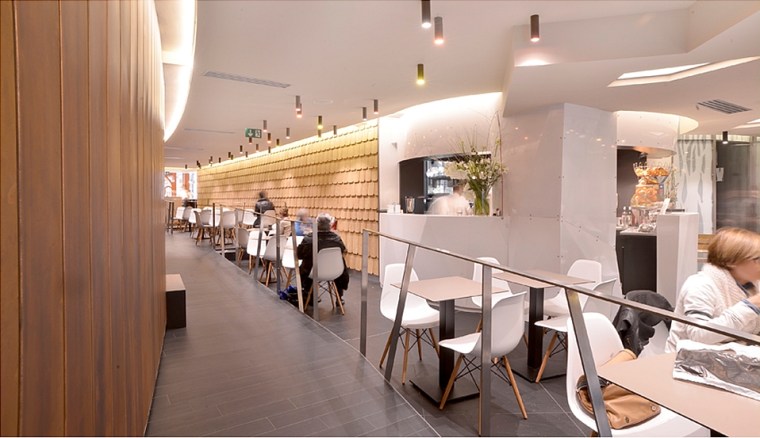
When we were in Lausanne last month, we stopped at another grand cafe that I have occasionally frequented. Moutarlier is situated in the Place de la Palud, near the city’s central fountain and glockenspiel clock, so an outside table normally does nicely. In fact, I don’t ever recall going inside before. However, use of the facilities dictated on this occasion – and quite a revelation it was.

I’m mentioning this because for me it exemplifies the Swiss outlook on their simultaneously historic-yet-modern country. Popular image of the country is, of course, very twee – all wooden chalets and Heidi meadows. There is indeed a lot of ‘heritage’ to look after – and yet once again this belies the real country – a nation that is not afraid to take a very progressive approach to much of what it does.

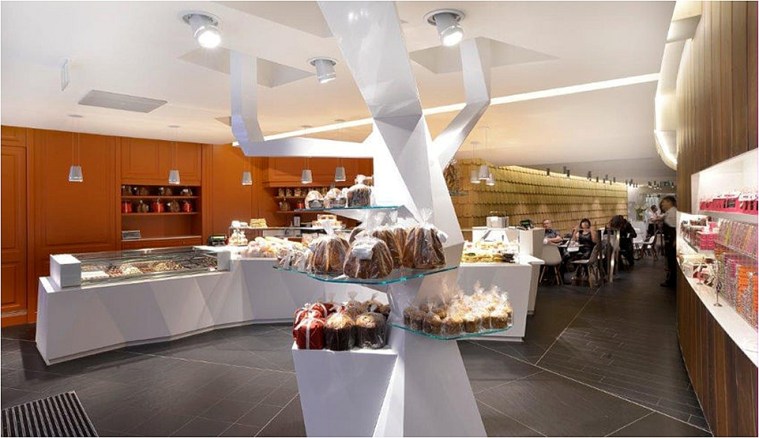
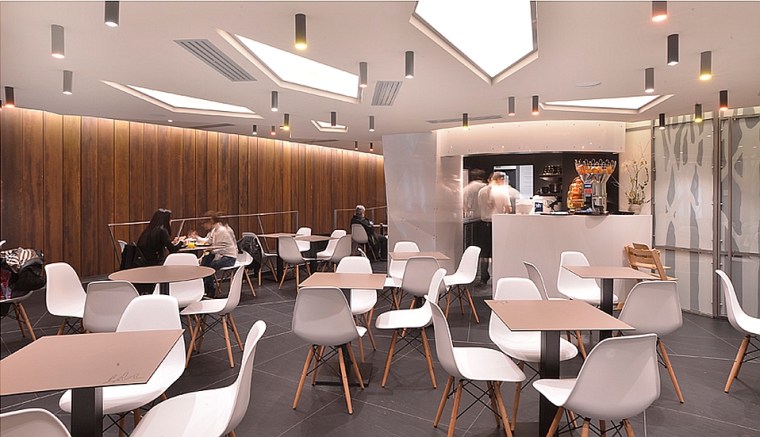
I didn’t take my camera with me – so I am relying here on images from Moutarlier’s own website. From the outside, one could be forgiven for thinking that this is another institution unchanged for decades (in fact, it opened in 1996). The exterior is rather grand – and largely intact. And yet… inside one encounters a pretty avant-garde modern decor quite deliberately at odds with the quaint exterior. But somehow it works: the basics of grande confiserie have been respected, as have the specific needs for whiling away the afternoon in strikingly auspicious surroundings. I also like the nods to traditional Swiss architecture, such as the wood panelling. The quality of the design and materials is also excellent – and I fully expect it to be the same in however many years’ time it is before I visit again.

mout03

mout02

In some ways it is the complete opposite to Britain’s approach, where it still seems that everything either needs to be made to look “historical” even when it isn’t – or superficially modern in a way that will fade and date in just a few years. Much of the time it is in fact nothing more than flimsy shop-dressing which will need to be ripped out and replaced with something else when fads change – and before it has even got an established identity. Even when we British do contemporary, we somehow mostly lack the confidence to give it the ‘edge’ that makes it work, let alone something that will last for decades, as I suspect the interior of Moutarlier will. In fifty years time, it will be renowned for its period interior… We by contrast, are too timid by half – and then we wonder why our modern design often doesn’t deliver the goods. Like anything else, quality counts, and so does continuity – even when it is radically reinterpreted. In fact, perhaps that is the secret of the Swiss success.

At a retail centre near me, the original fake village ‘High Street’ is presently being reconfigured with something rather more contemporary – but again very ‘safe’ and quite probably equally ephemeral. In the end it is just the latest engineered-consciousness stage-set backdrop against which people can part with their cash. But at least it has a new Lindt shop, so the chocolate will remain constantly, Swiss-ly good, even if the architecture isn’t.

mout05

mout04

Arts, Architecture & Design, Opinion & Thought

Big problems in miniature

stth

Sometimes profound truths can be found in obscure places. Underlying the whole Brexit issue is the matter of national perspectives and culture, yet outwith Remainer online groups this is still seldom being discussed. (There is an exhibition currently running in Bonn called Unrequited Love – about the German love of many things British – and the utter disregard that is this country’s reply).

You might not expect to find it in something as apparently trivial as the world of model railways – but I think it is there. (On second thoughts, we might reflect that if those attitudes are real, they will indeed be evident precisely in the nooks and crannies of national life where people lower their guard).

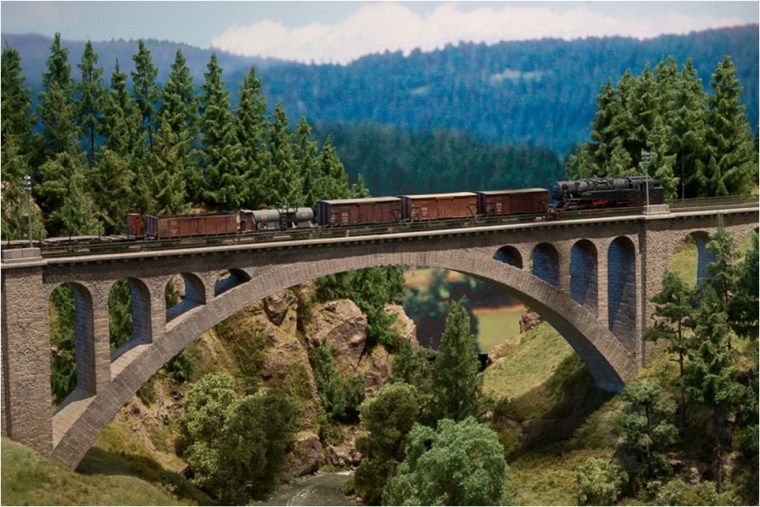
Railway enthusiasm is by some measures the second most popular male hobby (after fishing). I have been afflicted since my youngest years, most particularly by the strange urge to capture what I see in model form. Perhaps the public perception of railway modelling has been shifted somewhat recently by the TV series The Great Model Railway Challenge – though for those serious about their hobby, there is a feeling that the sensationalism and gimmickry of that show has overlooked the slow, patient craftsmanship of the finest modellers. Be that as it may, looking at the attitudes expressed in the modelling fraternity itself can be informative.

Perhaps the best way of doing this is to look at publicly-expressed attitudes, as seen through the hobby press (as in what will sell) and its widespread manifestation in model railway exhibitions.

Attitudes to non-British modelling in the UK are revealing. There are perhaps half a dozen monthly magazines for the hobby. Several of them actively refuse to publish articles about non-British subject matter. The market-leader, Peco, which has published Railway Modeller for 70 years now, far-sightedly set up a dedicated magazine as long ago as 1979 to cater for the perceived niche that modelled non-British subjects. It was called Continental Modeller, a misnomer as it covers the rest of the world – but the point was clear: there is a divide between the main, domestic market and those few who look elsewhere. While the dedicated magazine was welcome and has thrived, the effect has to been to lock non-British modellers into their own little bubble, while the mainstream never sees anything non-British.

Others of the magazines, not least British Railway Modelling, overtly refuse overseas subject matter. One might have thought that that name refers to the location of the modelling, but no: it refers to the subject matter. At least it’s honest, I suppose. And while the up-market Model Railway Journal has very occasionally featured non-British models, it has always treated it as an exception and a curiosity.

Underlying this is typical British prejudice. The more I think about it, the more I think it reflects a wider reality: it’s not necessarily deliberate, so much as what was in the cultural ‘air’ we breathed. The received wisdom in the modelling fraternity is that the continentals don’t produce good models. They are supposedly dominated by brightly-coloured plastic kits and trains that run far too fast, and are really glorified toys – in contrast to the British obsession with grimy ultra-realism. There is a grudging acceptance that the Americans sometimes produce good models – but as with everything, they are mostly too big and brash for British tastes. Little has been done to challenge such preconceptions.

Also noticeable is a striking asymmetry in the situation: the current edition of Hornby Magazine, for example, does include a model built by a German – of British railways. But we are not ‘allowed’ to see the work of Germans modelling their own railways – or indeed of Britons modelling them – except in Continental Modeller. Knowledge of continental railway systems amongst British enthusiasts is widely negligible. By contrast, I was recently approached by the editor of one of the large German magazines, Eisenbahn Journal, for articles on some of my methods. I know from experience that continental magazines cover a wider range of prototypes than just their own national ones. The mindset is more open, the reach wider.

In a striking parallel to the wider situation, British modelling has been kept separate by accidents of history: we model in scales slightly but significantly different from the rest of the world, and the differences are enough to prevent inter-changeability. In most cases, the British versions are less accurate compromises of what was being done elsewhere. If you want n’th degree of accuracy in Britain, you have to do it the hard way and make it all yourself…

Perversely, there seems to have been a grudging counter-current underlying this: for all the condescension, there was an acceptance that continental commercial models were more reliable and finely-made than ours, which were crude and unreliable by comparison. Top of the pile, yet again, are the Swiss whose models are made with the same precision as their watches (at prices to match). But that has now largely changed: our models are now almost entirely made in China.

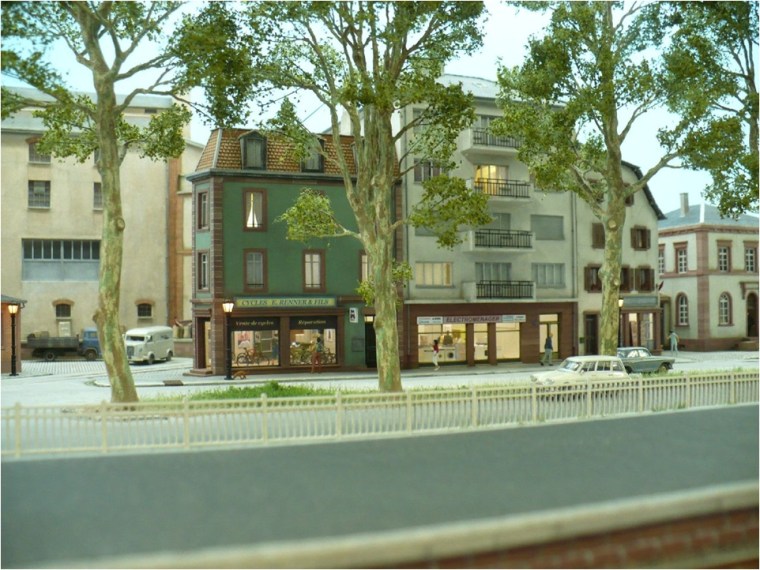
The parallel can be taken further, for there is another side to the story. In recent years, there has been a noticeable growth in interchange between the exhibition circuit in Britain and the continent. Dutch models in particular are not unknown in Britain – but certainly less so than some of the best British models which are increasingly invited to the big continental shows. There is undoubtedly a genuine admiration for British realism modelling on the continent; I have experienced this myself with my latest model which portrays a French scene, and I have had requests (granted) from French modellers to visit. One is coming in ten days’ time. But once again, there is generally much less interest shown at large in the other direction. The internet has become a significant fact here as everywhere: it is easily possible to see what is happening on the continental scene – but in my experience it is largely emasculated by the sheer lack of interest.

There is, on the continent, an organisation called FREMO (Friendship of European Railway Modellers) which lays down basic parameters which allows modellers to connect their modules to assemble giant super-models. It is almost unknown in Britain.

What I think we see here is a microcosm of Britain’s relationship with the continent: one in which the majority of people here remain determinedly isolated, wanting to have little to do with outside influences, which they genuinely believe are inferior to the home-grown version. The admiration British modelling receives is just not reciprocated. It is not that British modelling is without its merits – indeed the standard can be high. But there are just as many plasticky, toy-like models in the UK as elsewhere, and many very fine models on the continent, some of which knock the average British effort into a cocked hat. But by refusing to lift their eyes from their own domestic baseboards, most British modellers seem to have at best a distorted view of this, and at worse they remain in complete ignorance of good practice elsewhere, the sharing of which could enhance their own efforts. Therein lies the disadvantage this country repeatedly puts itself at by its refusal to integrate.

hch

And that is without the general camaraderie that comes from sharing one’s hobby. I now have railway-enthusiast friends in several other countries, and the interchange is great. Our shared hobby provides an excellent vehicle for international friendship – and what’s more, I now know a lot more about not only the railways but architecture, geography and language of those countries as a result.

In this one small teacup, it seems we can sum up the attitudes that underpin our current problems – and until they change so thoroughly that it can be seen in such esoteric parts of British life as railway modelling, I fear we will not get over them. There is little sign of that happening.

But there is one final aspect where the wider pattern is replicated in the hobby: since control systems went digital, most of the best technology that railway modellers are using comes from one place: Germany. And we buy that shamelessly.

sou
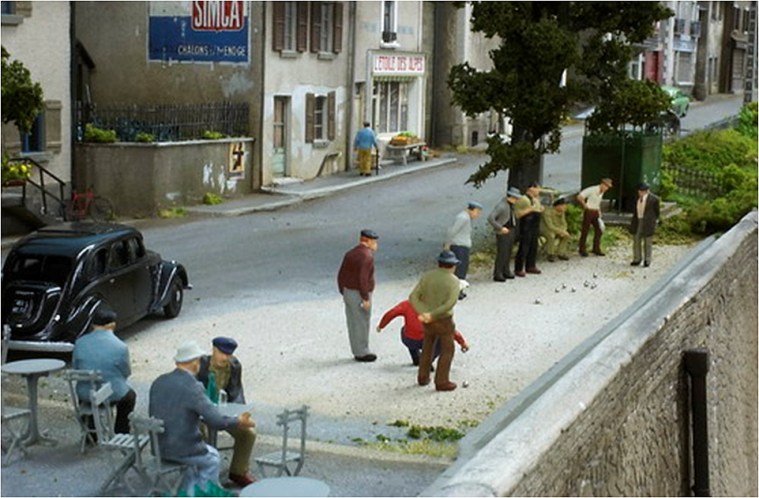
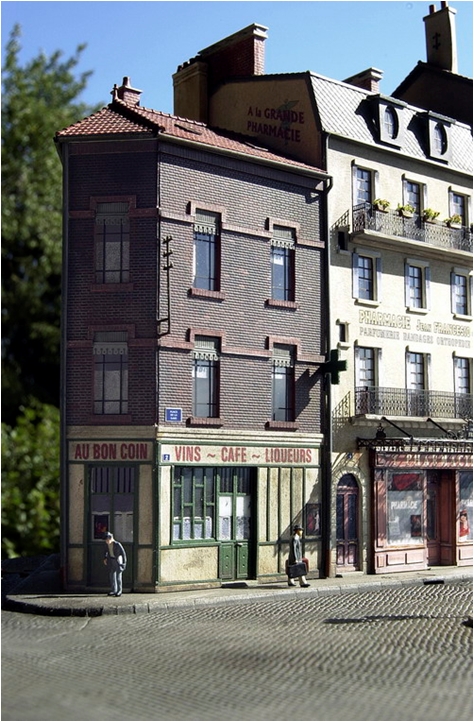
Above and below: The work of Dominic Burraud

sou2

Opinion & Thought, Politics and current affairs

Petitioning the European Parliament in Brussels

20191002_150418
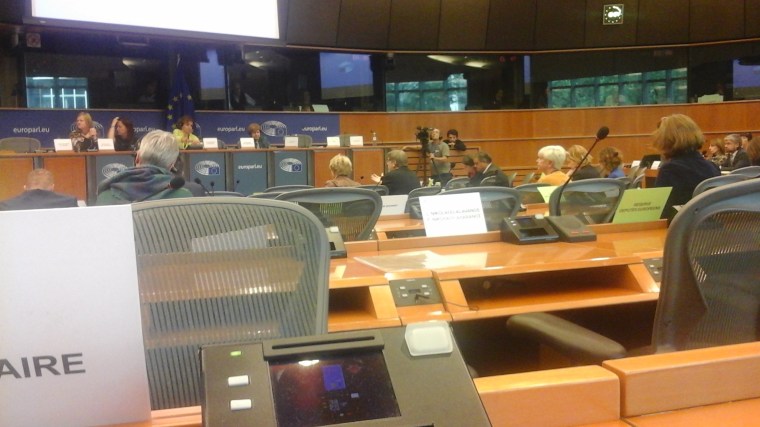
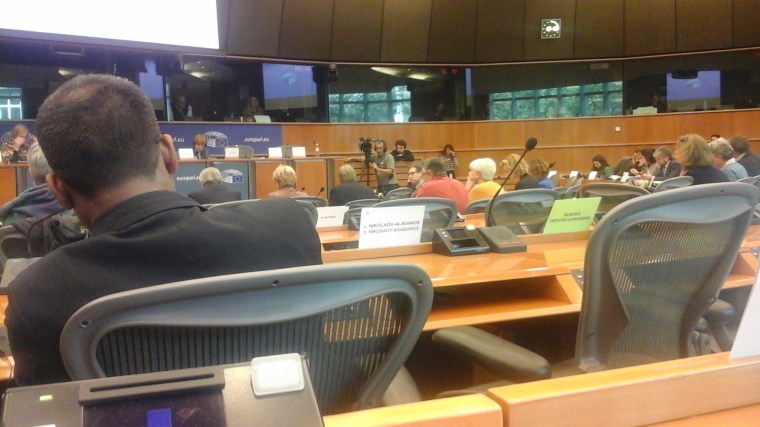
The view from my seat. Guy Verhofstadt straight ahead…

January 2020 update:

My petition to the European Parliament is still available for signing, and is still considered to be ‘live’. If you wish to sign, I suggest using this link to the website which contains details of how to do so. Due to EP procedures, it requires a little determination to sign, hence I have provided a help page. Alternatively, you can go straight to the EP petition page here


On 2nd October I travelled to Brussels to hear my petition debated by the European Parliament petitions committee (PETI).

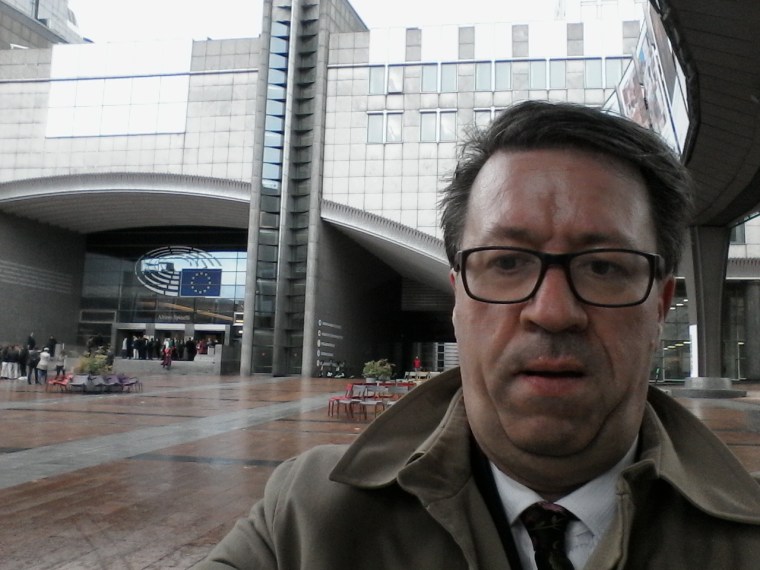
On occasions like this, the anxiety still jangles away unpleasantly in the background, but I managed to get myself to Brussels (and find a decent lunch!) I walked the mile to the Parliament, and despite a forecast of fine weather, this being Belgium, it rained on me…

I arrived in good time, and was met by members of the EP secretariat, who got me rapidly through security and into the chamber, which was in the form of a mini-hemicycle. I had expected to be sat somewhere towards the rear – but no: petitioners are seated on the floor of the chamber, along with MEPs and Commission representatives. Luckily I was familiar with most of the technology from my visits to the EP in Strasbourg.

Despite running early when I arrived, the debate did fall behind time – mostly because of the arrival of some of the EP ‘big guns’, notably Guy Verhofstadt (Lead on Brexit) and Antonio Tajani (former President of EP). Verhofstadt is never one to be brief, and he was still going well after the time petitioners were due to be heard.

As the time I had been given for my contribution came and went, I began to wonder whether I would get my chance before needing to head back to Midi to catch my Eurostar. In the event, my ‘caretaker’ managed to get my speech brought forward and I eventually spoke at about 17h20.

I got a round of applause, and as I was leaving the building, one of the British MEPs rushed out and congratulated me on my speech. So it seemed to go down well.

I have included the text of my speech below the photos.

Having watched, and taught, EU affairs for many years, this was a great experience. I can only say that anyone who doubts the value of European co-operation should watch the webcasts of such proceedings.

While this is admittedly a committee rather than the main chamber, proceedings are calm, unassuming and tinged with good humour. Those present seem to have few pretensions, and it is perhaps worth looking up the background a few of them, such as:

• Dolors Montserrat (Chair)
• Jude Kirton-Darling
• Claude Moraes
• Irina Von Wiese
• Christian Allard

When I arrived, the discussion was about how to extent animal welfare controls to laboratory animals and to curb the eating of songbirds in Cyprus. A significant issue. It is hugely varied. It was quite humbling and hugely enthusing to sit amongst such people from all over Europe and be heard and to hear their responses.

PETI hears several petitions at a time, grouped by themes. There were other representations from groups concerned about ex-pat rights and refugees after Brexit – but none other about the position of ‘regular’ British citizens. I am still left with the sense that while there is a lot of concern, no one really knows what to do about us. The Commission position is still that EU citizenship is a product of citizenship of a member-state and it would take a treaty change to alter that. Hence British citizens lose their rights if we leave. But they did not completely rule out a treaty change – huge though that would be – and there were a number of calls from MEPs for European citizenship to assume an identity independent from national ones. That would be contentious.

It is worth noting that PETI does not count numbers of signatures before admitting a petition. I was worried that mine only had a few hundred signatures – but there was one heard earlier in the session that had only THREE. It is the strength of the case that counts. And the ability to sit in a hearing and present one’s case is of course, conspicuous by its absence from the procedures in Westminster. While sitting there, I could not help but think that it will be an utter tragedy if Britons’ voices cease to be heard at the end of this month, or indeed at any point.

The meeting was web-cast and is available here.

  • Beginning at 15h57’50”
  • My speech is at 17h21’25”
  • There is a Commission response to my points from one of Michel Barnier’s team at 17h47’47”
  • Important point at 17:55’55” Where the representative says that the EC is not giving up on the existing Withdrawal Agreement despite what BJ says.
  • There is debate from the Committee at 17:57’50 and an important (but probably little-known point) about the cost of passports at 18h03’52. (Why does a British passport cost nearly FIVE TIMES the EU average for people claiming naturalisation?)
  • The section ends at around 18h14′.
20191002_133840
I don’t normally do selfies, but here I am just before going into the EP…

20191002_151323

Text of my speech:

Thank you for admitting my petition, and for giving me the opportunity to address you today.

Should Brexit happen, British citizens will in effect be stripped of their European citizenship. For many, this will be against their deeply-held wishes, and represents in effect the oppression of that group by its own government, similar in style if not degree, to events that often provoke moral outrage when they happen elsewhere in the world.

While accommodation will have to be found for nationals living in each other’s countries, pro-European Britons remaining resident in the UK will be the most disadvantaged group. Our rights and abilities to function in the rest of the EU risk being severely curtailed after Brexit.

As can be seen from the outpouring of pro-EU feeling in the UK, this is a greatly significant matter for many millions of us. It represents the theft of a deeply-important part of our identities by our own government and our peers. Our lives will be not only practically but culturally and emotionally diminished as a result. I have seen and experienced at first hand the deep anguish that this is causing.

Particularly for us islanders, whose history and geography have always set us slightly apart from the European mainstream, this is extremely important. It matters greatly to us that we can look our fellow Europeans straight in the eye and say “we are part of this project too”.

When it comes to resolving this issue, it is noticeable that our own administrations have had nothing whatsoever of substance to say to us for the past three years. We have become invisible; the daily rhetoric about the “will of the people” makes absolutely no reference to our wishes. As one commentator put it, “We are being written out of our own futures”. In short, the British government simply does not know what to do about us, and it is all too evident that the new UK administration cares even less than the last one did.

It is also very clear that Britons who are in favour of Brexit care not one iota for our welfare. They see this as a zero-sum victory for their views, and the likely consequences of this are not encouraging. I live in the constituency of the Home Secretary, and have stood on the streets of that constituency, experiencing the hatred of some Brexiters towards Remainers.

Guy Verhofstadt has argued that the lives of ordinary Europeans should not be harmed by Brexit. Whatever the political future, geographically and culturally speaking, Britons are still Europeans – and the lives of European-thinking Britons will be harmed by the actions of a minority of our fellows. I argue that the wider European community should not be prepared to let this happen, and should do whatever it can to mitigate the impact.

I maintain that should Brexit happen, and the U.K. becomes in effect just another external country from the EU’s perspective, it will be no business whatsoever of the UK government, what recognition and treatment the EU chooses to dispense to people within the territories of its own member-states.

I therefore call upon the EU to create a status – perhaps “associate citizen” – that would recognise this unique group of disadvantaged former EU citizens and provide them with as many as possible of their former rights whenever they are within EU27 countries. My petition sets out a number of possible dimensions of this. I suggest that this need not compromise any other citizenship arrangements either in the EU or the UK, and I urge the EU to act, unilaterally if necessary, to implement it.

I realise that there would be costs to doing this, and therefore it would be reasonable for those to be at least in part recovered. An application charge (and perhaps other checks) could also test the genuineness of the application – but I would urge you to implement any such system in a way that does not exclude those on low incomes. The EU has a great record on promoting equality and will surely recognise the importance of this. Again, I submit that such procedures would be nothing whatsoever to do with the UK government.

As someone who has been engaged for many years in European education in the UK, I urge you seriously to consider such moves, not least because they will help preserve a European consciousness in the UK during the dark times outside the EU. Should Brexit happen, providing this identity-option would be very significant in terms of reconciling British Europeans to an unenviable situation, and helping to heal the rift in our society – as something similar through the Good Friday Agreement has helped resolve such issues in Northern Ireland. An act of faith such as this can only encourage the U.K. to rejoin in due course.


Arts, Architecture & Design, Travel

Blame it on Mary.

51KiDGowArL

Mary Plain was a small bear. She lived in the Bear Pit in Bern – at least in the imagination of Gwynedd Rae, who wrote her children’s stories in the 1930’s, and which were a youthful favourite of mine. She has a lot to answer for.

Every time I pass through Bern, a necessary ritual is to go and say hello to Mary’s descendants. The bear pit as drawn in the books was quite accurate: a pair of round, sunken stone compounds, with various (rather denuded) trees for climbing, a large bath and sleeping quarters at the back. As I child, I was delighted to see that you could indeed buy carrots and sugar lumps to feed to the bears.

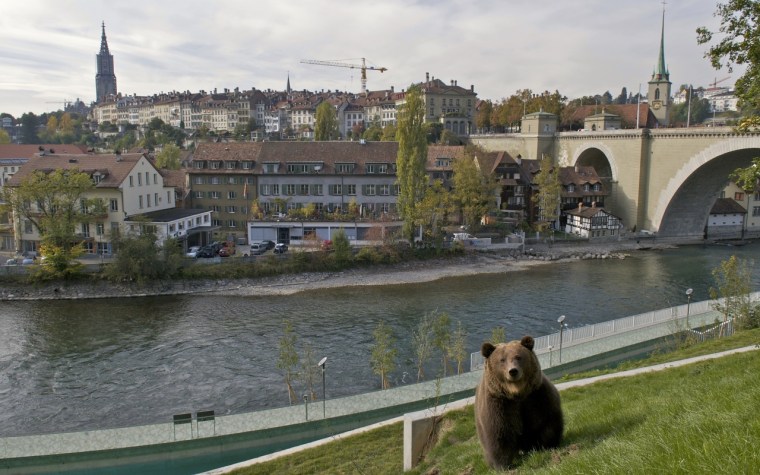
We made our latest visit a couple of weeks ago, on the way back from Lausanne to Basel, when the city was looking especially mellow in the late-afternoon glow of a sunny September day. Pleasingly, the Swiss have moved with the times when it comes to animal welfare, and in a neat reversal, the original bear pit is now an exhibition space and gin bar containing humans, while the bears roam a much larger and more naturalistic enclosure outside, on the steep hillside leading down to the river Aare. Now the trees have grown, however, it is much more difficult to spot them…

baerenpark_03-feb77e66
(Library picture)

Despite its being their capital, amongst the Swiss the Bernese have a reputation for being slow and lumpen. (“Why shouldn’t you tell a Bernese a joke on a Wednesday? Because he might laugh in church on Sunday…”). On the train into Bern earlier in the day, we had an impromptu conversation with a not-at-all lumpen young Bernese man, who was returning from visiting his girlfriend in Basel. He told us, though, that he does indeed like Bern because although it is the capital, “it is just like a large village”. But it still has some pretty swish quarters, if my experience is anything to go by, of the one where, a good many years ago I once went to a rather smart party. Even if it did go by the name of Bümpliz…

There can be few capital cities where you can see wooded hills at the end of the main street (and on some days snow-capped Alps too), and yet at the same time indulge in a spot of serious shopping or eat at a top-notch restaurant (avoided, given the distinctly non-provincial prices…). Bern has a wonderful character, and as with the other larger Swiss centres, its conservatism is pleasingly spiced with a noticeable undercurrent of trendy urban rebellion. It is a place that moves slowly and deliberatively, but always with its eyes on the future.

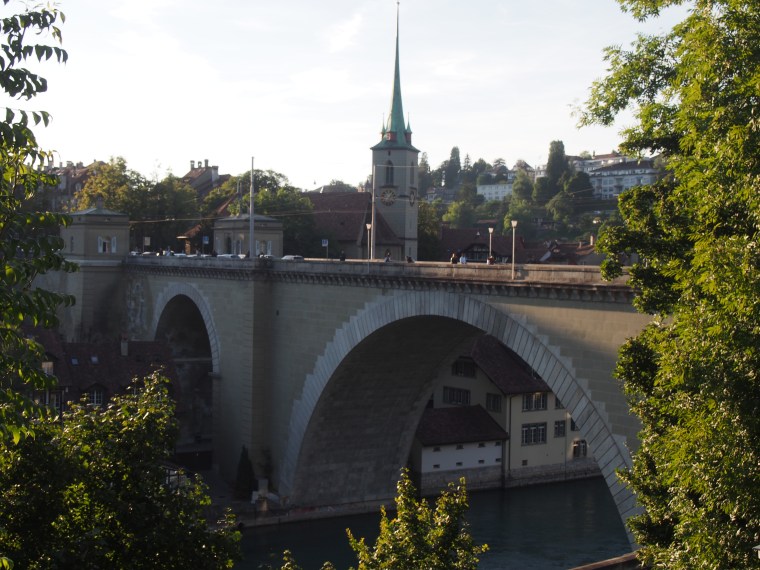
The centre of the city lies on a neck of land surrounded by the deeply-incised valley of the Aare, giving a dramatic setting, the main streets gradually sloping down towards the sharp point of the meander, while both road and rail routes are forced to approach over dramatic high bridges. The outer sides of the valley are scattered with desirable villas, while it is possible to indulge in a spot of river swimming here in the city centre, as in Basel. Topographically, the city has a superb natural arena.

OLYMPUS DIGITAL CAMERA

Many of the timeless buildings have decorated shutters, and are built from a sandstone that is a particular shade of mustard-green that seems to be found nowhere else. Quintessentially Swiss. It goes without saying that the public transport is peerless, even if the main station was rebuilt in the seventies in the style of Birmingham New Street. Here, twice an hour, inter-city trains from all over Switzerland draw up at adjacent platforms so that easy interchange is possible from almost anywhere to anywhere.

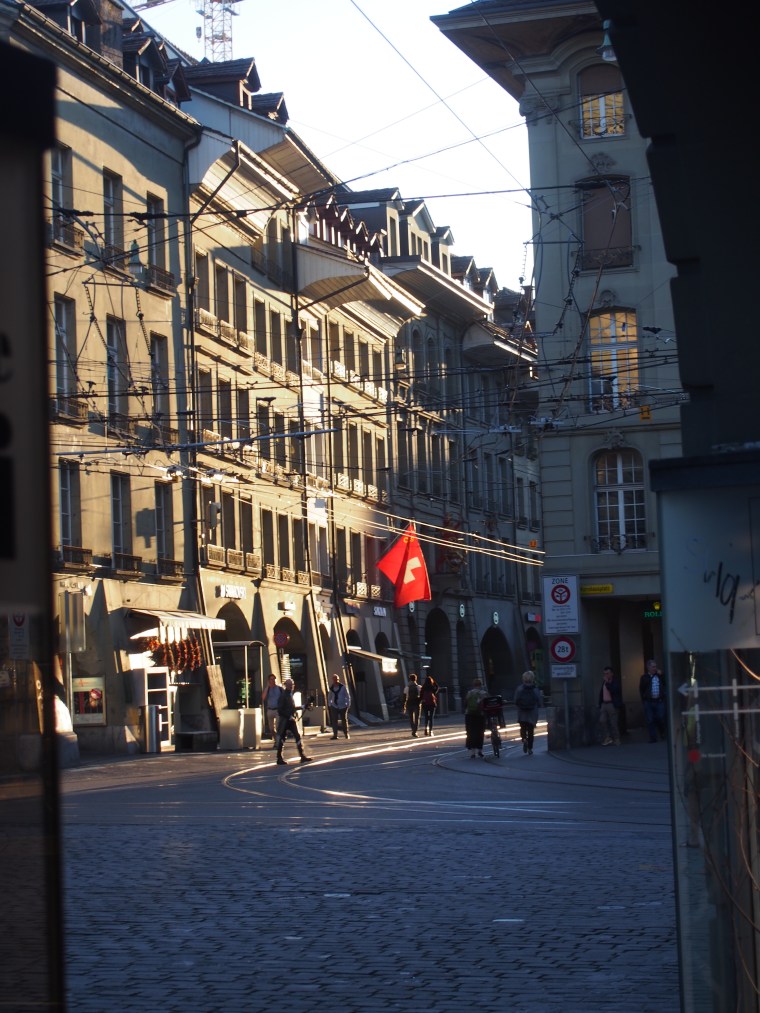
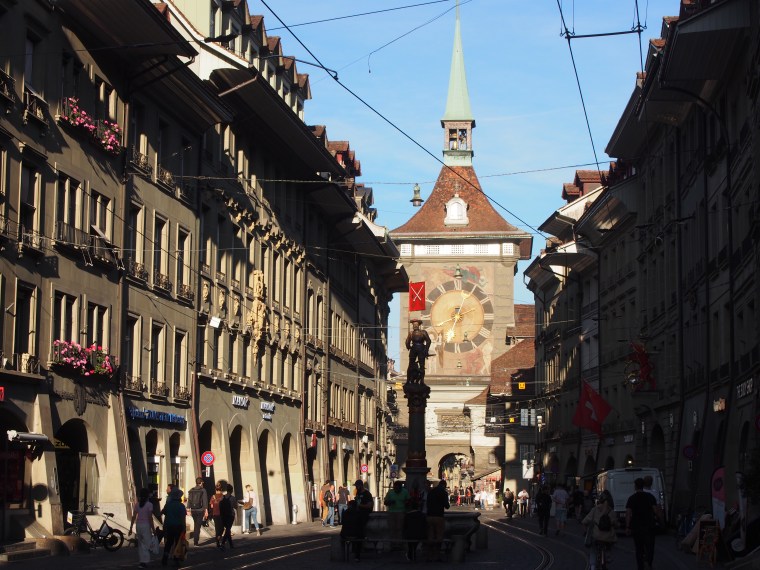
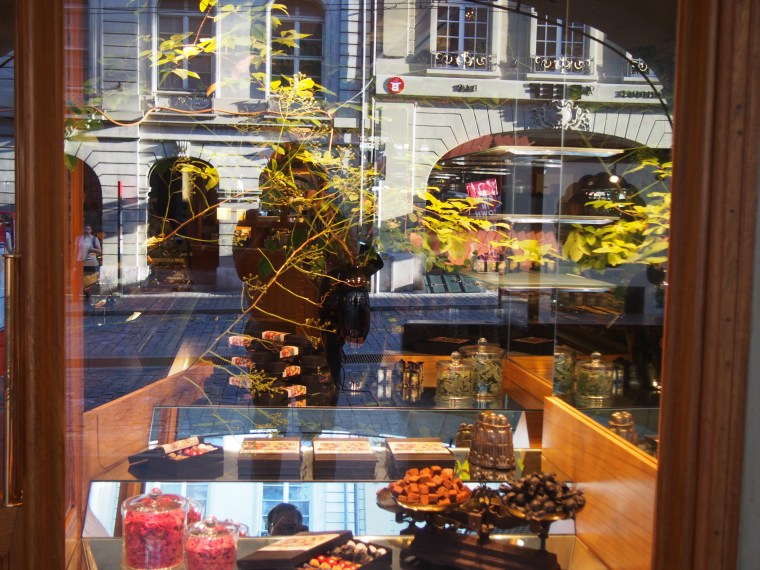
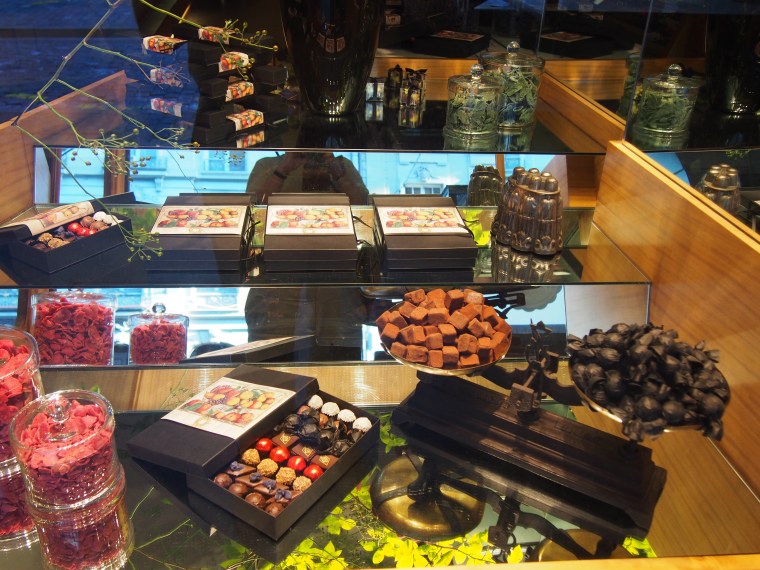
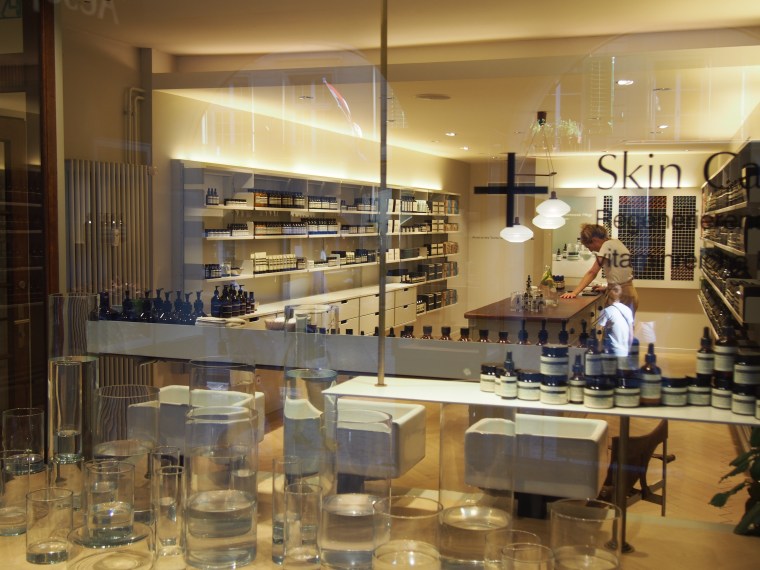
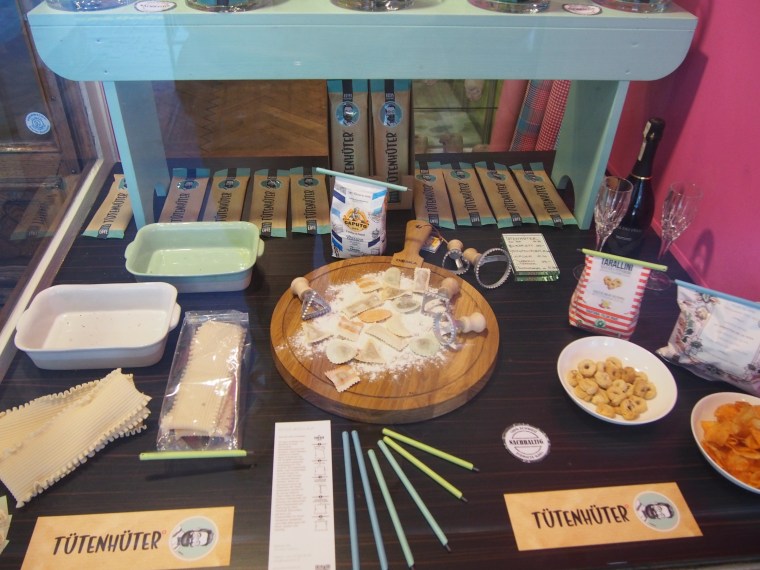
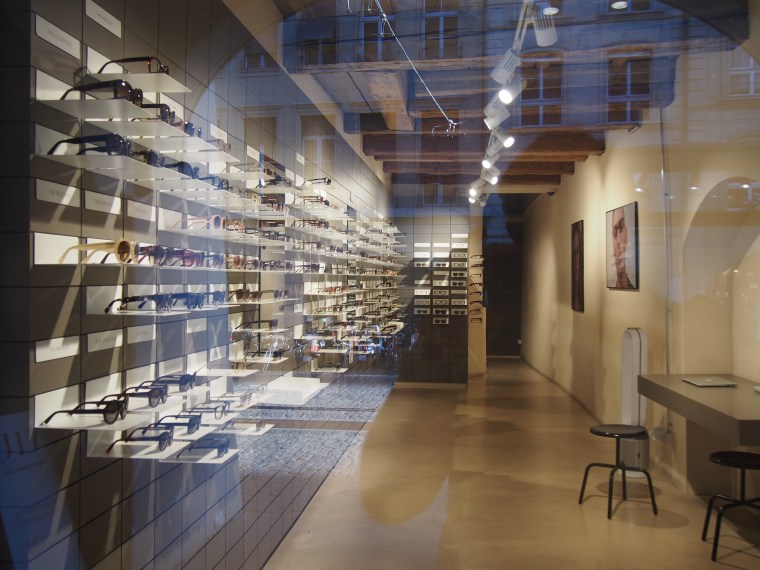
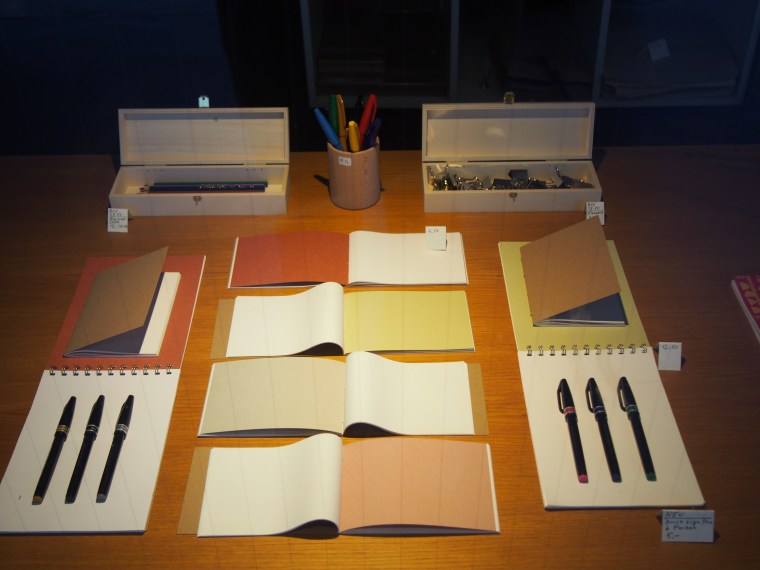
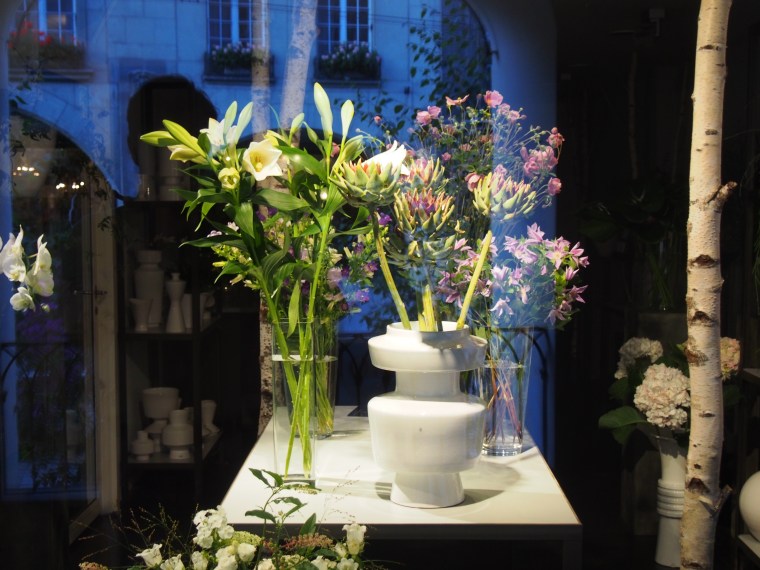
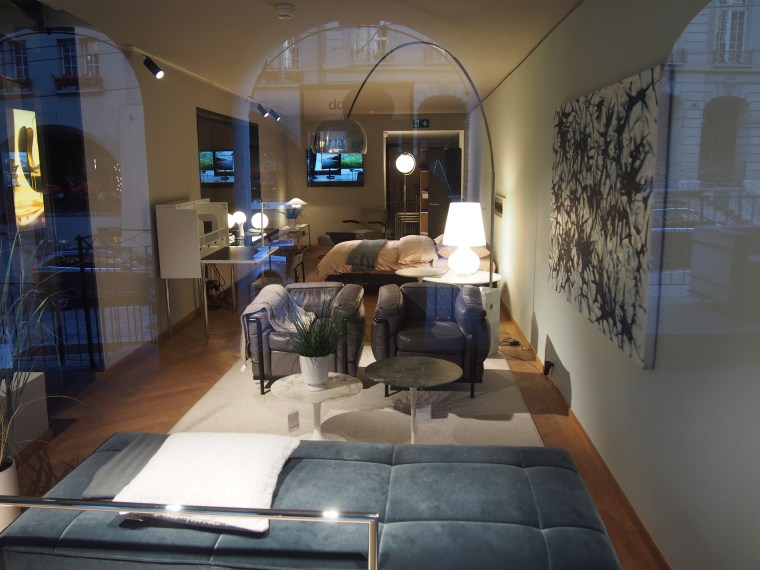
We love the arcaded streets, a larger version of those all over Switzerland which were, of course, never flattened by the ravages of the Twentieth Century. It’s all original. The old clock tower and the square outside the parliament building are straight from a fairy tale; visiting them, on the way to the bears, is another ritual. Even more than elsewhere in Switzerland, the shop-keepers seem to take a pride in making the most attractive window displays imaginable, which promise to turn the most mundane of purchases into a super-stylish adventure. I decided to make a small photo-survey of some of the present ones – see below.

OLYMPUS DIGITAL CAMERA

I like the scale of Swiss cities: I know exactly what the young traveller meant: it is a capital built on a very human scale, just as Switzerland is a nation built on an equally human scale. Ironic really, considering the physical grandeur all around. Maybe the ever-present mountains give the Swiss a sense of their own, human, insignificance?

My amusement with Bern’s slowness got its own back, however. As we were leaving the station, I was stung by a wasp. Being Bernese, it moved slowly enough that I was able to bat it away before it did its worst. But it left its venom to work a very gradual inflation of my right arm over the following two days, which then lasted a good week. Even the smallest inhabitants know that slow and steady brings results that are both progressive and unchanging over long periods of time.

I like Bern precisely because it feels both thoroughly modern and timeless. Thanks to Mary Plain, we have come to know quite well another Swiss city which subtly, perhaps unintentionally, drives home all that could be so much better about the life that, inexplicably, one has to live somewhere else.

OLYMPUS DIGITAL CAMERA

Below: a short photo-study of Bern’s shop windows…

OLYMPUS DIGITAL CAMERAOLYMPUS DIGITAL CAMERAOLYMPUS DIGITAL CAMERAOLYMPUS DIGITAL CAMERAOLYMPUS DIGITAL CAMERAOLYMPUS DIGITAL CAMERAOLYMPUS DIGITAL CAMERA

OLYMPUS DIGITAL CAMERA


Food, Travel

Beyond Schoggi

OLYMPUS DIGITAL CAMERA
Schiesser, Basel

I am very partial to a grand continental café. A classic of the kind is the Cafe Romand in Lausanne (below), its unchanging parquet-floored, wood-panelled interior a place where old men still come to pass the afternoon with a paper and coffee, and grandes-dames take afternoon cakes. In the evenings it serves fondue in traditional ceramic caquelons. It is immensely popular, a local institution, even though it’s a youngster, dating only from 1951. I’ve been an occasional customer since the late ’80s, and it is one of those places that somehow move with the times without ever changing.

Lusanne_Romand
Cafe Romand, Lausanne

Then there is Schiesser, an institution in Basel dating from 1870, another darkly-panelled tea shop on the upper floor of the eponymous confisserie opposite the town hall. Proper black-and-white-dressed waiters still prevail here, and the heiẞe-schokolade most definitely comes not out of a Cadbury’s tin.

OLYMPUS DIGITAL CAMERA
Elevenses by Schiesser

Swiss cuisine doesn’t have a particularly high profile abroad, partly perhaps because it, like the country itself, is so heterogeneous. The obvious features are fondue and – of course – cheese in general, together with the increasingly-known raclette and rösti. Like the country itself, the diet is a sometimes-perplexing mix of Germanic, French and Italian influences, which can crop up in disconcerting combinations. But there are also delicacies such as filets de perche, which have almost cult status on Lake Geneva. And we shouldn’t forget the fresh apricots and peaches, and the wine, even though it is something of an acquired taste, and not widely available elsewhere.

Food is done with the same care that the Swiss attach to most things – and they don’t forget the importance of the visual, either. Their food is tasty, and often cosmopolitan, but the thing that really stands out is that it is so enticingly presented.

Visiting food shops in Switzerland is a feast for the eyes even if you don’t purchase, and this is something else that to me gives the place a solid sense of well-being that is often lacking in Britain (and sometimes elsewhere). Sorry, but Greggs is just not the same. Somehow the Swiss manage to make their food outlets classy without being elitist, in a way that even their neighbours often fail to match – and that is saying something.

Britons might consider the approach quaint; there are still quite a few restaurants where waiting staff are traditionally formal, and even on the trains one still eats off crockery with proper cutlery. Old-fashioned, or simply maintaining high standards? There are plenty of street-food stalls of course, but the things that really appeal to me are the more solid outfits.

A much-missed attraction in London is the Swiss Centre in Leicester Square, which used to contain a Mövenpick Marché self-service restaurant in its basement – a bit like a culinary version of an IKEA marketplace, only much tastier. One could, for a while, imagine that one was in Bern or Zurich, and it was (presciently) where my wife and I went on our first date.

Mövenpick is a reputed Swiss brand, which covers restaurants, hotels and more. For me, its crowning glory is its ice cream, which unlike the company’s other offerings can be found scattered (thinly) across the U.K. I most recently came across it, bizarrely, on the menu of a pub in deepest Cambridgeshire. Recommended.

Even department stores and motorway service stations get in on the act as foodie destinations. While the up-market Globus might be expected to have a seriously sexy food hall, even the more mid-market Manor offers its own Marché. One proceeds with tray to various ‘stalls’, from which to mix and match salads, patisserie, fruit smoothies and more, or to have various dishes cooked while one waits. To top it off, the store in Basel has a great roof-top terrace, where one can park for a good while, looking out over the city.

Globus2
Globus food hall
Manor 1
Manor Marché, Basel
OLYMPUS DIGITAL CAMERA
Manor Marché, Basel
OLYMPUS DIGITAL CAMERA
Rooftop terrace, Manor Marché, Basel.

But I suppose we must inevitably come to chocolate. Forget Nestlé. An up-coming company is Läderach – first founded in the 1960s and producing superb chocolate. While Britons at last seem to be learning a serious chocolate habit (for which, sincere thanks Hotel Chocolat) this is on a different level entirely, with comparable prices; good chocolate is not a cheap commodity, but then a small amount goes a long way. Once again, the Swiss elevate an everyday transaction to the level of serious luxe; it is also rather more grown-up than Hotel Chocolat’s sometimes-gimicky presentation. It is noticeable that this brand has been expanding vigorously in recent years, and has now spread to several other countries, though not yet the U.K. It is possible to order online, and they do seem gradually to be addressing their shipping costs.

OLYMPUS DIGITAL CAMERA
Above and below: Läderach

OLYMPUS DIGITAL CAMERA

I suppose it is possible to argue that presentation doesn’t make any difference to the product. But I think it does: if it is true that consumers are shifting their spending from goods to ‘experiences’, then presentation and quality of service are part of making the purchase of something into a feel-good experience. It is something that too many retailers in Britain seem not even to begin to understand. I might have been tempted to suggest that large chains simply aren’t capable of delivering such experiences – but the Swiss show that to be incorrect, too.

As I wrote in my previous post about Morges, Swiss streets seem to be little-harmed (as yet?) by the online shopping revolution, certainty compared with the free-fall being seen in the U.K. Maybe that is because they understand (or just care) more about these matters.

The proof of the theory is in the eating.

Arts, Architecture & Design, Opinion & Thought, Travel

Morges please!

OLYMPUS DIGITAL CAMERA

Some places are just naturally blessed. Consider, for example Morges, a small town of 15,000 people on the shore of Lake Geneva a little to the west of Lausanne. I have known it for many years –and it was the place where I once took my wife-to-be, to cure her leg-pulling that my near-obsession with Switzerland was nothing more than rose-tinted imagination. It worked.

I suppose it’s the geographer in me that means I rarely go anywhere simply to switch off; travel is an opportunity for gentle, observational research. I am drawn to examine the differences between places, why they exist, and the effect they have on people’s lived experiences. It is patently not true that people and places are the same everywhere – but precisely how and why they are different can be complex, and behind the physical exterior lies a cultural landscape that is even more difficult to divine. In the case of Switzerland, as well as my general appreciation of the country’s more well-known attributes, I have become fascinated with what makes it tick. And yes, on occasions that can appear quite obsessional.

As with much of Switzerland, it’s not a matter of being on a different planet; it’s just that things there tend to fail to work badly, in the way they can do elsewhere. Morges is the kind of place that I suspect many would agree would be something close to a dream or ideal – and yet it is entirely real – and therefore realisable. True, it has an exceptionally beautiful setting, but more than that, the Swiss always make the most of what they have: a small town centre that in some countries would be peeling and faded, half the shops either boarded up or filled with junk shops is, instead, beautifully maintained, artfully lit, and full of genuinely interesting small shops and eateries.

Morges 1
The main street.

The traffic, while busy, is generally subordinated to pedestrians, and there is plenty of opportunity just to enjoy being there. What puzzles me rather, as a Briton, is that there is very little sign of the town suffering from the onslaught of online retailing, as is so obviously happening in my own country. The only evidence I found was the hoarding of a new mixed development near the station which talked about boosting the life of the town centre.

I think the answer is one that Britain would do well to note: the shops are not the cloned bulk-warehouses of conglomerates; most of them appear to be small, and individually-owned. They offer a range of goods that is genuinely enticing, high quality, and often displayed with panache. There is not a fast-food outlet or chain restaurant in sight. It makes using the town centre a desirable and rewarding experience, and this surely has to be the way forward.

As a non-native, it’s hard to get to the bottom of Morges’ seemingly charmed life. It is hardly ordinary – that would be nigh-on impossible given its location on the Rivièra Suisse, former home to the likes of Audrey Hepburn, Roger Moore, Charles Chaplin and Freddie Mercury – but it is seems largely by-passed by those on the Geneva – Lausanne – Montreux tourist drag. Judging by the levels of social interaction observed in the streets, most people there are locals – though that can perhaps conceal who those ‘locals’ are.

A little research shows that nearly a quarter of residents were born in the town, another quarter elsewhere in the Canton (region); a further 20% were born elsewhere in Switzerland and the remaining 30% is from elsewhere in the world. That is perhaps not surprising given Morges’ position between two international cities (ICRC and UN in Geneva, International Olympic Committee in Lausanne). But it is not unusual in Switzerland, where nearly the same percentage nationally is not Swiss. It is, in many ways a ‘just’ a local, provincial town. It has a well-known tulip festival in spring which brings in the tourists – but otherwise it is largely configured for its local population. I once went to an evening class on motor mechanics there.

Morges 5
The waterfront.
OLYMPUS DIGITAL CAMERA
Art Deco restaurant on the lake front.
Morges 6
Lausanne in the distance.
Morges 7
The lakeside promenade.


It’s too easy to dismiss the solid, refined quality of the place as the product of one of the world’s wealthiest countries. Undoubtedly, that is a significant factor – but more important is how the money is spent: invested in a high-quality public realm, excellent public transport, a well-maintained historic centre and beautiful landscaping, all of which are accessible to the whole population. It is not wealth, for example, that stipulates that lake shorelines in Switzerland must maintain continuous public access – something that elsewhere even Roger Federer is struggling to overcome.

It is not wealth alone that established the tulip festival, or the year-round programme of cultural events. Nor is it wealth alone that seems to make the Swiss populace take so much care over everything they do, from personal appearance, to the cleanliness of the streets and the beauty of even quite ordinary shop windows. Twenty years ago, I bought a shower curtain with a silly cartoon Swiss cow on it in the Morges branch of Interio. It is still as good as new.

Unlike many places with glossy exteriors, Swiss quality is real. Judge for yourself from the quality of this small town’s municipal website here.

Morges tulip fesitval
The tulip festival.

It is easy to dismiss Morges as a place living a charmed life – but many of my observations about it could equally apply to almost any similar town in Switzerland. What’s more, in Britain I suspect that not only would many equivalent small towns be struggling with the effects of decades of under-funding, but they would be desperately clinging to what is left of their ‘heritage’ And yet Morges is busy, in conjunction with Swiss Railways’ property arm, building an entirely new urban quarter next to the station, that will combine public space with a school and crèche, offices, shops and apartments – all built in a modern style that would do credit to some of the smarter bits of London. So different from the fight a few of us have had in our local town to get anything other than Disney-esque fake cottages built.

Quartier des Halles_1080x724
Apartment in the new quarter being built near the railway station.

It was good to be back in Morges after several years in which we lost our local connection. We did the customary walk along the lakeside, had the ritual (superb) ice cream from our regular kiosk and enjoyed a crêpe lunch in the lovely main street. But the real wealth of the place is simply its superb natural setting, looking across the Lake with its constant animation of paddle steamers, yachts and water-skiers, to a grandstand view of the Mont Blanc massif. It is just as glorious, in a quieter way, in winter.

The problem with Switzerland is that one is daily confronted with one’s ideals made real. Morges is the kind of place I would love my actual home to be, a place where one can imagine putting down deep roots, and feeling really proud of where one lived. Of course it does not do to be taken in purely by physical appearances, but I know the country well enough after a lifetime of visits, to know that Swiss quality is not a sham.

My sense, from being in the country, is of a place that is generally content, stable and reassuring: a place where the balance between what you put into life and what you get out of it is right, where life is lively without often being fraught, where it is possible to live genuinely well. That Switzerland regularly appears at or near the top of global life satisfaction surveys would seem to confirm this.

Maybe it is true that people are conditioned by their environments. All the Swiss need to do, in which case, is to capitalise on what they inherited. And they do. As I said, some places are just naturally blessed.

Morges 3
Mont Blanc, seen from Morges.