Arts, Architecture & Design, Food, Travel

The High Life

rtg03

After my previous complaints about the state of Britain’s town centres it was a pleasure, a few days ago, to visit somewhere that it still getting it right. Norwich (in Eastern England) has always been a law unto itself; I lived there for a year in the mid 1980s, when it was still a haven for as many alternative and offbeat scenes as you can imagine. Being rather out-on-a-limb geographically speaking has helped: only recently has it received the mixed blessings of a dual-carriageway road to the outside world, and while a modest 200,000 in population, its position as the centre of a large and quite remote rural hinterland lends it a big-city feel.

The building of the University of East Anglia in the 1960s added to its instinctively liberal character, especially after the construction of the Sainsbury Centre for the Visual Arts, an early work of Normal Foster, put it on the map forty years ago.

Even today, while it has ‘normalised’ somewhat, Norwich is still a city of great character, of course helped by a fine medieval, Georgian and Victorian architectural legacy and a network of narrow lanes still crammed with independent shops. As was the case everywhere, the sixties and seventies were generally less kind, with the usual bland corporate construction on the margins of the city centre. However, it was to one such building that my visit took me.

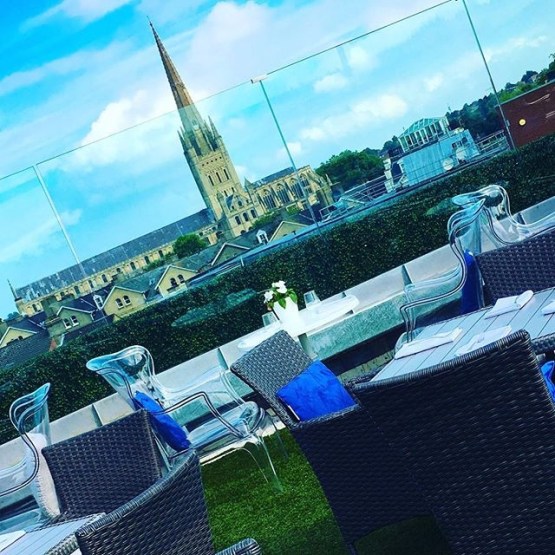
I was there for a professional rendezvous, and Chris had suggested meeting at The Rooftop Gardens, a restaurant atop a six storey office block not far from the station. This really is a case of making the best of the available opportunities in a way that provincial Britain rarely manages.

There is something appealing about getting high up in a city: it’s as though one has found an eyrie, tucked away yet simultaneously with a commanding view. Even for one who struggles with heights, the reason why penthouse apartments command a premium is immediately clear: an enviable 360 degree view taking in one of the city’s two cathedrals, its many medieval churches, the castle, the handsome railway station and the whole sweep of the city on its rise in the centre of a meander of the River Wensum. It’s a pity that so many such places are resolutely private.

The restaurant itself is smooth, exuding the kind of lounge-bar appeal I have seen in similar places on the continent, even if it doesn’t quite achieve the cool of somewhere like Bar Rouge, on the 20th floor of Basel’s Messeturm. But then, it doesn’t come with the vertigo either… The food is modern British in style, attractively produced if not especially generous of portion, and the staff attentive,  even a little eager.

There are two outside seating areas, with clear screens and a large awning to mitigate the climatic extremes in what is quite an exposed position; I can imagine it is an excellent spot on summer nights. There is also the advantage that it is the one place in that part of the city from where one cannot see the rest of the host building…

While Norwich is clearly a city of some means, the essential ingredient for remaining a “fine city” (as Norwich bills itself) is making the most of one’s assets. In that, imagination and vision are as important as hard cash. This is the city that, when its library burned down some years ago, built itself a fine contemporary mediathèque in the middle of the old town. In many British towns, the missing factor seems to be any kind of vision, which can work wonders even when money is short. As I have found more locally, there is a kind of dull, downtrodden provincialism about many smaller towns, a lack of any sense of urbanisme – civic pride or sophistication that is the necessary spark for places like Rooftop Gardens. I barely need to say that one gets a far wider sense of this on much of the continent.

Norwich is one example of how a place can have the best of both worlds: a city small enough to remain personable and eminently walkable, yet big enough to achieve some sophistication.  The Rooftop Gardens an excellent example of how to capitalise on an otherwise rather doubtful 1970s ‘asset’, and as such could easily be replicated elsewhere.


Arts, Architecture & Design, Opinion & Thought, Travel

What is becoming of the British town centre?

When Richard Beeching closed many of Britain’s branch line railways in the mid 1960’s, he was probably doing some necessary pruning – except that he didn’t realise that he was cutting not branches but roots. It later became evident how those smaller operations fed nutrients – in the form of custom – into the bigger lines. The consequence was a decline in use of the railways that took decades to reverse.

One might have hoped that we had learned the lesson – but it seems as though Britain’s town centres are going the same way. Walking around my local one (which had better remain nameless for fear of doing it more harm), I was shocked at its state of decline. I must admit, we go there rarely these days – which probably tells its own truth – so it was saddening to see the number of empty premises, tatty-looking streets and rather unsavoury-looking characters hanging around. Perhaps more frequent visits would have concealed the steepness of the decline.

This is not one of the centres of despair in the post-industrial wastelands of the North, but a major town of over 120,000 people, in one of the more prosperous parts of the south – and it is growing quickly. So what is happening to its urban fabric?

I think a number of factors are playing a part – and just as in the case of Beeching and the railways, own goals feature strongly.

I am part of that problem. I don’t mind for one minute being thought of as having obscure or even rarefied tastes – but be that as it may, my local town simply no longer caters for them as it used to. Consequently, I rarely find any need to spend money there, because it provides little that I need or want. The internet is of course a major part of this – but equally culpable, in my opinion, is the retail sector of Great Britain which has increasingly been dominated by chains such that anyone whose taste does not fall within the mainstream is less likely to be catered for. If you want to buy leisure-wear, you have the entire town to play with; look for any other form of decent menswear and you are struggling (except for a couple of very expensive shops). The same is true for music: the high street stores used to keep reasonable selections of minority genres; mostly now gone – so I buy my music from online specialists. I could go on: the point is this – by narrowing their offerings, and simultaneously putting many local specialist shops out of business, the retail sector has in effect excluded many of those smaller tribes who nonetheless collectively brought patronage to town centres.

There then followed a downward spiral – not helped in the least by three other factors:

1) the insistence of the local council on bleeding people dry for parking in the town, while for many years failing to provide workable alternatives in the form of good public transport. I know many people who will not use the town on account of its parking charges. I am talking here about often well-heeled people who live in the surrounding hinterland. Those who are left are the ones who cannot afford to go anywhere else.

2) The same council’s granting of permission for yet more out-of-town retail and leisure developments ostensibly to cater for the town’s growth – but which in reality only deprive the centre of trade.

3) The bleeding dry of funds from central government that has prevented local councils from maintaining their urban fabric, let alone innovating. But that is not the whole story: the town received a spectacular new art gallery some years ago – but the approach path is still half-screened off behind rusty, corrugated iron in an area where a redevelopment scheme never seems to happen. It can only be off-putting to potential visitors and the public image.

I am puzzled by one thing: towns on the continent must be encountering the same challenges from e-commerce (though I gather the Brits have been early adopters, as usual with anything that allows them never to leave their couches) – and there is no shortage of out-of-town retailing on the continent either – but the same hollowing-out effect seems not to be present.

Maybe it comes down simply to the fact that people in those countries simply have greater spending power to support more retailers – but I also wonder whether it is also something to do with the fact that continental towns have never been simply retail machines in the way British ones were allowed to become. There still seem to be more inner-urban dwellers on the continent (though it does also seem to be increasing in Britain) – and perhaps more significantly, people in France, Italy and elsewhere know how to inhabit their towns in a way the British have lost – or never had. The variety of cultural events seems to be much greater – and the food scene is not dominated by the increasingly tacky-looking chain restaurants that now line most British town streets as retail has fled. They also tend to have better public transport to bring people in from outlying districts.

I am sure the desire for greater choice has something to do with the problems in Britain: while I don’t buy often, I do spend money on good quality when I need something; but I will not part with cash for something sub-standard and no doubt I’m not alone in that demographic. People of that profile have been repelled by mainstream retail as I described. They also happen to be mobile: I can buy premium goods more cheaply at a nearby outlet village, likewise those and specialist goods online – and when I want the full urban experience, I am less than a hour’s drive from one place that is noticeably bucking the trend: Cambridge.

Cambridge also shows that while money clearly speaks (it has an evident glut), town centres can still work in Britain by providing for people with diverse needs and by offering more than just bleak, clone-retail. While Cambridge does have its critics, the sheer attractiveness and liveliness of its townscape makes up for a lot.

My local town also has an attractive townscape – indeed one of the more dramatic High Streets in the country – which the local council has repeatedly failed to pedestrianise it properly. It has other fine buildings too – some of which have been left to become weed-covered eyesores for want of an enlightened planning policy.

In the end it is the ability of local worthies to capitalise on what they have that I think has made the difference between Cambridge and my local centre. Quite what all the extra thousands who are expected to come to live in the newly-built acres of rabbit hutches are going to get out of their lives there is anyone’s guess.

A little vision goes a long way. And a lack of it can create a disaster where there need be none.

Arts, Architecture & Design, Opinion & Thought, Politics and current affairs

Authenticity and the modern Brit.

Bb01

I know: a post about Brexit and a Scottish folk band is going to have most clicking straight on past – but that is my point: hear me out!

There is much in modern life not to like; that ultimately seems to be what the Brexit vote was about. I am not however going to enter the fray here as to whether it is right or not – but it is unarguable that it has provoked a national debate in this country the like of which I have never seen. After several decades of somnolence, the conspiracy of ‘events’ has finally woken the British up to what their nation(s) have become – and plenty (on both sides of the debate) don’t much like it.

I would argue, however, that the reasons for this have little to do with our membership of the European Union, so much as the free reign that the forces of globalised capitalism have been given in this country – see the previous post. It is that which has really generated the crisis of identity currently being experienced in Britain. We have willingly been fed a diet of mass-produced, commercialised everything, whose main purpose is to hoover up as much of the nation’s disposable income as possible, as efficiently as possible. That means products that are cheap to produce and so bland that they will offend no one. As a result, they also come completely devoid of any cultural references that might make them distinctive – and this is no less so with the music industry as any other.

So it saddens me that for all the bashing many have been giving our country, perhaps justifiably, there are plenty of things of which we can still be proud – but which are regularly overlooked or ignored by the national mainstream. The fact that we have a vibrant folk and roots music scene is one – our musicians are in demand around the world within their own relatively small pool. Breabach, the subject of this piece are off to Australia next month, and regularly play across North America and continental Europe, where people seem to appreciate our native music if anything more than many British do. Possibly the strongest elements of a varied tradition are found in Scotland and Ireland – but while the Union endures, I am going to claim part of them for myself. In particular, the Scottish music scene has benefitted from the cultural confidence that devolution has brought, and a generation of young musicians has grown up shamelessly bringing new takes to something anciently British.

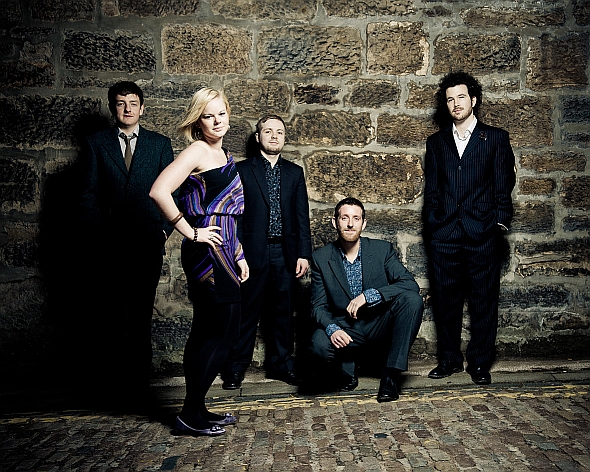
Breabach may well look like a traditional pipe-and-fiddle band – but that is not the half of it. Their music is almost entirely original, for all that they introduce traditional motifs and instrumentation. They are superb musicians, as tight as anything you would expect to find from people with a far higher profile. You won’t find much more than a hint of strict traditional music here – much of it ranges from a ‘wall of sound’ associated with much more contemporary genres, to lengthy pieces that verge on the symphonic on occasions. They are unafraid of sophisticated, syncopated rhythms, in amongst which they weave elements of Gaelic song and traditional tunes as well as many of their own compositions. There is even step-dance, used on an amplified ‘floor’ in part for its percussive quality.

They played to an appreciative full house and standing ovation in The King’s Place in London on Thursday, the first of a few warm-up gigs for the slack period between the Celtic Connections festival in Glasgow and their Australian tour. There is little affectation and few huge egos about these people: for a first encore, they went completely unplugged on a Gaelic song – and in the interval and after the concert, they were out front-of-house in good folk style, chatting with their audience and selling the inevitable CDs themselves.

The Scottish scene is but one part of a lively music genre that is affirmative and authentic. It exists not in a few large stadia for the financial gain of large international promoters, but in small venues the length and breadth of the nation, where it is a real and distinctive part of community and national identity. Breabach, however, show that it can also put its best clothes on and become something of much more contemporary relevance – a mark of a newly-emboldened national consciousness – in a way that is entirely of the present, even as it pays its due respects to the long and ancient history of these isles. Those in search of genuine Britain for a dose of national pride could do a lot worse than listen in.

http://breabach.com/

Sceptics also see also: https://tommygirard.wordpress.com/2012/02/14/breabach-the-desperate-battle-of-the-birds/

Bb02


Arts, Architecture & Design

Voice of an angel

JF01

Julie Fowlis, King’s Place, London.

Far more people have heard Julie Fowlis sing than are probably aware of the fact. Her ‘big moment’ to date was being commissioned to produce some of the backing music for Disney’s “Brave”; she also featured on BBC4’s well-received Transatlantic Sessions and on Jools Holland’s show in 2007. Despite that, she remains largely unknown outside the world of traditional music – which is probably just how she likes it – a more unaffected performer you could not find.

She sings almost entirely in Gaelic, having grown up on the Outer Hebridean island of North Uist. She is perhaps the first such singer to come close to breaking through into a more mainstream audience, despite the comments above. There was a moment a few years ago when it briefly seemed that she might be tempted to cross over into the commercial mainstream – and then she backed off again. She has resolutely resisted the temptation to move into English, which could no doubt secure her that much wider audience, but for her followers, it is her contemporary but sympathetic interpretation of Gaelic song that is part of her charm – which remains resolutely alien to anglophone ears for all that it is an indigenous British language.

Judging by the tour schedule, she and her band had probably started out from home near Inverness earlier in the same day in order to do this performance; indeed Eamonn Doorley observed that there were some ‘oblique brains’ on stage as a result – not that it showed.

The two 45minute sets were as close to note-perfect as makes no odds, though admittedly a fair proportion was long-established music, which made it no less welcome. Interspersed discretely with this were some items from her newly-released fifth album Alterum, which does include a couple of deviations from the previous norm – one the Annie Briggs song Go Your Way, and another a beautiful Galician song Camarinas – sung in a mixture of Galician and Gaelic, which in my view would be a more successful avenue to explore than English revival folk song.

Fowlis has an amazingly dynamic voice, ranging from the ethereal to the rhythmic, slightly hard-edged tones needed for the Puirt à beul a form of mouth-music of light-hearted, bawdy or nonsensical lyrics that were used for dancing, in the absence of formal instruments. It demands immensely tight vocal control and dynamic, and to intersperse it with whistle-playing as Julie Fowlis does requires superb breath control. The physical demands of the songs were often visible on stage.

Fowlis’ band comprises first-rate musicians – her husband Eamonn Dooley on bouzouki and Tony Byrne on guitar, outstanding Scottish fiddle-player Duncan Chisholm, and double-bassist Ewen Vernal. They play a tidy set of tunes too, often modern compositions in the traditional idiom. Fowlis herself is classically trained, playing not only whistles, but flute, oboe, cor anglais and accordion and both great and small Scottish pipes. It was much to our delight that she returned to the stage to finish the encore set on the Highland Pipes.

JF02

As a ‘way in’ to the world of traditional music, Julie Fowlis is superb. While she retains authenticity and respect for her roots, both her treatment of it and her persona have done much to appeal to a wider audience. I particularly like the fact that her success (she is also a T.V. presenter in Scotland and Ireland) has had no discernible effect on her personality, and she is still a modest, even slightly retiring presence on stage. Her music is greatly suited to intimate venues such as Hall One at the King’s Place, and the Sam Wannamaker Theatre where we saw her couple of years ago.

And I also like the fact that the entire team (including the sound engineer who had risen at 4am to fly from Inverness for the gig) were Scottish or Irish – evidence right in the heart of the capital that there is a whole world of ‘Celtic fringe’ culture going on out there in a part of the world, stretching from the Hebrides through Ireland to Brittany and Galicia, of which London is usually barely conscious.

http://www.juliefowlis.com/

Arts, Architecture & Design

Fabulous Belgians

04


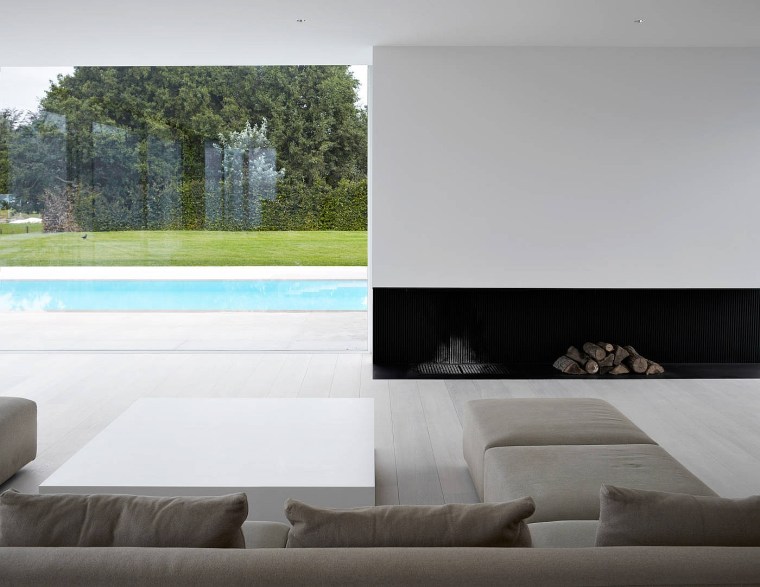
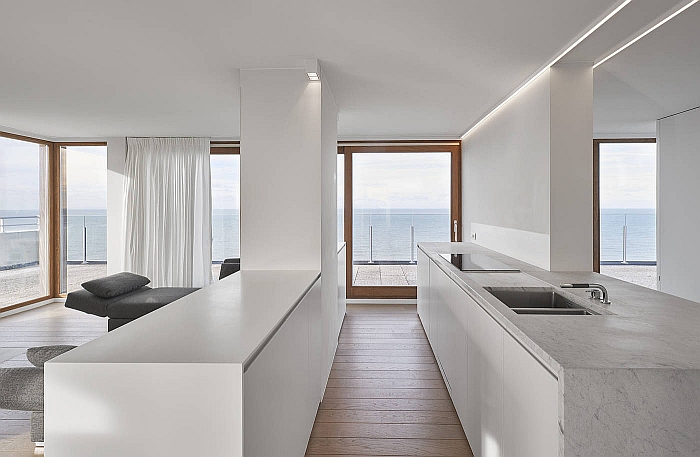
Attitudes towards architecture and design are, I think, influenced by the differing physical and social environments that give them birth. I’ve always looked to Switzerland, Italy, Australia and Japan for my interiors inspiration, places that aren’t afraid of the radically modern. There are some very good modern British architects, too, perhaps in a slightly gentler way – the work of David Chipperfield and John Pawson always inspires – though as always in Britain, modernism – the slightly-pejoratively named ‘International Style’ – seems to come with overtones of wealth and exclusivity.

One place that has remained somewhat below the radar in respect to modern architecture , is the Low Countries. I think it is fair to say that in Britain, Belgium in particular has always had a rather non-identity. But there is a large amount of excellent, distinctive design being produced in both Belgium and The Netherlands, of whom some of the fashion designers such as Dries van Noten and Anne Demeulmeester are higher profile. But the same spirit of under-stated and crisp minimalism is increasingly to be found in the work of those countries’ architects too, with practices such as Minus and Klaarchitectuur gaining a growing reputation, as well as a number of smaller practices such as Frederic Kielmoes. It has had some success in diverting me for the time being at least, from my more usual diet.

19

On reflection, perhaps we shouldn’t be surprised that a culture that produced medieval Flemish gothic is good at architecture generally – though I must admit the old stuff always used to feel rather dour and overblown to me, until I learned to like it by spending time in Lille.

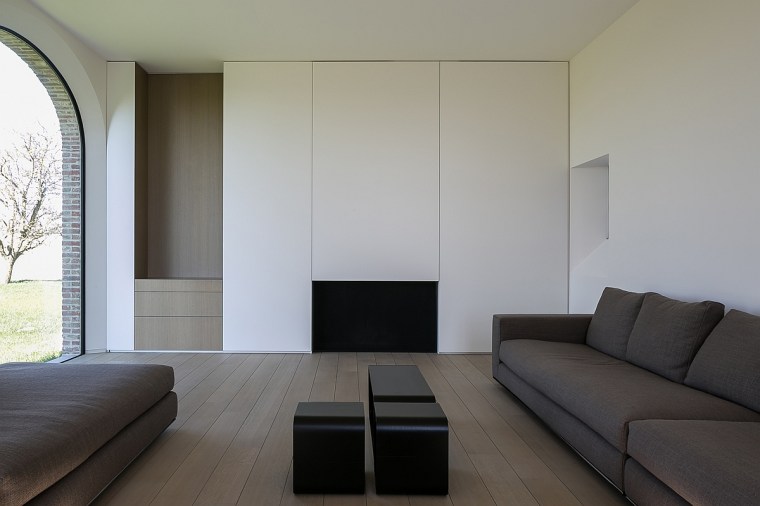
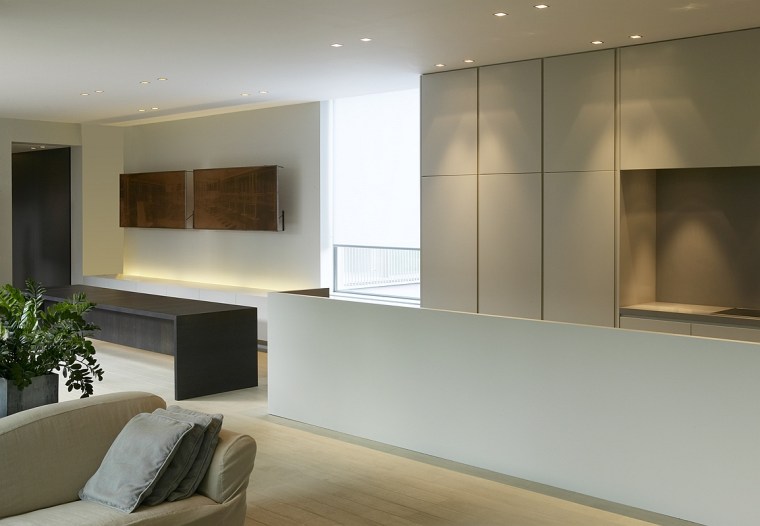
What is interesting about the Flemish take on modernism is that it seems closely suited to the quiet, unassuming landscapes, often post-industrial towns and pale light in which it is seen. Perhaps that is why its use of stark contrast works so well, with both very blond and very dark woods, slubby greys, inky blacks and just the very occasional ‘pop’ of saturated colour giving a little more support than is usual to the pure, slightly bluish-whites. It is rather different from the all-white of more ‘traditional’ modernism, which relies to a greater extent on strong natural light and a dry climate for maximum impact. Here, the restricted palette allows colour to come from either possessions or carefully-framed views of the exterior, which become almost art-works in their own right when seen against the monochrome interiors.

06

It is a striking and almost austere aesthetic, with overtones of the Old Masters as well as a nod to mid-century style in the simple, natural material chosen for the signature furniture pieces. It has an ethereal edge to it, too, which sits especially nicely within the region’s coastlines of dunes, grasses and big skies. It demonstrates, too, that modernism does not require glamorous surroundings in order to work.

21

As with many cultural matters, there is a visible continuity with the work of the previously-mentioned British architects such as Chipperfield and Pawson, though I rather like the fact that the Flemish work is perhaps a degree more sombre than the more forgiving British versions. In addition to the buildings themselves, the Belgians have a number of companies producing crisp, high-tech lighting and other fixtures, with companies like Modular and Deltalight being in the avant-guard.

11

What is more, there are some fascinating juxtapositions of ancient and modern taking place, which seems to work particularly well with the slightly gloomy traditional architecture of the region.

So there we are: a ‘school’ of architecture worth watching, and one that might have things to lend to Britain’s aesthetic as well. I suspect that many will consider such pure interiors impossible to live normal lives in – but I’m not so sure. There is nothing here that says ordinary, messy life should not go on within: it’s just a matter of how the buildings are organised to keep it contained.

And a few more things to add to the growing list of notable Belgians.

http://www.johnpawson.com/

https://davidchipperfield.com/projects

http://www.klaarchitectuur.be/portfolio

https://www.frederickielemoes.be/en/404

https://www.deltalight.com/en

http://www.supermodular.com/na/home


Arts, Architecture & Design, Opinion & Thought, Travel

Seeing the urban light

Fete-des-Lumieres-Place-des-Terreaux-Lyon

Fête des Lumières Lyon 2017

One of the things I admire about continental European countries is the way they ‘inhabit’ their towns and cities. While we in Britain have made great strides with revitalising our main urban areas in recent years, I always feel that the continentals, and in particular the French and Italians have a superior sense of urbanism. And it often extends to the smaller towns in a way that it often doesn’t in the U.K., where many of their equivalents feel half-hearted, if not hollowed-out.

Continental towns are not simply machines for shopping; they do not seem to have suffered from the corporate erosion of public space as has been highlighted here recently: for better or worse, squares and streets belong to all the people, and are not the sanitised pathways between shops that one sees here, with any ‘undesirable’ elements rapidly being moved on by private security guards. Consequently they seem to me to have a more authentic life to them, not that that is to diminish the hardship felt by the homeless, for example.

Another aspect of this is the number and scale of the festivals that take place; again Britain is catching up – we seem to have caught the habit of Christmas markets recently – but somehow we still don’t quite have the ‘conviction’ that comes from such festivities being long-established. Perhaps it will come with time.

I have always enjoyed the genuine communality of such festivals, amongst them the Herbstmesse and Fassnacht in Basel, and the Christmas market and Fête des Géants in Lille.

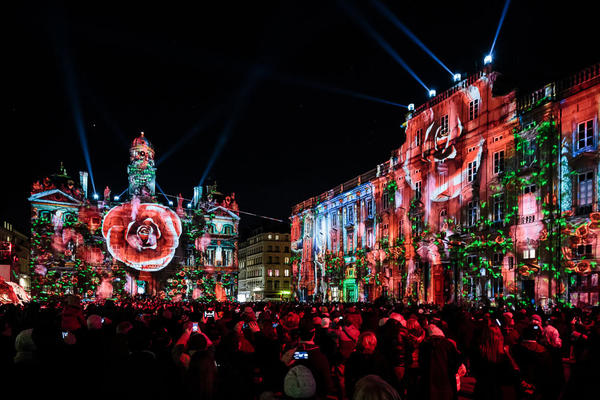
One on my bucket list is the Fête des Lumières in Lyon, which is has been happening this week. I like Lyon a lot: for a large city, it is remarkably civilised, and has a cosmopolitanism and sophistication that its British equivalents have yet to learn. The FdL is one of the most spectactular festivals I know, its technical accomplishment and, it has to be said expense, something that is beyond the ambitions of most cash-strapped British local Councils. That said, I think a large amount of it has to come down to vision, and it probably helps that the French have a great sense for graphic art, and they originated the ‘son et lumière’ spectacles of which this is probably the greatest. Every time watch, I am amazed at the creativity and technical accuracy of these artists of light. Enjoy the clips from this year’s festival.


Arts, Architecture & Design

Simple is beautiful

CM05

As if proof were needed that good design need not cost the earth, here is an example of beautiful design that comes at an attractive price…

David Mellor is recognised as a leading figure in modern British design, and is the Royal Designer for Industry. He trained as a silversmith and made his name designing and manufacturing cutlery, in a plain but classic style deriving from mid-century modern design. His most ubiquitous piece of work is the British traffic light, which he designed in 1966.

His company is based in a modern-vernacular building at Hathersage in Derbyshire, now run by his son Corin. David Mellor died in 2009.

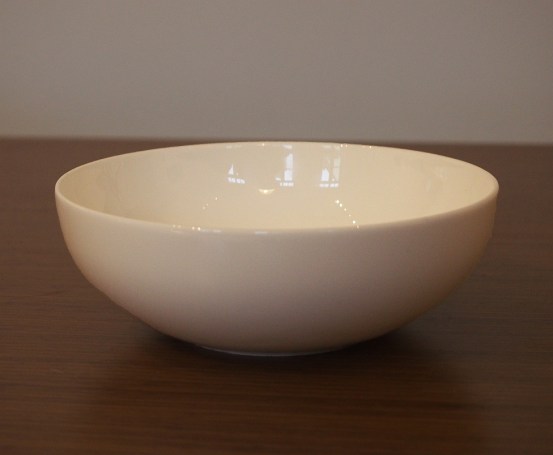
Mellor’s range has been extended over the years into other tablewares and beyond, and I particularly like this piece of bone china tableware. Like the cutlery, the design is plain and the materials fine but simple. In those circumstances, form is all, and the shape of these bowls is perfect. Being bone china, they are of very fine outline and crisp definition, and the white finish is a solid warm shade unlike the slight grey of much cheap white tableware.

We have replaced some broken breakfast bowls with these (simple is what I need in the morning…) but I think even the small ones are good enough to act as display items in their own right. While gathering a whole service would not be particularly cheap, a single breakfast bowl costs around £10. A larger size is also available.

http://www.davidmellordesign.com/

CM04

Arts, Architecture & Design, Travel

Modernism on a marshy coast

bh04

Having been born a westerner, to me the coast always meant towering cliffs and rocky outcrops with crashing waves or at least a decent swell. By contrast, the eastern coast of England is deeply uneventful, as the land (sometimes literally) slips apologetically into the sea. On this side of the country, you have to go to Yorkshire before anything more dramatic happens. I recall looking at maps of the country as a child, and thinking that the bit of the coastline north of London looked particularly untidy, before it sorts itself out north of Ipswich into the distinctive bulge of East Anglia.

The sea (well, the nearest salty inlet) is a mere ten miles from my home, and yet much of Essex feels distinctly un-coastal. By a strange fluke of geography, the country actually wraps itself around its coast, so that you can travel a good forty road miles, approach the coast and find yourself looking across at a place not very far from where you started. But if you add up the total length of the salt marshes, inlets and creeks, it adds up to the longest (salt-water) coastline of any county in England.

It’s a chaotic landscape of salt marsh, mud flat and low-lying islands, some of which can be reached by causeways at low tide. It’s also one that human activity has done its very best to mess up further, with a legacy of jerry-building extending from some of the earlier fishermen’s sheds by way of oil refineries to acres of sprawling mobile home camps clamped desperately around little apologies for beaches, which for most of the time lead you not so much to water as vast expanses of mud. The recent addition of off-shore wind-farms tames the scene further, though I must admit an admiration for those graceful and slightly surreal structures, which I think are at least an improvement on Shell Haven refinery. I suppose if you grew up in Tower Hamlets, it’s a welcome release. Yet, over the years I have come to appreciate that it does have a rather melancholy atmosphere of its own.

bw01
The Blackwater estuary at low tide


And it does yield bounty, even if one might have reservations about the water-quality of the North Sea. Mersea Island near Colchester has been the source of oysters since Roman times, while further south, Maldon’s marshes are home to a particularly fine sea salt. The area is internationally recognised as a sea-bird sanctuary, and I have seen seals just off the beach at Walton on the Naze.

I do wish, however that more had been done to prevent the particularly sad kind of sprawl that I mentioned earlier: it takes a lot to see even a little of the picturesque in the rows of caravans, and blingy housing estates. So it was pleasing yesterday to walk out past Maldon to the beginnings of open coastline on the way to Goldhanger. A cold wind was blowing in off the sea (special delivery from Norway) so it was wrap-up-warm weather. We (two former colleagues and I) headed for what passes as a headland where a set of rather unusual-looking structures could be seen, and not far from where we knew there was one of the excellent Tiptree Tea Shops. These have spread in recent years to become a much-appreciated highlight of the more visit-able places in this ambivalent county. They are the creation of another eminent local concern, Wilkin Jams of Tiptree (by Royal Appointment), and they serve excellent lunches, cakes and cream teas.

The structures, built by Osea Leisure Park, turned out to be a modern take on traditional Indian Ocean beach hut no less, a line of ten in contrasting pastels, perched on stilts and just 20cm above the water at high tide. They were designed to have minimal impact on the protected beach beneath. It’s pleasing to see some genuinely innovative, high quality architecture being put into such a place – even if the cost of purchasing one, around £25,000, means it’s hardly a democratic gesture…

OLYMPUS DIGITAL CAMERA

The nearby tea room offered a refuge from the wind, and served up warm drinks and cakes before our return to the cars at Heybridge Basin. Looked at from the right angle, it could almost have been somewhere much more romantic, even a little Arthur Ransome. Just shows what a little imagination can do to the way humans intervene in even relatively mundane places.

ts01
The Osea View tea room

https://www.tiptree.com/index.php/tiptree-tea-rooms/locations.html

Arts, Architecture & Design, Opinion & Thought

Well rounded people

bench

Autumn term 1975. Monday morning started with double woodwork – and for me the slightly strange experience of learning in my father’s department. Although it’s perhaps a pity it didn’t come mid-way through the week, I always looked forward to the lesson (which was not taught by my Pa…). Given the academic routine of the grammar school, I found great pleasure of making dovetail joints or turning bowls on the lathe for a change. Unlike certain of my father’s colleagues, I never saw practical lessons as inferior, and I think it is where my now much-valued aesthetic appreciation and streak of perfectionism came from. I well remember my father’s fury when, one day he was summoned to the Headmaster’s office (where he was still seen as the chippie) and instructed to repair fifty wooden exam desks. He replied that he was not the odd-jobs man. Indeed, he was and is a highly-skilled cabinet-maker.

It was also interesting how some of the best in the class during those lessons were not the academic stars (though there was crossover); I think it was good that this gave those with different talents a chance to shine – and the academic ones a taste of what it was like to struggle a bit.

This recollection is particularly in my mind at the moment as my father, now 83, (and still making violins for a hobby) is currently collaborating with a young friend and me to construct a facsimile of a mid-century Scandinavian piece of furniture  by Kai Kristiansen in American black walnut (shown in rosewood above). It is a wood he has never worked before and he is quite excited by the prospect; it is proving to be a most enjoyable experience, which has ranged from researching the original, to analysing the construction, adapting it for the workshop and personal taste, to sourcing suitable timber. A specification and price has been agreed, and construction will start shortly.

Practical skills have been repeatedly looked down on by educators in this country; it is though they are somehow insufficiently worthy, given their apparent lack of intellectual rigour. My former teacher Peter Whitton knew this was not true, for despite being a Classicist, he was never happier than in his woodwork shop, where he too turned out fine pieces.

At present, I am starting to look at what I do next; the medication is gone, and I can feel my mental strength returning little by little. Amongst a number of ‘irons in the fire’ I am tempted to branch part-time into interior design, a field I have followed for many years. I defy anyone to claim that the processes involved are intellectually weak; indeed, I know of few so demanding exercises as solving difficult design dilemmas. And then there is the fact that one (hopefully) has a beautiful end product, which can be admired by those with the aesthetic sensitivity to do so. It is very tempting to sign up for that diploma.

Last Friday, we went to the opening night of Grayson Perry’s exhibition The Life of Julie Cope at FirstSite in Colchester; I am also currently reading his book The Descent of Man, and despite Perry’s lurid persona and less than rigorous academic background, let no one claim that this is not both a skilled and highly erudite man.

At the other end of the spectrum, I know of individuals educated to the highest academic levels, who are not able to perform the simplest practical tasks for themselves, and who seemingly lack any ability really to see (in the deep sense) beauty in their surroundings. They may have trained minds (and I’m all for that) but they seem impoverished in other ways. Is this the cost of the strong emphasis on academia? The ultimate sadness for my father came some years ago when the Craft & Design department he had founded and developed over forty years was closed to make way for a computer suite. No more opportunity for today’s sixth formers to do something practical as part of their week’s programme.

This is short-sighted: many highly-educated people do also appreciate the arts and practical crafts; they provide a complete diversion into another rich aspect of life which I for one would never be without. Peter also knew this, as did the many clearly-thoughtful people at the Perry exhibition.

Only target-chasing educational managers seem snooty enough to disparage the breadth that comes from the empowerment to produce and appreciate tangible works. Our neighbouring nations such as Germany have never disparaged practical skills either – and a comparison of the two nations’ economies tells all that need to be said about that.

Bring back double woodwork on Monday mornings – especially in the most academic schools. Breadth, depth and richness in education is important.

Arts, Architecture & Design

Don’t (just) Dream

OLYMPUS DIGITAL CAMERA

First World problems.

Some months after my wife bought one, I eventually yielded to the temptation of a tablet computer, the main reason being a wish to cut down on the amount of recycling generated by my rather sizeable magazine consumption. I’m happy to say it worked – but I felt that if I was going to be spending quite a lot of time with that item, it deserved to be done properly. In particular, I like a book that I am going to be holding for a lot of time to be pleasingly tactile, and I didn’t see why a tablet case should be less so. One can also add that a tablet is both more fragile and more expensive than the average book, and so perhaps needs a suitable case all the more.

The official Samsung case came in at about £50 and was only available in a very limited range of colours and finishes, so I  hunted through the hundreds of cases available online. Most were surprisingly cheap; I eventually bought one that looked promising. It started well, but inside a month, two of the clips holding the tablet in place had broken, and there were signs of further imminent deterioration. So after another considerable hunt, I bought a slightly more expensive replacement. This lasted rather longer – but it had several design flaws, not least the inability to charge the tablet with the cover closed – and it too soon started to deteriorate. At this stage, I also found out that ‘PU leather’ is a euphemism for polyurethane and is, in my view pushing its luck with trade description law. Time for another re-think.

Next I bought a Danish-designed leather cover – albeit made in India. This would have been quite costly had it not been an end-of-line model. It was better on the tactility front, but it turned out still not to permit case-closed charging, and after a few weeks, the ridges against which the open cover rests came loose inside its lining, meaning the tablet would not stand up properly.

Further searching – and eventually I landed on the Noreve website. This company specialises in what it calls ‘haute couture for devices’ These covers are hand-made to order in St Tropez no less, from top-quality leathers, the colours and finish of which can be specified on ordering. They have a small range in stock, and there is a wait of about two weeks for a made-to-order specimen.

As always, I staked out the website for several weeks until a sale came up, with a significant reduction on offer; I pounced. The case eventually arrived, not only well-packaged, but also in its own box and cloth travel-bag. Très chic. The claims made by Noreve are not over-stated: the case grips the tablet firmly but unobtrusively, and it is still possible to remove it when needed; strong magnets hold the case closed without the need for a strap. All of the function ports are fully accessible and the material finish is beautifully tactile – rather akin to holding a leather-bound volume in one’s hands. The experience of using the tablet is significantly enhanced as a result. My only criticism is that there appears to be no magnetic auto-off function when closing the case.

OLYMPUS DIGITAL CAMERA

Six months later, Noreve emailed me asking if I wanted to replace the case with a new one; it was very tempting to reply by asking whether they were expecting the original to have fallen apart, not that there appeared to be any chance whatsoever of that happening. Indeed the case is just starting to loosen up and mellow nicely.

Judging by the prices of other goods on their website, I suspect that many Noreve items are bought by those who can afford to treat them as disposable – which I most definitely cannot, neither would not wish to. Judging from progress to date, this will last many years – and as it is what I had had in mind to begin with, there is going to be little temptation to change. Some may be interested to note that they also provide mobile phone covers for a vast range of phones, as well as specs cases and other niceties.

The £75 I paid for the case was about 50% higher than the Samsung one, and about the same amount more than the total cost of the several failed cheap efforts I had purchased to begin with. But I expect this to last many times longer and therefore justify the outlay.

Moral of the story: always follow your own advice and buy the best you can afford to start with.

https://www.noreve.com/en/

Noreve products are also available from third-party suppliers including Amazon, though in limited styles and not to order.

(Usual disclaimer)