Sartoria

Olga delivers

OLYMPUS DIGITAL CAMERA

Quite a few years ago, I bought a lovely shirt from a small gents’ clothier in Bologna. It somehow epitomised everything that an Italian shirt should be: super-soft lightweight cotton, cutaway collar, beautifully stitched, in a shade of very pale yellow. It was one of those shops where everything is brought to you from behind the counter, and I spent a good time trying a number for size, all to helpful comments from the owner, before I settled on one.

That shirt lasted, and became a much-loved item in my wardrobe, until it eventually became too small for the – ahem – ‘lunch’ (as one of my favourite British menswear proprietors would say…)

I was looking for a replacement but yellow shirts seem to be at the nadir of their popularity at the moment – which is how I came to order one from Camiceria Olga (see earlier post).

It duly arrived some days ago after a couple of weeks’ wait. I was curious to see how it would compare with off-the-shelf items from the likes of Bagutta, which are superb but come at a significantly higher price – and would it be a worthy replacement for the original?

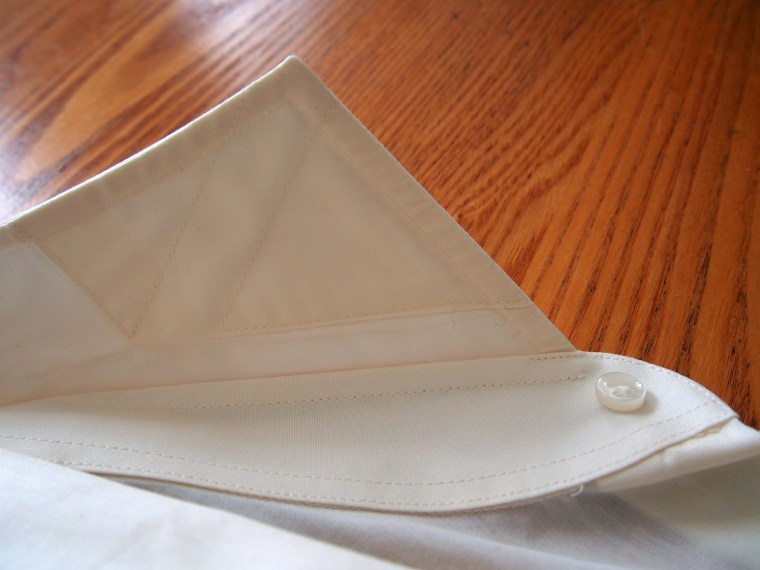
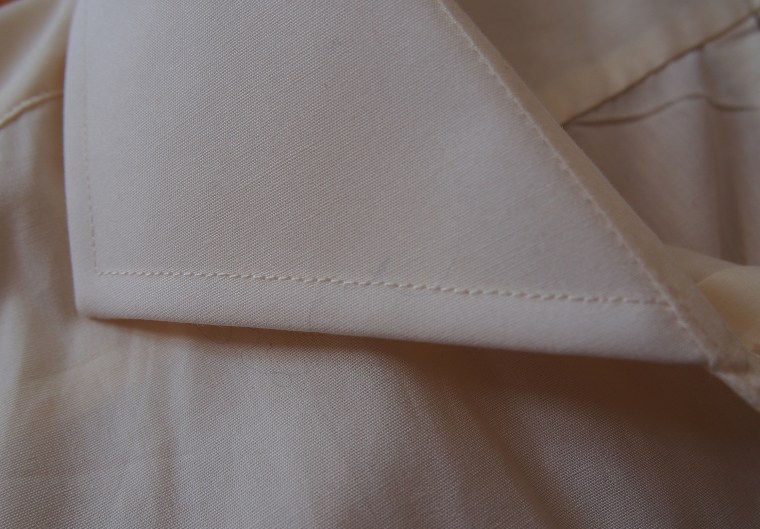
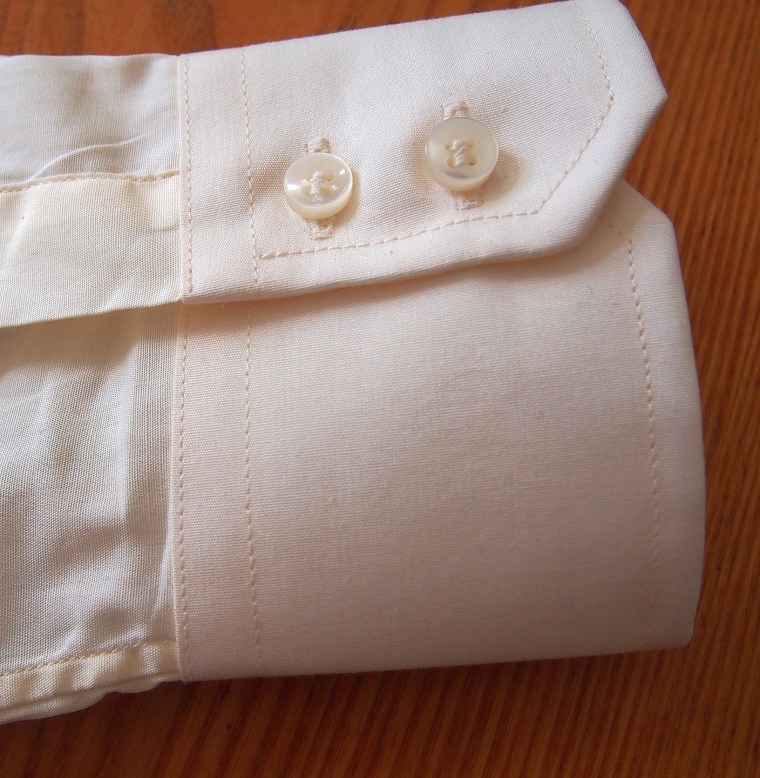
Well, I can’t remember what I paid for the original, but for €55 this is very acceptable. The same light, fine cotton is there, the collar properly cut away, though perhaps just a little longer than I would prefer. The stitching is also finely done, down to smaller details like the seam offset under the arms. The fit is excellent; it looked large when it arrived – but it doesn’t tug over the lunch as some off-the-shelf ones do.

Olga03

The colour is even paler than the original shirt – almost verging on cream, and I would have liked it just a tad darker. But as I said, this is very acceptable; the fabric comes from Olga’s ‘everyday shirt’ range, but it is certainly a lot finer than one would find on the average British High Street – and one has the luxury of choosing collar, cuff and other details as well.

Olga01

There are undoubtedly more luxurious tailors available online – but at a much steeper price; for my money Camiceria Olga is excellent, and I shall be going back for more in due course. Except I will have to wait for the autumn, as true to Milanese style, they are chiusu per ferie (closed for holidays) until then.

https://camiceriaolga.it/en

Opinion & Thought, Politics and current affairs, Travel

Missed again – or why Britain’s public transport lags behind its neighbours’

657_Electrification_of_Ardwick_Depot__Stabling_and_fuelling_roads_from_eastern_end_looking_west

In 2012, the government announced the largest investment in railway electrification since the 1970s.  Lines to Bristol and South Wales, Sheffield and the East Midlands, and across the Pennines between Manchester and Leeds, and from Southampton to the Midlands were all due to be wired. We were told that it would bring journey savings, efficiency gains, environmental gains, removal of freight from the roads, and more – all of which in technical terms is true.

Last week, the same party scrapped most of the schemes due to cost over-runs on the one that has actually got underway between London and Bristol. We are now told we don’t need electric trains and the ‘visual intrusion’ they bring. They can’t both be right.

Why does this county so often fail in matters of national investment? By comparison, virtually all of the French, German and Italian main line networks have been electric for decades – and in Switzerland the coverage is 100% – even down to rural branch lines. Then there is the money that has already been wasted raising bridges and tunnels for wires that will not now appear, and designs for trains whose performance will be compromised from the start by the need to carry round heavy diesel engines.

What the government never admits is that the problem here is of its own making: by privatising the railways, a great deal of technical expertise has been lost: private franchise holders are not interested in this kind of long-term investment, and much of the skill-base that was present under British Rail was simply pensioned off. Replacement expertise can be, and has been bought in – at a cost. The new infrastructure was developed in Switzerland – but as with all private ventures, the costs of the profit motive, delay compensation and legal complexity ratchet up overall costs and have resulted in a huge cost-overrun on the Great Western scheme even before it is finished.

The other unspoken matter, I suspect, is the imminent loss of EU moneys that would have funded some of the work under the Trans-European Network programme and for instance, the follow-on electrification of suburban lines in the Welsh Valleys, which will presumably not now happen either. In the past few years, schemes in this country have been funded to the tune of €43 million by the E.U. Also note that it is the provinces that are going to lose out yet again – I wonder whether the same decision would have been taken for London’s network. The graph below shows per capita investment by English region in public transport in 2016. It makes salutary viewing in that respect.

transport spending

A  fast, modern and efficient rail network is an essential piece of infrastructure for any nation, but yet again our masters have failed to grasp the opportunity to make a radical step forward – a valuable scheme torpedoed by short-term political expediency. Once more, this country is failing to deliver something than many of our neighbours have had for decades, and which will be all the more necessary to allow the British economy to compete when or if Brexit occurs. The contrast is notable between the fanfare with which the programme was launched and the way it was unceremoniously buried on the last day before the parliamentary recess: standard procedure for failed policies. Yet again, our sclerotic, indecisive political system will have wasted money planning but then failing to  deliver what a few years it told us we urgently needed.


Sartoria

Advertising – but not as we know it.

caruso_adv_fw1415

The Italian menswear brand Caruso is not old; it was founded in 2009 when the former CEO of Brioni Umberto Angeloni bought up a little-known fabric manufacturer and turned it into one of the most desirable, esoteric brands in the country. It remains little-known though: there is still only one shop in the U.K., Trunk in Marylebone High Street where you can buy Caruso clothes over the counter.

I have, however acquired some items by a less expensive (but totally legal!) route and I can vouch that the quality is superb. All garments are entirely hand-made; both the workmanship and materials are top-notch.

Angeloni is a perfectionist; what else can you call someone who changes his watch several times a day to suit the hour? Part of an Italian outlook on La Dolce Vita that I find simultaneously immensely admirable and completely, narcissistically over the top.

Somehow, they manage to pull it off without appearing ridiculous, which is the most likely outcome anywhere else in the world. I think the secret is not to take oneself too seriously…

As you might expect, the price of such clothes is eye-watering, but I will explain how they can be obtained for a fraction of the original cost in another post. For the moment, enjoy the first of Angeloni’s adverts for Caruso: as subtle as his clothes are beautiful, and playing to all my fondest images of his home country – a thing of gentle, slightly humorous beauty in its own right…


Arts, Architecture & Design

La Belle Époque: Roman River Music Summer Weekend 2017

RRF

People often suppose that living just 45 miles from London is a blessing: “all that culture and entertainment you have access to…”

Actually, it has significant downsides – and not just in property prices. My sense is that huge cities suck the life out of their hinterlands. The combination of the commuting life and socio-economic mass of such places leaves little that is viable for perhaps forty or fifty miles around. And while it is true that London does offer a cornucopia, rushing out of a concert in order to catch the ‘Vomit Comet’ last train back to the sticks rather takes the edge off the evening, even before we consider the total outlay.

So it is excellent that the Roman River Music Festival is going from strength to strength in our area. It was started by a group of musicians in 2000 and is gaining in profile each year, last year even attracting the presence of Nicola Benedetti. Essex is not exactly renowned for its high culture, so it is extremely gratifying to see this being put right, supported by  Arts Council England and the National Lottery fund.

While the core of the festival programme is classical, a wide range of genres is included, and some unusual venues adopted, all under the artistic direction of Orlando Jopling.

Thus it was a delight to be able to walk to a concert in under five minutes, held as part of the RRF’s Summer Weekend of Belle Époque French music in the church of St. Peter ad Vincula, Coggeshall.

The Navarra Quartet were joined by pianist Tom Poster, soprano Raphaela Papadakis and Americans Elena Urioste (violin) and Karim Sulayman (tenor) for works by Ravel, Chausson and Fauré. That is was top-quality music was born out by the presence of BBC Radio 3, which has recorded the entire sequence of concerts for broadcast.

The programme began with a familiar piece Pavanne pour une infant défunte, though performed for solo piano rather than the more usual orchestra. It was followed by Chausson’s Chanson Perpetuelle, La Bonne Chanson eight-song cycle by Fauré and finished with Ravel’s Piano Trio. It is not the easiest of music to listen to and while I do appreciate French music of that period, I don’t consider myself knowledgeable enough to provide an artistic review. However, it was clear that the performers were highly accomplished as the sparks flew in the second Ravel piece in particular.

A nice touch was the short encore, recognising the early beginnings of jazz in the era, as the ensemble played a lovely arrangement of Henry Mancini’s Moon River. The previous evening had had Gershwin.

The church has a fine acoustic, as I know from experience – and a large East Anglian ‘wool church’ presents an airy setting for summer music.

All in all an excellent antidote to the haul into London for top-quality classical music, and worthy of widespread support. This year’s main festival runs from 14th September to 1st October.

http://romanrivermusic.org.uk

The weekend’s concerts will be broadcast this week as Radio 3’s Lunchtime Concert at 1.00pm from this Tuesday. The concert mentioned above will be broadcast on Thursday.

http://www.bbc.co.uk/programmes/b006tny5/broadcasts/upcoming

Opinion & Thought, Politics and current affairs

The Long Game

May
photo: http://www.theguardian.com

I wonder how History will judge this period in the story of the British nation(s). Living through it, the predominant impression is of directionless chaos, with all the usual certainties about the State we live in suspended, not least that unspoken national belief that disasters happen elsewhere.

Having encountered grass-roots continentals on an annual basis for the last couple of decades, it has only reinforced my view that by comparison there are some very ugly, uncivilised characters in Britain. We’re not the only ones of course: there is a segment of German society which is pretty brutal too, and no doubt most countries have their equivalent – otherwise we would not have seen the rise in far-Right support that we have. How do you respond to such threats?

When Theresa May became Prime Minister, I suspect like many, was prepared to give her space, if only because the alternatives were worse. Despite her secretive and authoritarian instincts, she is no fool, and at least projected the right image. It doesn’t need me to describe what has happened since.

But I wonder whether History may still judge her more kindly than we currently suspect. When I was teaching, I sometimes used a form of reverse psychology with difficult pupils. If one creates what is admittedly an illusion between the consequences of two courses of action, it is possible to deflect people from self-destruction without a loss of face. It uses a classic cognitive flaw where people fall for a false dichotomy.

I find it hard to understand May’s trajectory on Brexit without recourse to one of two explanations: either she was a closet Brexiteer all along, and she simply kept her powder dry during the referendum campaign – which is disingenuous enough that if true, she deserves to lose her position on the strength of it alone; or she is playing the same cognitive flaw with the nation. Realising the democratic impasse created by the referendum result, could she be giving the nation a taste of the consequences that it will face if hard Brexit goes ahead, in the hope that enough people will recoil before it actually comes to pass, that a rethink becomes possible? Why else would she still be playing hard-ball? It is like my teacher-strategy of outlining consequences to a difficult pupil and then asking, “Do you REALLY want to go down that path? Are you SURE?”

Meanwhile, prominent characters on the EU side seem to be doing as much as they can to leave the door open for Britain. Their motives may be less than pure, of course – but my admittedly-biased impression is that they are showing a concern for the people of this country that many do not show for themselves, and nor indeed do their national leaders. Will they yet save us from ourselves?

The current debate in Britain is not just the one that should have happened before the Referendum, but the one that should have been happening for the last forty years. But maybe at last, the British are starting to realise what the European project is really about.

Events in the interim have clearly not gone to plan for May – but there are some signs that public opinion is indeed beginning to shift about what outcome it prefers. Maybe the brinksmanship is starting to have an impact. There’s a long way to go, and I offer this theory without much confidence that it holds water.

But if it turns out to be correct, May could still go down in history as one of our most courageous Prime Ministers after all.


Opinion & Thought

Death by management

I’ve been dabbling on the fringes of local democracy. The small town where I live is noted for its outstanding heritage and excellent quality of life, but like many such places, it presently faces multiple challenges from various forms of development that are closing in. In the case of housing, the big builders frequently target such places because homes sell quickly there for a premium. But in the process, they very often ruin what was attractive in the first place.

Neighbourhood plans were a political initiative to give at least a semblance of local self-determination – it depends on how cynical you want to be. But my impression is that these activities are suffering from the same malaise that seems to afflict all of modern life – over-management.

I will hasten to say that I am sure those heading in this direction mean only well; it is just that for many people, professional life has become about little more than endless committee meetings and they can see nothing beyond this approach. It seems that nothing in modern organisations can move without a pile of policy objectives, dozens of meetings and tome of paperwork.

There are some people who glory in all of this – and I have met my fair share of professional committee-sitters in my time. The Healthy Schools Initiative was one; I spent a fair amount of time in meetings with people who seemed far more concerned with ticking boxes, writing policies and acquiring accreditation logos than actually effecting real change. And for all that the logos were indeed acquired, very little of real use actually changed. Certainly nothing that justified all the expensive professional hours spent in those meetings.

If local democracy is to mean anything, be it in schools or entire communities, it is surely about giving people the ability to make a real impact on the places where they live and work. That should not require dozens of sub-committees and expensive consultants and analysts. And when I put some practical ideas forward, it seemed as though, being ‘projects’ – as opposed to policies – they have to go in the box marked ‘aspirational’, for attention only at some ill-defined moment in the far future.

The cynic in me says that death-by-management is a product of a society that struggles to create enough ‘real’ jobs for its people. Equally, I know that communal activities do need to be co-ordinated, money accounted for, and democracy observed. But on that last point, the triumph of the professional committee-member is not democratic, for it excludes a whole tranche of people who do not operate in that way. Furthermore, such hidebound procedure strangles the ability of the doers to operate in their own, possibly rather esoteric ways; bureaucracy and committee-work are not known for their creativity and imagination, and history is littered with influential people who revolutionised their fields precisely by not following the rules laid down by their dullard masters.

Over-management kills stone dead the ability of such people actually to bring about real, on-the-ground improvements.

Food

The taste of summer

OLYMPUS DIGITAL CAMERA

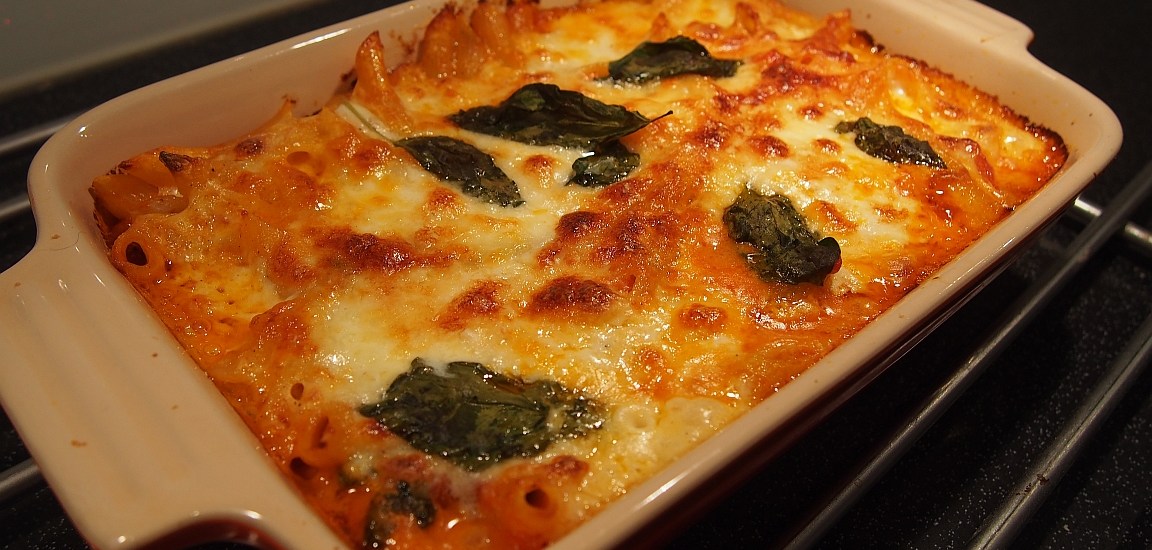
Given the labour of love that is food styling and journalism, I won’t be turning this blog into a cookery course; more likely I will be discussing food-related issues. But some things are too good not to share, and this is one – it has to be one of the simplest pasta dishes of all. I can’t remember where the recipe came from, but it has become a summer staple in our home.

Ingredients:

Two or three ripe tomatoes per person

75g of ricotta per person

50g of conchiglie (pasta shells) per person

Torn basil leaves

Olive oil

Sea salt, pepper, sugar (to taste)

Method:

Cut the tomatoes into bite-sized chunks. Very ripe tomatoes are best, San Marzano if you can get them. If not, season with salt, pepper and possibly a little sugar in order to bring the juice and flavour out. Place in a bowl with several tbsp of olive oil, the seasoning and the torn basil. Leave to marinade as convenient.

Boil water and cook the pasta al dente (usually about 12-13 minutes).

Just before it is ready, add the ricotta to the tomatoes and stir to mix ingredients. Some people prefer the ricotta to remain crumbly; I prefer to mix it until it becomes a sauce.

Drain the pasta and return to the pan. Add the tomato mix, stir and leave for a couple of minutes. The residual heat from the pan is all that is needed to warm the tomatoes and sauce a little. Italian food is rarely served piping hot.

Serve

Arts, Architecture & Design, Travel

Market Hall in Leicester

Leicester-Food-Hall-106
image: leicestermarket.co.uk

When I was a student in Leicester, I economised on food bills by hitting the local market at the end of a Saturday afternoon, when they were virtually giving the food away. On a recent visit, I was glad to see this hadn’t changed (1kilo of superb cherries for £1.20 anyone?)

One of the things that makes me proud of Britain is the ongoing renaissance of its major cities, and at last Leicester is getting its share. We are starting to see some of the vibrance of continental cities coming to the U.K., and my wife and I are mid-way through a programme of visiting them all to see what is happening.

Leicester was traditionally a city that went below the radar. In the Early 1980s when I lived there, it was pretty dowdy – but then, so were most British cities. The discovery of Richard III’s remains and the local soccer team’s rise to fame seems to have given new life to a place that always did have a buzz, thanks to its multi-ethnicity. The city also houses the National Space Centre, and an excellent steam railway on its doorstep.

We were particularly struck by the new indoor market that has replaced the gloomy 1970’s structure. I like the tensions created when contemporary architecture is juxtaposed with the old stuff, and all the more so when it is a working building rather than a trophy. In this case, the new hall sits beautifully alongside the 1850’s Grade II listed Corn Exchange. What’s more,  the old indoor market has been demolished to make way for a major new square in the heart of the old town.

Leicester has a lot of great Victorian and Edwardian architecture, and also a new theatre to replace the excellent but now-gone Haymarket – The Curve designed by Uruguyan architect Raphael Vinoly, which is leading the revival of another inner-city quarter. Well worth a visit.

Arts, Architecture & Design

Cool for Cats – 1

OLYMPUS DIGITAL CAMERA

The little character shown below was a bit of an impulse arrival, being a local rescue cat, and he has been excellent ‘therapy’ during my period of convalescence.

20170627_190843

We’d discussed having a cat many times before, but always put the decision off. Cats, interior design and model-making don’t really go together. And we weren’t sure how he would cope with the ‘pipes either. (More on that another time…)

Anyway, he arrived in early February and is a delight. But we were keen not to fill the house with fluffy pet tat, as seems the norm. The usual internet search revealed plenty of nicely designed pet furniture – but most of it is in the States or mainland Europe and much is not available in the U.K. What does our choice of pet accoutrements say about our national character, I wonder?

Eventually we were able to track down some essential items that have if nothing else not detracted from their surroundings. This piece in question is a cat cave and comes from Meyou in Paris. Not cheap, but we decided to bite the bullet on this one, and it is certainly an attractive, tactile item. But despite ‘encouragement’ Notley refused to go near it for several months, until one day my wife discovered him curled up asleep inside, and the cave now receives regular use. Which just goes to show that you can take the cave to the cat but…

http://www.meyou-paris.com/en/

(unsponsored post) 

Arts, Architecture & Design

Gallery in the Lanes, Norwich

bowl

While walking through my old haunts in Norwich a couple of months ago, my wife and I discovered a new opening: The Gallery in the Lanes. Newly-opened and pristine-looking, it is something of a Tardis, with a much larger interior than one might expect.

We immediately liked the window display and decided to investigate. Inside, we found a range of wall art, ceramics, jewellery and more. In particular, we admired the ceramic work of Richard Baxter, whom, it turns out works from a studio in Leigh-on-Sea, not a million miles south from where we live. We looked at each other; it was one of those occasional moments that results in a no-dispute impulse buy. We walked on it, but did return later in the day to acquire the bowl shown above.

Baxter works in Limoges porcelain, which allows him to produce beautifully fine pieces, and we like his palette of bold and vivid colours too.

The gallery does sell online and also operates the Own Art interest-free credit scheme, but if you are within reach of Norwich, it is well worth browsing at first hand Both artist and gallery (with enthusiastic, approachable staff) highly recommended.

https://www.galleryinthelanes.co.uk/

(Unsponsored post)